A New Book in My Top 5

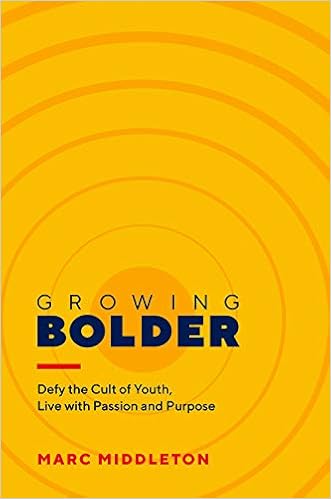
Image result for growing bolder book

This book was recommended to me by Cody Sype from the Functional Aging Institute when I attended his certification seminar.

I am accustomed to going to seminars, conferences, etc., where books are recommended and I am often cynical, but as a guy who is not getting any younger and is somewhat anxious about aging, this book sparked my interest.

Marc Middleton makes the argument that the “Machine”–the healthcare industrial complex, government, media and culture in general–wants all of us as we age to feel helpless, frail, weak and dependent. The Machine does this because it makes money for them; entire industries are built around this notion and we buy into it because it is so prevalent in our society.

Middleton’s goal is to show us another way. Retiring and aging aren’t about being put out to pasture. On the contrary, our 70s, 80s, 90s and beyond can be the happiest and most meaningful years of our lives. Middleton brings multiple examples of ordinary older Americans doing incredible things. These are not all far-fetched examples; all the individuals are accessible and inspiring.

I can honestly say that this book got me to rethink my attitude about aging. I know to look at the Machine with skepticism. I know that many of us reinforce ageism without even realizing it. I know that unless our society changes its point of view, we will have a big problem on our hands. This demographic is growing; unless we are able to dismantle the Machine, we had better be prepared for a whole sector our economy warehoused in long-term care facilities. Is that what we want?

I am inspired by this book. It has changed my thoughts about aging and given me the courage to rock whatever time I have left!
Thought for Shabbat

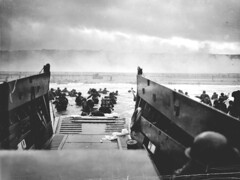
D-Day - June 6, 1944

It has been interesting and emotional to watch as our nation and Europe marked the 75th Anniversary of the D-Day Invasion during WWII.

This heroic and painful endeavor turned the tide of the war in Europe and led to the eventual liberation of those on the continent who were under Nazi control.   What we have learned since 1944 (and perhaps knew all along) is that liberation is not just a one-time event; just because the Nazi forces were pushed back and eventually surrendered does not mean that everything in Europe was rainbows and unicorns.  There is a never-ending struggle to create, uphold and defend the institutions of freedom.  There is also a recognition that freedom is not just for freedom’s sake; that liberty should be used for a higher goal to enrich the lives of those living under it, allowing for peace and justice to survive and thrive.

It is a meaningful coincidence that this milestone anniversary was celebrated just before the holiday of Shavuot.  This holiday recalls the giving of the law at Mt. Sinai; that event is what the exodus from Egypt was all about.  Freedom from Egypt was not just an exercise in liberty for the sake of running around the desert doing whatever we pleased.  It was liberty in order to serve God and our fellow humans (rather than an earthly ruler like Pharaoh).  Just as in Europe after the conclusion of WWII, this process is not over.  It did not end when the sea closed in on the Egyptian Charioteers.  It did not end when the Children of Israel received the Torah.  It did not end when we entered the Promised Land.  And it did not end when we went into exile.  The work is never done.

The 75th Anniversary of D-Day and Shavuot are strong reminders to us that not only is the work of freedom never done, but that we must also remind ourselves for what purpose liberty has been won.

Shabbat Shalom and Chag Shavuot Sameach!

I’ve Fallen and I Can’t Get Up…Or…

falling

One of my top clients was so excited to bring in an article from yesterday’s (June 5, 2019) New York Times, “Rate of Death From a Fall Is Increasing Rapidly for Americans over 75,” by Katie Hafner. Here is the link: https://www.nytimes.com/2019/06/04/health/falls-elderly-prevention-deaths.html .

Let me start out by stating that while I am not a doctor, my many years working as a congregational rabbi and doing hospital visits has taught me a thing or two. In particular, I have seen first-hand that falls are a huge problem for older Americans. There is more than just the physical trauma too. A fall can make a person anxious about falling again so they go out less. Going out less leads to social isolation, can contribute to poor nutrition (ordering in rather than going to a store to get “real” food), and a general decline in conditions.

A new study out by the Journal of American Medicine shows that the rate of death from falls for those over 75 is going up at an alarming rate. There are a number of factors that explain this, but chief among them is that folks are surviving other conditions that might previously have ended their lives; the more we age and the longer we live, the higher a role falls plays in morbidity.

Part of my training as a Functional Aging Specialist allows me to better detect when a person is at a higher risk for a fall. My training has also taught me how to work to mitigate the risk. With some of my clients, this is a huge part of what we do–simply learning not to fall, and what to do if it does happen.

The article suggest that there are a number of factors that can help prevent falls: exercise, being aware of medications and the effect they can have on balance, the clothes and accessories we are wearing (bifocals and high heels are both culprits), tidying up to get rid of tripping hazards, and staying hydrated.

Falls are not inevitable. They can be prevented. When they are, they allow older adults to live longer, more independent and joyful lives. As we age, we need to be cognizant of this possibility and take the steps to make our golden years fall-free.

Just how Evil is Bread?

Bread!

Several years ago I made the switch from white bread to whole wheat bread, and eventually to whole grain bread. When I was raising a family, bread was a thing…sandwiches at lunchtime for sure!

I never thought my kids would go for anything other than plain white bread, but when I switched things up they surprised me. In particular, we have become fans of Dave’s Breads, http://www.daveskillerbread.com/ . They make several kinds of bread and to me it tastes almost like eating cake. Filled with fiber, seeds and just delicious. And it’s certified kosher!

But, wait! What!?! Bread??? How can that be part of a healthy diet. Well, (literally) not all breads are baked equal. We have been taught that too many carbs and the wrong kind are not good for us. Even so, carbohydrates do play a role in our diet and how we fuel our bodies. There is a huge spectrum between what is actually OK and what is just turning into gunk in your insides.

An article published on http://www.medicalnewstoday.com has a good, brief discussion about the differences between breads and their nutritional value. Here is a link to the article: https://www.medicalnewstoday.com/articles/325351.php

Sometimes you feel like a sandwich or toast; now you have a little more info about the choices you can make. No need to just go for the national brand white breads; try the Ezekiel bread and multi-grain and you might just be surprised!

That Feeling of Being Needed…

cute baby with her dad in the pool

Thought for Shabbat

On Thursday I was at the JCC swimming pool.  At the far end of the pool was a little girl (maybe 12-15 months) being held by her dad.  She was crying (which is why I noticed her) and holding on to her daddy with all her might.  And I had a flashback to my own days as a father of a young child.

I remember those days when my children (the youngest of whom is 19) would hold on to me in the pool.  That firm grip from those little hands and arms reminded me of just how much my kids needed me.  At the same time, it was heartwarming to know that not only did they need me, but I was able to give them exactly what they needed:  a sense of safety and security.  There is nothing in the world like that feeling.

Even though my kids are grown up now, I know that they still need me…but in different ways.  I also recognize that at different times there are others who need me.  There are members of the congregation who depend on me for guidance, and who know that at some time I may need to accompany them through a difficult time.  There are clients of mine at the JCC who depend on me to help them reach their fitness goals in a safe and effective way; others rely on me help keep them active and independent in their older years.  There are also those in society in general who count on me as a fellow citizen to do the right thing, to support the positive endeavors in which we are engaged, and to help them meet their needs.

It feels good to be needed, but it feels even better to be able to provide for those needs.  This is a Jewish value to be sure, but more than that, we know it to be true in our hearts.

Shabbat Shalom!

Processed vs Unprocessed Foods and Weight

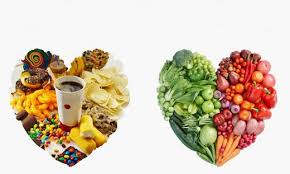
In my May 2, 2019 post about metabolism, I shared an article by registered dietitian Samantha Cassety. Among the many points she made about how our foods are used as energy, was an explanation about the difference between a diet made up of more processed foods versus more unprocessed. Bottom line: your body has to expend more energy (calories) to absorb unprocessed food, ie, to “process” it; processed foods are much more easily absorbed and burn less calories.

An article out a few weeks ago on http://www.cell.com, reiterated this point and brought a recent study to prove it. Here is the link: https://www.cell.com/cell-metabolism/fulltext/S1550-4131(19)30248-7 . Not only does Cassety’s explanation hold up, this article goes further to say that generally speaking those who eat processed foods are more likely to overeat than those who eat unprocessed foods. The methodology of the exam is very interesting; one group had no choice but to eat either highly processed foods and the other to eat unprocessed foods. The results were unmistakable. Eating highly processed foods contributes to weight gain.

What do we learn? There is a price to pay for the convenience of prepared foods. The deeper question: is that price worth it?

Thanks to my colleagues at the Mandel JCC, Brandon Colon and Jeff Yannarell, for sharing this article.

The “Fitness” of our Memorial Day

My Great-Uncle’s Grave in the US Military Cemetery in Meuse-Argonne, France

I had a conversation a few days ago with a member of the JCC who is from Israel. She asked me what exactly the story is with our Memorial Day; in particular, she wondered how people could say “Happy Memorial Day.” Isn’t it supposed to be sad?

There is a huge difference between how we observe (or don’t) this day in the USA as opposed to Israel. It is much more solemn in Israel, with a moment of silence when Israel comes to a standstill.

Image result for yom hazikaron

No matter what you are doing, you stop and stand at attention in memory of the fallen soldiers and victims of terrorism–even if you are in the middle of a supermarket, even if you are driving your car, even if you are studying. Here, there are the occasional memorial services; Jewish War Veterans often arrange these or they are done town by town. Otherwise, it is barbecues, picnics, opening day at the swimming pool, and, of course, lots of sales at the mall!

What makes for the difference? I don’t know for sure, but in a country as small as Israel, every one knows someone or knows someone who knows someone who was killed in the military. Nearly everyone who lives there has served in the military as well. This close connection to war and what it really means plays an important role in the mind of individuals and in the psyche of the country. It is a time for remembering and reflecting–definitely, not a “Happy Yom Hazikaron,” now lets get the grill fired up!

Here in the US, depending on the circles in which we travel (social, socio-economic, political) we may not know anyone who served in the military–especially after the mandatory draft was dismantled. I have a good friend who serves as a Chaplain in the military, but I would imagine it is a rarity to know someone closely who serves. We may know veterans, but we all know how well we (as a nation) have treated them.

Our notion of Memorial Day is not fit at all. It does not fit at all. This should be a day of really remembering those who gave the ultimate sacrifice for the ideals that we hold so dear. It should also be a time to reflect upon and work for those who have served and currently serve in our armed forces. How well do we take care of them? They risk their lives for us. What are we doing for them?

I never got to meet my Uncle Harry Miller. All I know of him are a few pictures and the letters he sent to my grandmother when she was a teenager during WWI. Some day soon, I hope to visit his grave and say a prayer for him.

In the meantime, I will think about the best ways to honor him and his sacrifice. Maybe not a barbecue or new fitted sheets….

A Meaningful Memorial Day to all!

Thought for Shabbat…Always 400 words or less

Image result for love your mother earth
She’s the only one you’ll ever have….

I don’t know if you saw the news article from the Washington Post on Wednesday, but there was a distressing article about the amount of trash washing up on remote islands these days.  One beach alone, was littered with 414 million pieces of garbage—most of it plastic.

What are we doing to our planet?  What are we doing to make it better?

The Torah itself wants us to take care of our home because it’s the only one we have.  In the story of Adam and Eve in the Garden, God told Adam that the world was his to work and guard.  This is not a coincidental use of words.  From the very beginning, the Creator made clear that we are to make us of the planet, but we must also see to it that we do so in a responsible way.  It needs to be healthy for generations to come.

Our weekly Torah portion, Behar, touches on this same theme.  We are introduced to the laws of the Sabbatical Year and the Jubilee.  During the Sabbatical Year, field were supposed to lie fallow and trees and bushes untended.  Does this sound like modern crop rotation techniques today?  The Torah tells us that this would occur once every seven year; it is still observed in a modified way in Israel to this day. 

We may not be able to observe the Sabbatical Year in the USA (and in fact the mitzvah only applies in the Land of Israel), but there is much more we can do to care for the planet.  Remember:  reduce, re-use and recycle.  Your Mother Earth will appreciate it…and so will coming generations! 

Exercise on the Sabbath

A few days ago at the Mandel JCC, a member who is a regular and long-time runner–who knows that I am a rabbi and a personal trainer–asked me (out of curiosity, I suppose), if running is permitted on Shabbat (the Sabbath).

This was not really the kind of question that I could answer on one foot (even though my left foot is still in a boot!), but I gave him the short answer, and promised to do a little more research. The short answer (so Jewish!) is: yes…and…no. It depends.

I started my “little more research” at my favorite Halachic (Jewish legal) source, Rabbi Googlowitz. A simple search on http://www.google.com revealed a surprisingly large number of web pages on this topic.

The long and the short of it…here is the issue. Traditionally, Shabbat is seen as being observed in two general ways: Shamor (guarding) and Zachor (remembering). These two broad categories come from the fact that the Aseret Hadibrot (The Ten Commandments) appear twice in the Torah–once in the Book of Exodus and once in the Book of Deuteronomy–in almost identical form. With regard to the observance of Shabbat (the 4th Commandment), one version uses the word Shamor and the other Zachor. Commentators said that the verses differ in order to instruct us that there are two aspects to making Shabbat holy and special. One is through guarding (observing the myriad laws about what can and cannot be done on the 7th day); the other is through remembering (doing the non-legal things that bring enjoyment to the day like having a festive meal, visiting friends, studying Torah, etc.) , often referred to as Oneg (literally, “joy”). The question becomes: is running simply exerting one’s body and therefore considered to be a violation of shamor–a kind of “work” with a productive purpose…or…is running an enjoyable activity in whose participation we can derive enjoyment, and therefore a kind of Zachor/Oneg? If the answer is the former, it is forbidden; if the answer is the latter, it is permitted. So…you are allowed to run, but only if it’s fun!

This is a very condensed version of the answer, but I was surprised to find that two pretty traditional websites: http://www.aish.com (Aish HaTorah) and http://www.ohr.edu (Ohr Sameach) said pretty much the same thing. Check them out for yourself to get the sources and the context.

By far the most comprehensive article I could find on the topic was written by my friend and colleague, Rabbi Jonathan Lubliner; it was endorsed overwhelmingly by the Committee on Jewish Law and Standards of the Rabbinical Assembly (the rabbinic association of the the Conservative Movement–which is ironically the name of one of the liberal/progressive branches of Judaism). He covers all kinds of exercises and the various circumstances and contexts in which athletic activities are permitted or not. Here is the web address: https://www.rabbinicalassembly.org/sites/default/files/public/halakhah/teshuvot/2011-2020/lubliner-recreation-sports-shabbat.pdf

My conclusion: like everything else having to do with exercise and athletic activity, if you’re not enjoying it…either you’re doing it wrong or perhaps you shouldn’t be doing it at all!

This whole Celery Juice thing is Stalking me…

I cannot resist a pun.

But can I resist Celery Juice. Several weeks ago, one of my clients mentioned to me that as part of my surgery recovery I should do a celery juice cleanse. She extolled the virtues of this concoction as a way to clear the body (in particular, the liver) of toxins, i.e., the medications that I have taken as part of the recovery.

I thought it sounded a little crazy, but my client seems like a relatively sane person, so I went on line to see what I could find. I encountered a few articles that mentioned celery juice a having the ability to do exactly what she promised. None of them was an article from the New England Journal of Medicine or even WebMD. Even so, I figured that in a few weeks I would give it a try. What did I have to lose?

Then this morning, this article came out on http://www.NBCNews.com: https://www.nbcnews.com/think/opinion/what-does-celery-juice-do-you-why-diet-wellness-fad-ncna1007171

The article suggests that this is just another diet fad without a whole lot of science around it. Not enough research has been done to show what the benefits might be…and on the flip-side, what the dangers might be. Dangers? What danger could there be in drinking celery juice? Remember the grapefruit diets? All fun in games unless you are on a statin drug or certain antihistamines!

Celery is a healthy food. It is a green vegetable and it is low in calories and high in fiber. One of my favorite cities in the world, Kalamazoo, was once considered the Celery Capital of the World, and some still refer to it as Celery City. The article mentions, however, that much of the benefit of consuming celery is lost when you juice it; eating celery is a calorie zero sum game–the energy you expend chewing it, balances the calories in the celery itself. The fiber is mostly lost in the juicing process as well.

The point here: the latest fad, miracle cure, must-eat vegetable, etc., is most likely not harmful (although more research is needed), but less likely to be of any significant dietary or health advantage. There are tried and true methods to accomplish our health goals like eating a variety of vegetables in the full spectrum of colors, following a Mediterranean-style diet, avoiding overly processed foods, etc., so why run after the latest shiny, new fad?

So, will I try the Celery Juice? I might give it a try for a day or two. I wonder how it will taste with a little vodka and Bloody Mary mix….