Please Rise…. You May Be Seated.

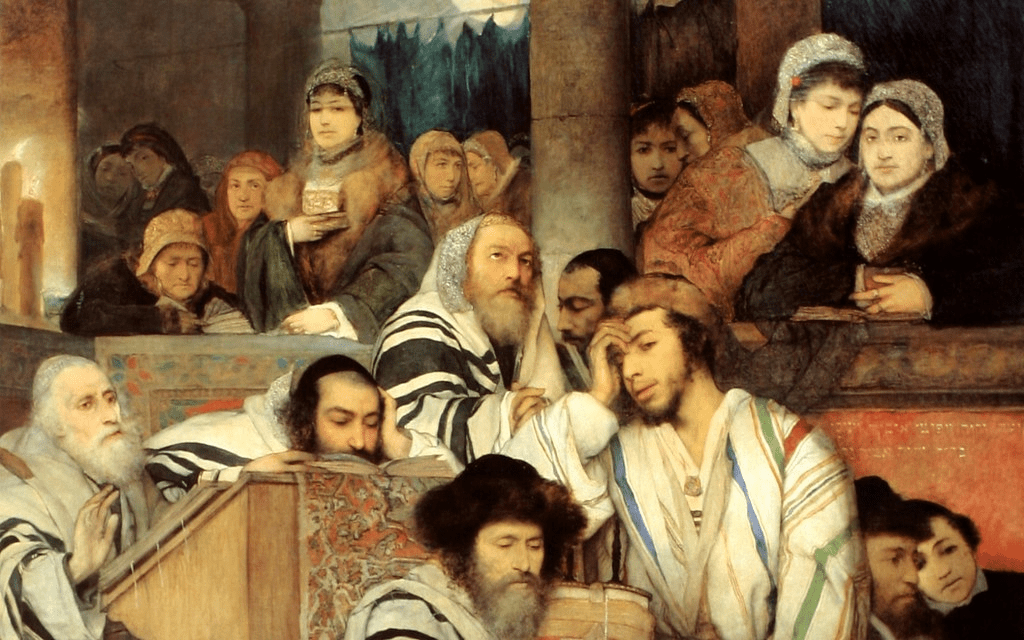
Rosh Hashanah, the Jewish New Year and one of the holiest days on the Hebrew calendar, begins this coming Friday at sunset. It marks the beginning of the Ten Days of Repentance, at period of prayer, introspection, atonement, and more prayer. A key aspect of the services–in fact, all Jewish services throughout the year–is that there are quite a few parts when the congregation stands. On Rosh Hashanah and Yom Kippur, when services are a lot longer (hours and hours), the sitting and standing is especially noticeable. There is even one service at the end of Yom Kippur, Ne’ilah, when worshippers do not sit throughout nearly it entirety.

In the past I have blogged about the benefits of prayer and repentance/forgiveness. Not only do they bring spiritual uplift, but they can also affect our physical being. This got me thinking about the physical demands of Jewish prayer (all that standing and sitting) how it might affect our health.

One of the best exercises for strengthening legs–which is important for activities like walking and climbing stairs–is the Squat. Many people mistake the Deep Knee Bend for the Squat, but they are very different; in general, I do not recommend Deep Knee Bends for older adults as it puts so much stress on the knees, which can damage them and lead to pain. During a Squat, the knees are bent, but not in a forward motion; the knees (ideally) stay directly above the ankles as the rear end goes back and down. If you have ever gone to sit in a chair and then, at the last moment, realized you do not have a soup spoon so you get up before your butt hits the chair…this is pretty much what a Squat is. Because older adults may have muscle loss and issues with balance, Squats are a scary proposition; for some, they are just an impossibility. A good substitute for Squats (wait for it….) is an exercise called a Sit and Stand; it is exactly what it sounds like and it works all the same muscles as a Squat: glutes and quads.

During the coming weeks, worshippers in synagogues will hear the Rabbi say “Please rise,” and “You may be seated.” It is good to know that not only will the sitting and standing add to the spiritual dimension of the holiday, but also to the physical. We are literally strengthened by the ups and downs.

Of course, if you are not the praying type (no judgment), remember that Sit and Stands are a great alternative to the Squat for those who are worried about balance and lower body strength.

Wishing all those who celebrate, a happy and healthy New Year!

Assessing and Correcting Bad Posture

Did you see the article by Dr. Pamela Peeke about posture in the most recent issue of the AARP Magazine? I have blogged about the importance of posture for older adults in the past, but it bears some review.

Peeke’s article addresses six different ways that we can assess our posture, and work toward fixing it. Not only can it improve our appearance, but it can also relieve pain.

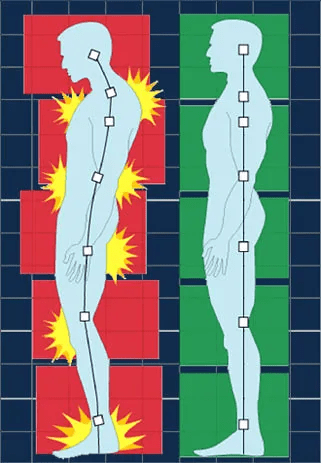
The first three are done in front of a mirror, but standing perpendicular to it (ie, with our side toward the mirror). Turn your head so you can see your reflection.

  1. Where are your ears? If they are not directly over your shoulders as they should be, scapular retractions and/or chin tucks can help.
  2. Where are your hips? If your hips tilt forward, tighten your abdominal muscles and push your hips forward so that they are directly beneath your shoulders.
  3. Where are your ankles? If your ears or hips are out of line, your ankles may not be in the right place–directly below your shoulders. Work on 1 & 2 above, and 3 should resolve itself.

Now, turn so that you are facing the mirror.

  1. Where are your shoulders? If one is higher than the other, try forward and reverse shoulder rolls. If one or both is rounded forward, stretch your chest muscles (which pull the shoulders forward) by clasping your hands behind your back and interlacing your fingers; now pull your hands up and away as far as you can from your back for 10 seconds and repeat throughout the day.
  2. Where are your feet? They should be shoulder-width apart, parallel, and with toes facing forward. If that is not the case, shuffle your feet until they are in the correct position; note the balanced feeling and strive to maintain it throughout the day.
  3. Where are your knees? If your knees are out of alignment, you can stand with toes pointing inward and heels slightly apart. Fold forward at the hips and let everything hang loose. This will help re-align the knees and stretch the hamstrings.

There are many reasons for poor posture. For serious issues that lead to pain or major misalignments, talk to a physician; physical therapy or other treatments may be necessary.

Remember, posture is not just about appearance. When we are out of alignment, it can cause a cascade of negative effects on the body. A little bit of work each day can go a long way.

Older Adults and Marijuana

A number of studies out in the past few years suggest that older adults (in this case 65+) are using marijuana in greater numbers than expected. An article in the Washington Post suggests that several factors account for the rise in its use.

Perhaps the most important is the fact that it has become legal for medical and/or recreational use in many parts of the country. Older adults may be more concerned about participating in an illegal activity than adolescents/younger adults; now that it is legally available, many are giving it a try for the first time. The article suggests that among the youngest of the Baby Boomer generations (which is where I am), use was more common during our earlier days, took a dip for several decades and is ticking up again. A fascinating aside is that folks who are more politically liberal (those who listen to NPR!) are more likely to partake.

In addition to legalization, there has been a lot of hype written about the benefits of marijuana use (as oppposed to abuse). Older adults with various medical conditions are finding relief for problems with sleeping, pain, Parkinson’s Disease, and side effects of chemotherapy for cancer. It is noteworthy that AARP has even weighed in on the issue. On their website and in their print materials there has been ongoing coverage of the proposed benefits of marijuana and CBD. The news is somewhat mixed: on the one hand, there is much anecdotal evidence that there is a positive impact; on the other hand, more research is needed to conclusively determine whether the risks outweigh the benefits.

I know of older adults who have found relief. I also have older clients and others who ask me my opinion on the matter. I am not a doctor, but I do recommend that they discuss it with their physician. It seems to me that there are lots of people who suffer from a wide variety of ailments where marijuana may actually improve the situation.

I look forward to more research in the years ahead–especially as I age and may have to deal with medical conditions where marijuana can make a difference.

500 Subscribers!

Every once in a while I check the statistics on my blog to see what posts are most popular, where people are reading, and how many subscribers I have. Today I happened to check and saw that I got my 500th subscriber! This blog was started on February 24, 2019–I was still working at a local gym, and the pandemic would not hit with full fury for another year or so. I did not know if anyone would read it, let alone have subscribers. While 500 is not a million, I am proud of hte accomplishment and the work that I put in to achieve it.

I have learned a lot from the work of maintaining a blog. I always remember that my son told me that a blog is like a living thing; you have to feed it and take care of it in order for it to survive. I strive to create a new post each week on a topic related to older adults and fitness. Often I highlight articles I have seen on news websites, in my trade magazines, and in my continuing education classes. I am grateful to all the fitness, medical, and allied professions experts for their continuing interest and research. Their work makes mine easier–not just blogging, but working with my clients as well. I will endeavor to bring the latest news and research as well as my insights so that older adults can live healthier, more independent lives.

Thanks to all my subscribers. I do this for you!

Hot, New Research on Lowering Blood Pressure with Isometric Exercises

I do not usually get fitness-related articles sent to me by clients, friends, or family members, but a recent article on CNN.com elicited a couple of e-mails as well as questions by some of my clients. Kristen Rogers reported on a large study that was published by the British Journal of Medicine last week.

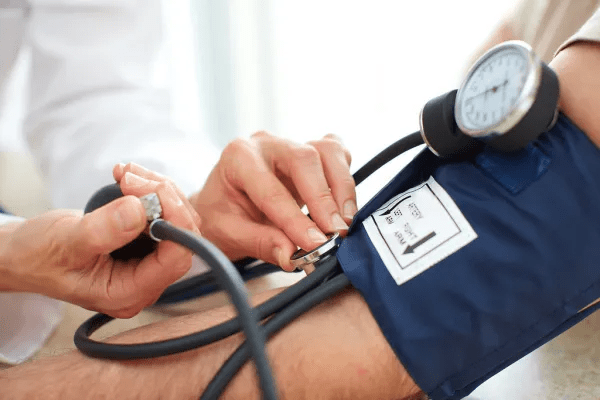
It is a meta-analysis; that is, it looks at hundreds of studies and synthesizes their results. In the past, cardio exercises were recommended the most for lowering blood pressure, but much of that research was outdated; the authors of this new study wanted to update recommendations based on the newest studies. They found that isometric exercises–ones where muscles contract but do not visibly change in length–are the most effective at lowering blood pressure.

Two exercises that are suggested are planks and wall squats (also known as wall sits). These are exercises that I do with some of my clients if they are able. The article does not make specific mention of whether this advice is directed at older adults, but it seems to indicate it as a general rule that these exercises will have this effect–whether a person has hypertension (high blood pressure) or not. The article indicates that isometrics can be added into a regular program that also includes cardio and HIIT (High Intensity Interal Training); for more info on HIIT read this post or this post.

Overall, adults should aim for 150 minutes of moderate-intensity exercise each week; this should include a mix of cardio and weight/resistance training, as well as isometrics for those who are able. That last part is key. Planks are great but will be a challenge for those who are not able to get down to or up off of the floor; of course, planks can be modified to be done off a counter-top, heavy piece of furnitutre, or a wall. Wall sits present a number of other issues; if not done correctly, they can do damage to the knees, and those who lack sufficient strength may find themselves in the middle of a wall squat unable to stand up or slide up the wall, therefore falling to the floor.

These findings are not a panacea for lowering blood pressure; they are another piece in the puzzle. A healthy diet, sufficient rest, and following doctor’s orders (which may include medication) are key to managing hypertension. It is also worthwhile to talk to an exercise or fitness specialist to find out what kinds of isometric exercises can safely be added to your regimen. All of these approaches are important to prevent other medical complications that can result from unchecked hypertension.

Daily Approaches to Back Pain

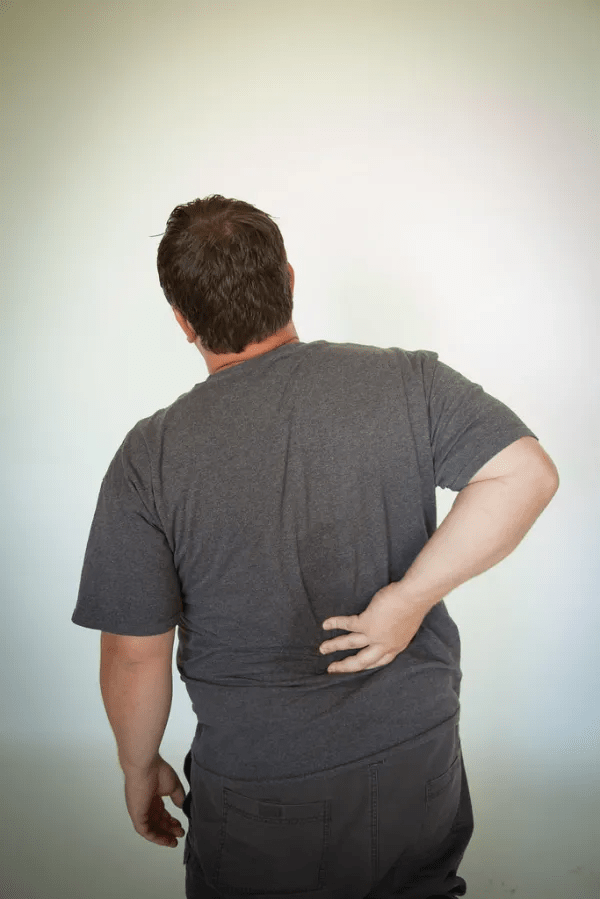
When I was much younger, I remember watching TV commercials for Doan’s Pills; they were supposed to bring relief for back pain. As a kid, I wondered just what that was all about; as I age, I understand just how much of an impact back pain can have on our ability to carry out our daily activities and the quality of our lives.

Dana Santas, a certified strength and conditioning coach and mind-body coach, explains in a recent article that rather than thinking about drastice measures, there are simpler actions we can take every day to ward off back pain.

  1. Move more. We used to think that when we had back pain we should just avoid movement until it gets better. Research shows the opposite is what is called for. Regular exercise is great, but even parking further from your destination and walking a little further, taking the stairs instead of an elevator, or a 5-minute burst of activity can make a positive difference. An increased heart rate helps circulate blood to the muscles to avoid stiffness.
  2. Switch sides. In all my work with clients, there are always imbalances because we are either right-handed or left-handed. Weakness on one side can cause back pain as we favor one side over the other. Santas suggests switching hands when carrying a bag or laptop, opening doors with the other hand, etc. Actions like this can help even out the differences.
  3. Correct imbalances. This is related to #2. When we walk, run, swim, or cycle our movements should be symmetrical. If you suffer from back pain, one of the reasons could be that our movements are not symmetrical. It may be worthwhile to have a health professional evaluate this and provide corrective measures.
  4. Stop slumping. This is a major problem with older adults which can be exacerbated by conditions like osteoporosis and Parkinson’s Disease. Santas explains that it is more than just a question of squeezing one’s shoulders together; pay attention to posture and breathing as well. Sitting or standing up straight and focusing on long, slower breaths can improve back pain.
  5. Stay present. This is the most interesting and perhaps most difficult to achieve. Many of us have stress in our lives that leads to back pain. By taking on some mindfulness practices like meditation or yoga we can reduce stress levels. Focus not on what happened in the past or what might occur in the future; be in the moment. Even taking a few minutes each day to focus on our breathing (see #4) can have an impact.
  6. Be proactive. This is Santas’ best piece of advice. There are certain things that we do on regularly to help maintain our health: brushing teeth, bathing, eating properly, etc. If we experience back pain, we should view it is a health need that should be attended to on a regular (even daily) basis. Find ways to make the first 5 strategies a set part of your routine.

Those who suffer from back pain–or have suffered in the past–know just how difficult it can be. It is helpful to know that there are strategies we can employ to help prevent and alleviate the pain. Be proactive and make it a priority!

Health and Wellness Programs through Insurance Companies

About a month ago, I got a phone call from my health insurance company…so I answered it. I usually do not answer calls that look like spam, but this was my insurance company. I was skeptical and ready to ask to be put on the “no-call list,” when the woman on the other end asked if I was familiar with the company’s wellness plan. This had my attention. I am, after all, in the wellness field myself.

The last two health insurance companies under which I was covered had similar programs so I knew what it was about. Depending on the company, it can take different forms. In many cases, insured individuals are offered free health coaching services; that coaching can be over any area of health about which the person has concerns. It could be nutrition, aging, weight-management, etc. Some of the more elaborate programs provide perks like discounts for gym memberships, free written and video information, as well as referrals.

I met with my coach for the first time 10 days ago and the call lasted about 30 minutes. We identified some areas that are concerning to me and discussed ways that my coach could help. Since she was from my insurance company (and a registered nurse) I was able to share with her the medical issues that are at the top of my list–particularly important since the company has balked at covering some of the treatments that might benefit me. Nothing was a surprise (or would be) to her.

I am looking forward to this relationship with my health coach. It is always good to have someone checking in and keeping me on track; this is, after all, what I do for my own clients! We will see just how beneficial the process is, but I do not see how it can hurt.

My advice here is that if you are contacted by your health insurance company about coaching, take the few minutes to hear what it is about. If you do not get a call, it is worth going to the website or calling the customer service number. This service is almost always free–that is, included in your premiums.

Not only is this service in your best interest, but it also helps to bring down insurance costs for everyone by guiding us toward more health and wellness.

Use It or Lose It Update

This past week I was away for the 4th of July holiday; I got back on Wednesday evening and the next day was a fast day on the Jewish calendar so I did not hold my group fitness class. Not only had I missed a number of days of working out (although there was a lot of walking in Boston), my clients had as well. On Friday and this week already, my clients and I are seeing the difference…and it is not pretty.

In 2020 at the beginning of the Pandemic, I had blogged about this because so many people stopped going to the gym and had not yet figured out how to keep active. Back then, I had noted that within a month decreases in stamina and muscle strength were already detectable. More recent research shows that “deterioration” can begin closer to 14 days and even as early as 10. Those who did not work out for two weeks, according to one source, saw a decrease in muscle strength of 4%. This may not seem like a lot, but what if that two weeks drags on to three, or four, or more?

The key takeaway is that it is better to try to exercise even a little bit. Quickie workouts can be effective too. On vacation, a brisk walk or taking the stairs instead of an elevator can make a difference. Many think that after an absence of physical activity, it will not be too difficult to hop right back into it. Ask anyone who took a break due to surgery just how accurate that is–not at all!

Use it or lose it is a cute phrase, but research bears out that there is truth in this little rhyme. The next few weeks with my clients getting back into the swing of things will be challenging. Next time, there will be better planning for how we can all stay active even when I am not available.

More Adult Playgrounds

Two years ago, I blogged about an exciting trend in which municipalities are building public, outdoor fitness parks. They contain equipment designed to provide a workout for a wide range of abilities and age groups–except for kids.

The June 2023 issue of AARP Bulletin shared an update on this trend; AARP has been a key partner in providing grant money for these facilities. In 2019, AARP committed to build fitness parks in every state together with the organization FitLot. Currently there are 53 parks–with one in each state as will as the US Virgin Islands and Puerto Rico; in most communities classes and orientations are held at the parks.

This is very good news, but when I checked the nearest park to my home is an over 3-hour drive away. That means there is still a need for these kinds of facilities in much greater numbers. Contact FitLot and/or AARP to find out what it would take to get one in our community. In the meantime, there are more fitness parks that are not a part of this program. Check with your local municipality about availability where you live.

Keeping older adults active is key to remaining healthier and more independent. Fitness parks are another resource to help us all reach that goal.

Ashes, Ashes, We All Fall Down

It is not uncommon to see little (and not-so-little) children fall down. While they may cry for a little bit, most of the time there are only minor “boo-boos.” As we age, however, falling can become a much more serious matter. About 36 million people over the age of 65 report falling each year with 3 million resulting in trips to the Emergency Room. Falls can result in fractures, sprains, bruises, or worse; the healing process for older adults is longer and more arduous than in our younger years.

An article in June, 2023 issue of AARP Bulletin, “How the Pros Fall Safely,” discusses the best way to avoid injury when we are going down. The article is not on-line yet, but it is worth getting a copy of the print edition. There are different strategies depending on whether it is a sideways, forward, or backward fall.

In a sideways fall, bend the knees, tuck in the chin, and lift the head. Keep arms close to the chest and go limp; collapse onto the outside of your bottom thigh, then roll backwards onto the torso and upper back. This protects the head from injury, keeps hands and wrists from breaking, and results in landing on the most padded part of the body, safeguarding the hip.

In a backward fall, stumble backward (rather than just going straight back) while tucking in the chin into the chest and trying to get the body (especially the rear end) close to the ground. Bend the knees into a deep squat so you land on your rear end. Round the spine and roll onto the back and shoulders. Keep your arms at your sides. As in the sideways fall, fragile bones are protected while landing on a padded area of the body.

In a forward fall, go limp, bend the knees to one side, tuck the chin into the chest, keeping the head tilted away from the ground. Try to land on the outside of the thigh. When you hit the ground, keep the momentum going and role onto the side of your torso and upper back. Try to curl your body as much as possible. Again, bones are more protected this way.

Once you are on the ground, do not get up immediately, but rather assess the situation. It is natural to want to pop right up to avoid embarassment, but if there is a broken bone this can make things worse.

As a personal trainer for older adults, I spend a fair amount of time and energy with clients trying to prevent falls. If one should happen, though, these simple pointers can make a difference: “relax, go limp,” tuck the chin in and keep the head off the ground, land where the most padding is.

Be careful out there!