
Are You Feeling Triggered?

About two months ago I woke up and my thumb was really sore. This in and of itself is not terribly unusual since I work out a lot and I have the occasional ache: no pain, no gain. Also, at my age (63), it can be expected that I wake up some days with something not working the way it used to. I figured that it would get better in a few days, but when it didn’t, I contacted my primary care physician who recommended a brace for my thumb. With no improvement–in fact, the pain was beginning to radiate up my arm–I was referred to an orthopaedist who diagnosed me with Trigger Thumb. He gave me another brace which made a big difference and put me on a series of anti-inflammatory steroids. The pain dissapated but the limited range of motion of my thumb continued to get worse. We tried a second round of the steroids, but unfortunately, I could no longer bend my thumb. After consulting with the orthopaedist, we decided on surgery.

What is Trigger Finger (not to be confused with trigger happy)? It is a condition where the finger may have difficulty bending or straightening out; there may also be a popping or snapping in one of the joints. This is often accompanied by pain and/or swelling. In my case, the thumb simply would not bend; the few times were it did (like while I was gardening), the discomfort was immense.

It is caused when the tendon sheath in the palm becomes inflamed, making it difficult for the tendon to glide smoothly. There is a system of pulleys that make the fingers move, but the inflammation stops the tendon just like a not in a rope would prevent it from going through a pulley. We do not know exactly why Trigger Finger occurs, but risk factors include repetitive hand use that requires gripping and certain medical conditions associated with the joints; men between the ages of 40-60 are at the greatest risk.

There are a number of ways to treat Trigger Finger. First, as my doctor recommended, a splint or a brace can help to immobilize the joint and allow the inflammation to go down, thus restoring movement. NSAIDs (non-steroidal anti-inflammatory drugs) like Ibuprofen can make a difference too, but not everyone (including me) can take them. Sometimes an injection of steroids into the affected area can be a solution, but if you choose this route and it fails, surgery will not be an option for at least a few months; my doctor and I chose not to do this because the oral steroids did not seem to solve the issue. Finally, there is a simple outpatient surgery that can be done under local or general anesthesia; I have a strong vasovagal response so we opted for the general. Full recovery from surgery takes about two weeks, and in my case involved very little discomfort.

Why is all of this important? I have blogged before about how we need not accept that certain conditions that develop as we age will be permanent. Sometimes, we seem to say, “oh well, I am getting older, and I guess this thing just doesn’t work anymore.” There are often easy and painless solutions that will allow us to keep active and independent. In my case, I am right-handed and that is where the issue was. Not writing, using a keyboard, or being able to cook, clean, etc., simply was not an option. When something new pops up, it is okay to wait a few days to see if it resolves (a lot of times it does), but if you cannot live with a certain limitation, contact your doctor.

In the final analysis, how would I rate the experience of treating my Trigger Finger? I would definitely give it a “thumbs up!”

I Got Your Back

Most of us have probably had that conversation at some time where someone begins talking about a problem with their back while throwing out seeming random letters and numbers: “L5!” “C2!” “T11!” At any moment you almost expect someone to yell “Bingo!” What do these letters and numbers mean?

There are a total of number of bones in stacked together in the back is 33. They are divided into a number of different categories based on their location on the spine. The topmost part is called the cervical spine; it has 7 bones that serve to support the skull and help with a variety of movements. The 7 bones are numbered from top to bottom; C=cervical, so it is C1, C2, C3, and so on. The middle part of the back is the thoracic spine; it has 12 bones and connects to the ribs while providing stability. The 12 bones are numbered from top to bottom; T=Thoracic, so it is T1, T2, T3, and so on. Next is the lumbar spine with 5 bones; they are the largest of the vertebrae and help to support much of our weight. They are also numbered from top to bottom: L1, L2, etc. Below this is the sacrum with 5 fused bones that connect the pelvis to the back. Finally, the coccyx is at the very bottom with 4 fused bones (although sometimes there are 3 or 5) that provide attachment points for pelvic floor muscles.

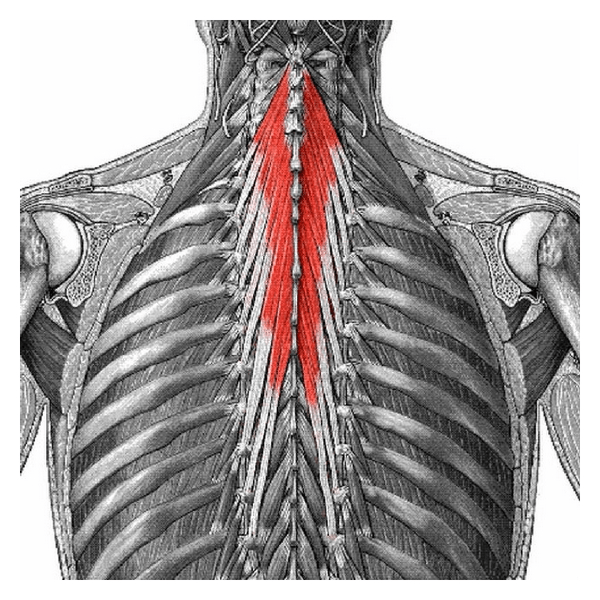
This seems like a lot of information, but the most important part to remember is that there are three main sections each with their own purpose, and two sets of fused vertebrae at the bottom that also have their own role. All of these bones are supported by muscles that provide stability; they are called intrinsic muscles. There are also extrinsic muscles that sit on the back but whose jobs are to control the arms and shoulders.

It is important to maintain the strength and flexibility of each part of the spine. The most important exercise for cervical spine health is the chin tuck, which I have blogged about in the past; looking over your shoulders in each direction is also a great exercise. For the thoracic spine, try foam roller extensions, standing torso rotations, and side-lying (open-book) rotations. For the cervical spine, the best exercise include cat/cows, glute bridges, child’s pose, and bird-dogs. Of course, if you have an injury or other concerns, consult with a medical professional so as not to do damage to this most important part of our bodies.

In the future, I will talk more about our backs, but the terminology seems so intimidating that I felt it important to demystify what we talk about when we throw out those Bingo-sounding letters and numbers.

Don’t Just Sit There…Grab a Snack

And it is not what you think.

When I meet with new clients, part of the intake process involves getting to know their exercise habits (or lack thereof). This includes whether they spend a lot of time sitting or on their feet. This is a question asked by many physicians as well.

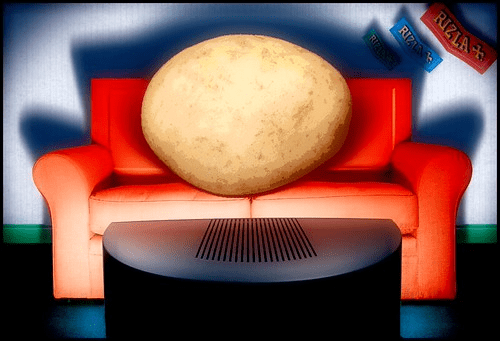
A recent article in the JAMA Network Open from 2023, “Dose-Response Associations Between Accelerometry Measured Physical Activity and Sedentary Time and All-Cause Mortality,” explores the risk of long-time sedentary behavior–in other words, being a couch potato. The article shows that this kind of behavior can have serious negative health consequences even when a person is engaged in regular exercise. What is important is the total amount of movement on average each day–not just how long a workout is. The effects of sitting on the couch or at a desk for prolonged periods of time cannot be “out-exercised.” That is why it is important to take regular breaks (every 30-45 minutes) to take a short walk, do a mobility exercise, or just stand.

This brings us to the snack. In the past I have blogged about “quickies,” short bursts of exercise that still have a positive influence on our fitness. The new cool term for this is according to the British Journal of Sports Medicine is an “exercise snack.” The general guideline is that we should engage in 150 minutes of exercise weekly. That could be five 30-minute workouts, or two 45-minutes + two 30-minutes, or any other combo. Research shows that even snacks of five minutes can be effective; the research in BJSM indicates that as little as 30 seconds has an impact. When done regularly, these “micro-workouts” can move the needle to greater fitness and health. If setting aside 30 minutes five times per week seems daunting, this can be a great way to work toward the goal of 150.

The most important take-aways are that being sedentary has negative effects that are often difficult to overcome. One of the ways to counteract the couch potato effect may be as simple as grabbing a snack–just make sure it is an exercise snack and not a giant bag of cheese puffs!

Paying Attention to Mental Health

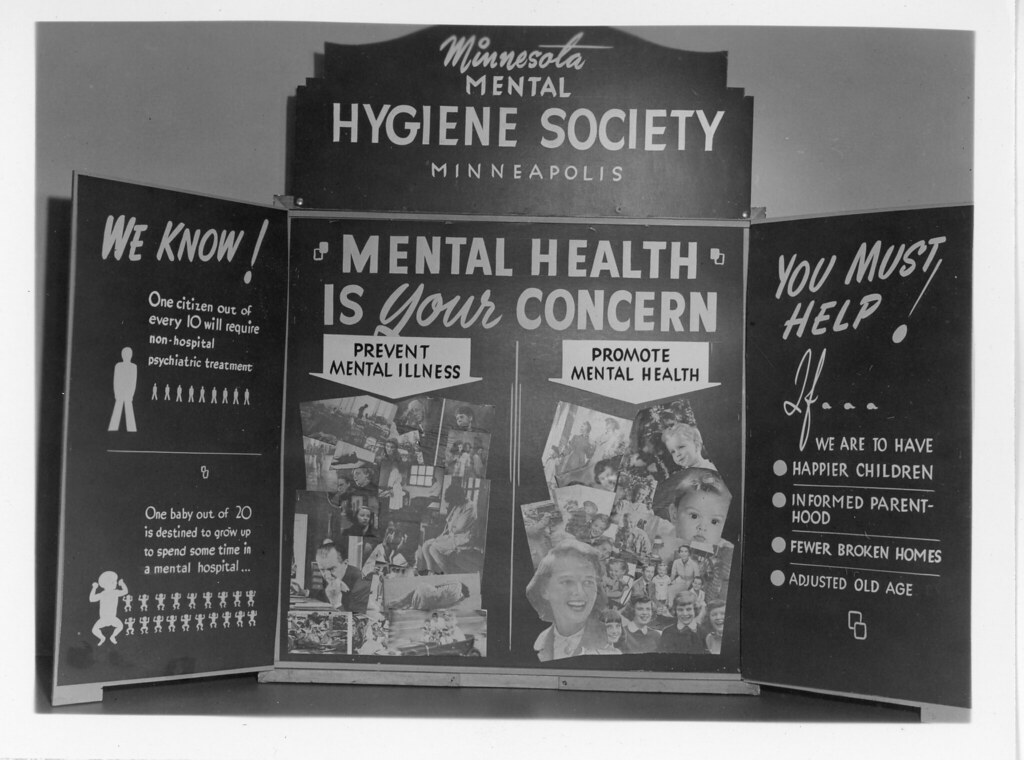
This display from Minnesota is a reminder that today is the first day of Mental Health Awareness Month. May has been set aside since 1949 to raise awareness about mental illness and fight the stigma surrounding it.

Of course, mental health is important in every stage of our lives, but there are certain aspects that are of particular interest to older adults. It is estimated that about 7% of older adults worldwide are affected by mental illness, often related to decline in physical health, loss of loved ones, and social isolation. Up to twice as many suffer from anxiety that can manifest itself in many ways. Dementia is not considered a mental illness but depression can often mimic the symptoms and/occur along with it. Finally, there is growing concern that older adults may misuse alcohol and prescriptions drugs.

The risk factors for mental illness in older adulthood can stem from conditions that appear later in life–both physical and otherwise. Chronic health conditions, disability, uncontrolled pain, and other physiological issues can challenge a person’s mental well-being. While adults are living longer, they often do so with a greater sense of loneliness and isolation coupled with a loss of independence. Add to this major life transitions such as retirement, loss of a partner, or moving to an assisted living facility, and older adults find their mental health can be quite fragile.

Look many physical conditions, mental health can be treated. There are options such as talk therapy as well as medications. The best treatment, though, is prevention. As we age, the more involved we are in social settings, the more we exercise and eat properly, and the more regularly we visit our health professionals, the more likely we are to stave off mental illness or be able to treat it if it does occur.

May is a good time to reflect on how we are doing, and how those around us are doing. Get educated and make sure to talk to a medical professional if you are worried about your mental health or that of a loved one.

Have a great May everyone!

Fitness Through Life

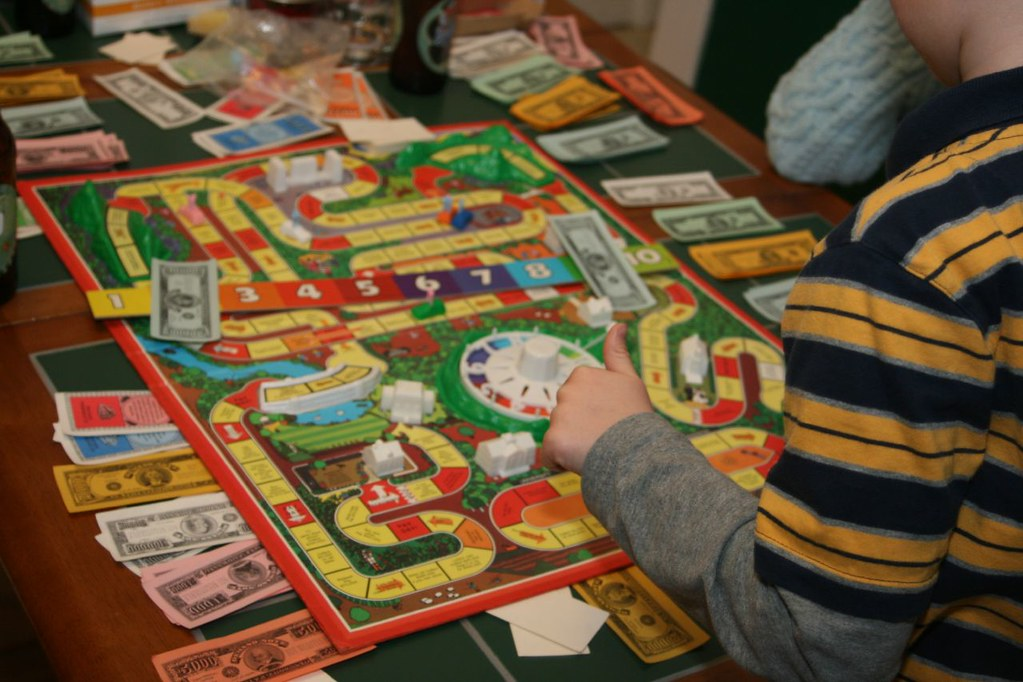
Do you remember the game of “Life?” As a kid I remember playing this; it was not until I was older that I realized just how adult of a game it really was. The basic premise was that each player gets to choose their path in life but unexpected twists and turns happen with each turn. It was marketed as a fun game, but it pretty closely resembles “real life” for many of us.

I have written many times in the past about how the choices we make today can affect our health and fitness tomorrow. I see it all the time with my clients; eating healthier, exercising, getting plenty of rest, and avoiding risky behaviors usually provide a more positive outcome. I use the work “usually” because there are many things in life that are simply out of our control. An accident can leave us with life-long injuries. Diseases can limit our ability to do the things we want. A financial downturn can change our priorities. The death of a dear one can alter our psyche.

Is it possible to continue to make good health and fitness decisions despite the obstacles that life might throw our way? I remember when my mother passed away 18 years ago, a friend gave me these words of advice: “Take good care of yourself, this will be harder than you think.” I have shared these words with grieving individuals ever since. The bumps along the road are a natural part of life and they should not disrupt long-term the decisions we make about our own well-being; in fact, making good choices is one of the things that can help us survive and thrive in the face of challenges.

When life throws us a curve ball, we may not be able to stick with the same plan to which we may have become accustomed. On the contrary, we will most likely have to make adjustments. Personal trainers and other health professionals can play an important role in helping us navigate modifications that need to be made–either temporarily or long-term. We should not view these changes as defeat or giving up; rather we should look at them as a sign of resilience. There are many ways to achieve better health and fitness. What worked in the past may not work today. The main thing is to recognize the changes as a part of life. What happens during our lives is not totally up to us, but how we respond is totally under our control.

I *Heart* You

It is just a few days until St. Valentine’s Day. Coincidentally (or maybe not), February is also American Heart Month.

This is a time of the year when we should be especially thinking about heart health. What are the most important things for older adults to know about our tickers?

The most important steps we can take to keep our hearts healthy are:

  1. Getting regular medical checkups. Monitoring blood pressure, cholesterol, weight, and glucose levels need to be done routinely. At the same time, all prescription medications should be reviewed, and if still appropriate be taken regularly.
  2. Make the appropriate changes in lifestyle and diet. Aim for 150 minutes of moderate activity each week as well as routine strength training. Diet should include more healthy foods such as fruits, vegetables, whole grains, lean protein, and fish; keep sodium, sugar, and fats to a minimum. Keep hydrated and get enough rest (7-9 hours per night).
  3. Avoid risky behaviors. This does not mean skydiving, but rather if you are a smoker, kick the habit. Limit alcohol consumption. Manage stress; make self-care a part of your life. Built-in relaxation, mediation, social time, and hobbies can all help reduce stress.
  4. Know the warning signs of heart attack and stroke. Chest pain, shortness of breath, unusual fatigue, numbness, and confusion can all be symptoms. Get prompt medical attention.

What is the best Valentine’s Day gift? The gift of health and fitness! Take some time to step up your game. Your heart will thank you, and so will your loved ones!

How’s That Resolution Going?

It’s almost a month into to the New Year and I am wondering: how’s that resolution going? When I used to be a regular gym-goer (I now work out at home) and later as a personal trainer at a gym, it was somewhat entertaining to watch the surge of new people who joined the gym in late December or early January. At first, the gym would be way busier than usual, but within a few weeks, it was back to the regulars with perhaps a few newbies still hanging in there.

Many folks have an all-or-nothing attitude to their New Year’s resolutions. If they do not hit success immediately, they simply give up. A more helpful approach is to take a step back and try to figure out what is not working and why? Ideally, when making a resolution in the first place, one should examine what has worked in the past, what has not worked in the past, what are the obstacles to success, and what is the best path toward achieving the goal. After the fact, though, is also a good to ask these questions. If the visits to the gym have petered out, why is that? Is it too hard to fit it into the schedule? Is the atmosphere too intimidating? Do you feel judged? Is it boring…or just too difficult? Answer those questions and then figure out how to overcome it. The solution could be to set a time (or times) on the weekly calendar that is dedicated to fitness. How about grabbing a friend who is willing to be on the journey with you? What about asking for help?

This, to me, is perhaps the most important point. Our fitness and health are too important to just give up. Get some help. That could be from a fitness professional–at a gym or who (like me) comes to your home or trains on-line. Contact a friend who is into fitness and can give you advice and encouragement. You may even be in touch with your physician who can refer you to providers who can help you meet your goals. It is tough to ask for help–especially when we like to think that we are strong enough to handle our own “problems.” Many times, however, reaching out can change the trajectory.

Do not give up on your goals (fitness or otherwise) just because it is not going as you hoped in the new year. January is not over yet; there are 11 months to go. Get some help, and let’s make 2026 a year of good health and fitness!

My Video Course is Live!

It is official! My video course: “Senior Strength for Better Walking” is now live on in the world wide web!

The course is comprised of four 20-ish minutes videos that focus on building lower body strength to help with walking. Each video has a warm-up as well as stretches at the end. It is designed for individuals who are not regular exercisers, or who have never exercised, but have decided that they would like to be able to keep walking for a while longer. As you go from one video to the next, the exercises become more challenging. Learners can focus on Video 1 for a while and then go on to Video 2 once they feel ready, or the videos can be played in a rotation. The only equipment needed is a chair, a mat, a water bottle, and some light dumbbells (not required).

Click here to go to the course. Watch the introductory video and let me know what you think. I am really proud of the work that has gone into this project. Please feel free to share it widely with those whom you think might benefit from an effective and fun lower body workout!

Approaching the New Year!

Hard to believe but 2025 is almost past us. Was it a good year for you, or are you ready to wish it farewell? A lot of good things happened for me this year–as well as some real challenges–and I am hoping for the best in 2026.

Of course, in the Fitness Industry, the New Year is a very busy time. The gyms and fitness centers are filled with those whom I like to call “resolutionaries.” For the first few weeks of the year, there are those who resolved to “get in shape” or “lose weight,” and they flock to gyms and fitness centers. For the vast majority, this only lasts for short time. The cycle can plays out year after year.

In the past, I have blogged about New Year’s resolutions. In 2019, I discussed strategies for having real success and sticking with it. The next year–in the middle of the pandemic–I blogged about realistic goals and expectations given the difficult circumstances, especially with regard to weight loss. In 2023, I focused on the importance of finding someone to help you or join you as you renew your fitness journey. I stand by all my advice from the previous years. Review these short essays and hopefully they will inspire and motivate you.

Finally, 2026 is the year when my first fitness videos will become available on-line. Entitled “Senior Strength for Better Walking,” it is a beginner’s level 4-part course (each session is about 20 minutes long) aimed at lower body strength. I am excited to expand the message and hope it will resonate with many older adults out there. It would be amazing if it were the first of several courses I am able to put out there.

In the meantime, best wishes to you all for a happy, healthy, and safe 2026. Remember, the work you put into keep your body healthy in 2026, will affect the way that 2027, 2028, and beyond will look and feel. It is never too late to start!

Exercise and Diabetes

When we think about November, most of us think about Thanksgiving, but it is also American Diabetes Month. I have blogged about Diabetes in the past, here are a few things we should all know about Diabetes and exercise.

Diabetes is a chronic disease where the body does not produce enough insulin or cannot properly use it, leading to high blood sugar levels.  This occurs because insulin, a hormone, is necessary for blood sugar (glucose) to enter cells for energy. Over time, consistently high blood sugar can cause serious health problems like heart disease, vision loss, and kidney disease. Generally, when we think of Diabetes, we think of controlling the disease through diet and medication (namely insulin). Major organizations such as the American Diabetes Association and the National Institutes of Health also recommend that regular exercise be a part of the plan for controlling blood glucose levels.

It is worth noting that many people with Diabetes (especially Type 2) have a number of other health issues such as obesity and being overly sedentary. The thought of starting an exercise regimen may seem daunting. After a diagnosis of Diabetes, there are so many changes to deal with: learning to inject medicine (in some cases), changing diet, monitoring blood levels, etc. How is it possible to add regular physical activity to that mix?

The American Diabetes Association recommends (and I echo this sentiment) beginning slowly. A journey of a thousand miles begins with a single step. It may not be feasible or desirable to immediately jump into a daily exercise routine. A primary care physician or endocrinologist should be consulted so that a person with Diabetes understands the effect that exercise can have–especially when it comes to glucose levels. An exercise professional such as a personal trainer can also assist in the process; it is important to choose one who either has certification for or extensive experience working with clients who are diabetic.

The diagnosis of a chronic disease is never easy. In many cases, though, there are choices that we can make to control the way the disease will affect our lives. One of the choices is incorporating regular exercise into our schedule. It may be scary and overwhelming at first, but with the right kind of help, we can have a big impact.