Hot, New Research on Lowering Blood Pressure with Isometric Exercises

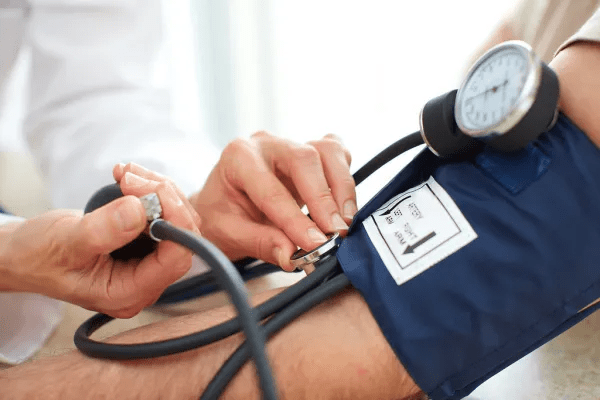
I do not usually get fitness-related articles sent to me by clients, friends, or family members, but a recent article on CNN.com elicited a couple of e-mails as well as questions by some of my clients. Kristen Rogers reported on a large study that was published by the British Journal of Medicine last week.

It is a meta-analysis; that is, it looks at hundreds of studies and synthesizes their results. In the past, cardio exercises were recommended the most for lowering blood pressure, but much of that research was outdated; the authors of this new study wanted to update recommendations based on the newest studies. They found that isometric exercises–ones where muscles contract but do not visibly change in length–are the most effective at lowering blood pressure.

Two exercises that are suggested are planks and wall squats (also known as wall sits). These are exercises that I do with some of my clients if they are able. The article does not make specific mention of whether this advice is directed at older adults, but it seems to indicate it as a general rule that these exercises will have this effect–whether a person has hypertension (high blood pressure) or not. The article indicates that isometrics can be added into a regular program that also includes cardio and HIIT (High Intensity Interal Training); for more info on HIIT read this post or this post.

Overall, adults should aim for 150 minutes of moderate-intensity exercise each week; this should include a mix of cardio and weight/resistance training, as well as isometrics for those who are able. That last part is key. Planks are great but will be a challenge for those who are not able to get down to or up off of the floor; of course, planks can be modified to be done off a counter-top, heavy piece of furnitutre, or a wall. Wall sits present a number of other issues; if not done correctly, they can do damage to the knees, and those who lack sufficient strength may find themselves in the middle of a wall squat unable to stand up or slide up the wall, therefore falling to the floor.

These findings are not a panacea for lowering blood pressure; they are another piece in the puzzle. A healthy diet, sufficient rest, and following doctor’s orders (which may include medication) are key to managing hypertension. It is also worthwhile to talk to an exercise or fitness specialist to find out what kinds of isometric exercises can safely be added to your regimen. All of these approaches are important to prevent other medical complications that can result from unchecked hypertension.

Daily Approaches to Back Pain

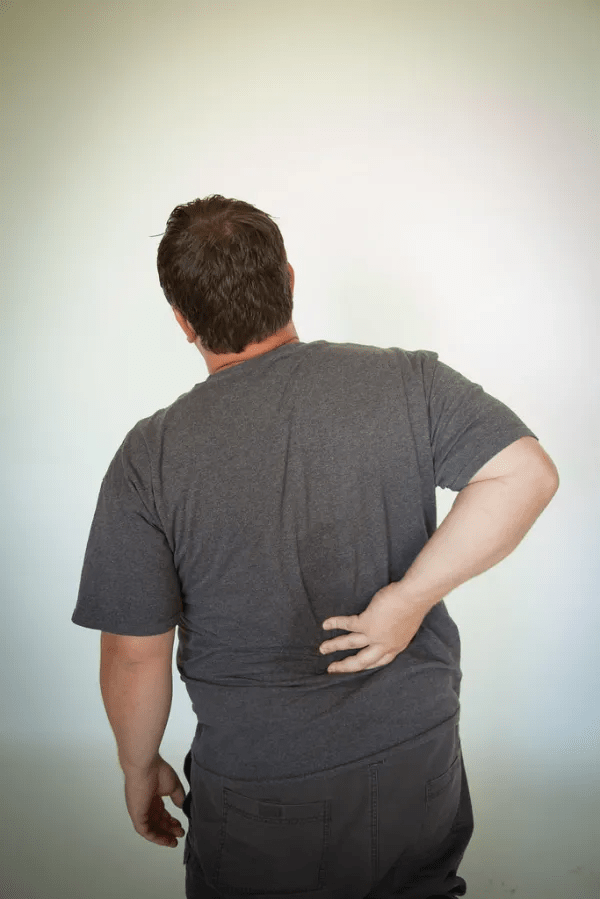
When I was much younger, I remember watching TV commercials for Doan’s Pills; they were supposed to bring relief for back pain. As a kid, I wondered just what that was all about; as I age, I understand just how much of an impact back pain can have on our ability to carry out our daily activities and the quality of our lives.

Dana Santas, a certified strength and conditioning coach and mind-body coach, explains in a recent article that rather than thinking about drastice measures, there are simpler actions we can take every day to ward off back pain.

  1. Move more. We used to think that when we had back pain we should just avoid movement until it gets better. Research shows the opposite is what is called for. Regular exercise is great, but even parking further from your destination and walking a little further, taking the stairs instead of an elevator, or a 5-minute burst of activity can make a positive difference. An increased heart rate helps circulate blood to the muscles to avoid stiffness.
  2. Switch sides. In all my work with clients, there are always imbalances because we are either right-handed or left-handed. Weakness on one side can cause back pain as we favor one side over the other. Santas suggests switching hands when carrying a bag or laptop, opening doors with the other hand, etc. Actions like this can help even out the differences.
  3. Correct imbalances. This is related to #2. When we walk, run, swim, or cycle our movements should be symmetrical. If you suffer from back pain, one of the reasons could be that our movements are not symmetrical. It may be worthwhile to have a health professional evaluate this and provide corrective measures.
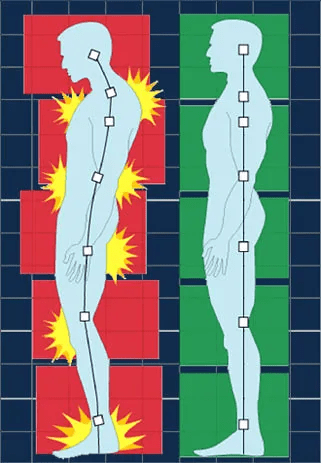
  4. Stop slumping. This is a major problem with older adults which can be exacerbated by conditions like osteoporosis and Parkinson’s Disease. Santas explains that it is more than just a question of squeezing one’s shoulders together; pay attention to posture and breathing as well. Sitting or standing up straight and focusing on long, slower breaths can improve back pain.
  5. Stay present. This is the most interesting and perhaps most difficult to achieve. Many of us have stress in our lives that leads to back pain. By taking on some mindfulness practices like meditation or yoga we can reduce stress levels. Focus not on what happened in the past or what might occur in the future; be in the moment. Even taking a few minutes each day to focus on our breathing (see #4) can have an impact.
  6. Be proactive. This is Santas’ best piece of advice. There are certain things that we do on regularly to help maintain our health: brushing teeth, bathing, eating properly, etc. If we experience back pain, we should view it is a health need that should be attended to on a regular (even daily) basis. Find ways to make the first 5 strategies a set part of your routine.

Those who suffer from back pain–or have suffered in the past–know just how difficult it can be. It is helpful to know that there are strategies we can employ to help prevent and alleviate the pain. Be proactive and make it a priority!

Health and Wellness Programs through Insurance Companies

About a month ago, I got a phone call from my health insurance company…so I answered it. I usually do not answer calls that look like spam, but this was my insurance company. I was skeptical and ready to ask to be put on the “no-call list,” when the woman on the other end asked if I was familiar with the company’s wellness plan. This had my attention. I am, after all, in the wellness field myself.

The last two health insurance companies under which I was covered had similar programs so I knew what it was about. Depending on the company, it can take different forms. In many cases, insured individuals are offered free health coaching services; that coaching can be over any area of health about which the person has concerns. It could be nutrition, aging, weight-management, etc. Some of the more elaborate programs provide perks like discounts for gym memberships, free written and video information, as well as referrals.

I met with my coach for the first time 10 days ago and the call lasted about 30 minutes. We identified some areas that are concerning to me and discussed ways that my coach could help. Since she was from my insurance company (and a registered nurse) I was able to share with her the medical issues that are at the top of my list–particularly important since the company has balked at covering some of the treatments that might benefit me. Nothing was a surprise (or would be) to her.

I am looking forward to this relationship with my health coach. It is always good to have someone checking in and keeping me on track; this is, after all, what I do for my own clients! We will see just how beneficial the process is, but I do not see how it can hurt.

My advice here is that if you are contacted by your health insurance company about coaching, take the few minutes to hear what it is about. If you do not get a call, it is worth going to the website or calling the customer service number. This service is almost always free–that is, included in your premiums.

Not only is this service in your best interest, but it also helps to bring down insurance costs for everyone by guiding us toward more health and wellness.

Use It or Lose It Update

This past week I was away for the 4th of July holiday; I got back on Wednesday evening and the next day was a fast day on the Jewish calendar so I did not hold my group fitness class. Not only had I missed a number of days of working out (although there was a lot of walking in Boston), my clients had as well. On Friday and this week already, my clients and I are seeing the difference…and it is not pretty.

In 2020 at the beginning of the Pandemic, I had blogged about this because so many people stopped going to the gym and had not yet figured out how to keep active. Back then, I had noted that within a month decreases in stamina and muscle strength were already detectable. More recent research shows that “deterioration” can begin closer to 14 days and even as early as 10. Those who did not work out for two weeks, according to one source, saw a decrease in muscle strength of 4%. This may not seem like a lot, but what if that two weeks drags on to three, or four, or more?

The key takeaway is that it is better to try to exercise even a little bit. Quickie workouts can be effective too. On vacation, a brisk walk or taking the stairs instead of an elevator can make a difference. Many think that after an absence of physical activity, it will not be too difficult to hop right back into it. Ask anyone who took a break due to surgery just how accurate that is–not at all!

Use it or lose it is a cute phrase, but research bears out that there is truth in this little rhyme. The next few weeks with my clients getting back into the swing of things will be challenging. Next time, there will be better planning for how we can all stay active even when I am not available.

More Adult Playgrounds

Two years ago, I blogged about an exciting trend in which municipalities are building public, outdoor fitness parks. They contain equipment designed to provide a workout for a wide range of abilities and age groups–except for kids.

The June 2023 issue of AARP Bulletin shared an update on this trend; AARP has been a key partner in providing grant money for these facilities. In 2019, AARP committed to build fitness parks in every state together with the organization FitLot. Currently there are 53 parks–with one in each state as will as the US Virgin Islands and Puerto Rico; in most communities classes and orientations are held at the parks.

This is very good news, but when I checked the nearest park to my home is an over 3-hour drive away. That means there is still a need for these kinds of facilities in much greater numbers. Contact FitLot and/or AARP to find out what it would take to get one in our community. In the meantime, there are more fitness parks that are not a part of this program. Check with your local municipality about availability where you live.

Keeping older adults active is key to remaining healthier and more independent. Fitness parks are another resource to help us all reach that goal.

Ashes, Ashes, We All Fall Down

It is not uncommon to see little (and not-so-little) children fall down. While they may cry for a little bit, most of the time there are only minor “boo-boos.” As we age, however, falling can become a much more serious matter. About 36 million people over the age of 65 report falling each year with 3 million resulting in trips to the Emergency Room. Falls can result in fractures, sprains, bruises, or worse; the healing process for older adults is longer and more arduous than in our younger years.

An article in June, 2023 issue of AARP Bulletin, “How the Pros Fall Safely,” discusses the best way to avoid injury when we are going down. The article is not on-line yet, but it is worth getting a copy of the print edition. There are different strategies depending on whether it is a sideways, forward, or backward fall.

In a sideways fall, bend the knees, tuck in the chin, and lift the head. Keep arms close to the chest and go limp; collapse onto the outside of your bottom thigh, then roll backwards onto the torso and upper back. This protects the head from injury, keeps hands and wrists from breaking, and results in landing on the most padded part of the body, safeguarding the hip.

In a backward fall, stumble backward (rather than just going straight back) while tucking in the chin into the chest and trying to get the body (especially the rear end) close to the ground. Bend the knees into a deep squat so you land on your rear end. Round the spine and roll onto the back and shoulders. Keep your arms at your sides. As in the sideways fall, fragile bones are protected while landing on a padded area of the body.

In a forward fall, go limp, bend the knees to one side, tuck the chin into the chest, keeping the head tilted away from the ground. Try to land on the outside of the thigh. When you hit the ground, keep the momentum going and role onto the side of your torso and upper back. Try to curl your body as much as possible. Again, bones are more protected this way.

Once you are on the ground, do not get up immediately, but rather assess the situation. It is natural to want to pop right up to avoid embarassment, but if there is a broken bone this can make things worse.

As a personal trainer for older adults, I spend a fair amount of time and energy with clients trying to prevent falls. If one should happen, though, these simple pointers can make a difference: “relax, go limp,” tuck the chin in and keep the head off the ground, land where the most padding is.

Be careful out there!

Gardening as a Workout?

In my previous home, I enjoyed having a vegetable garden–especially when my kids were younger and they could see and join in the process of growing some of our own food. My new home is surrounded by many mature trees and is situated in such a way that there is not a whole lot of direct sunlight necessary for this kind of gardening. Although vegetables may be out of the question, I have gotten into annual and perennial flowers that are hardy enough to flourish in our mostly shady area. Suddenly, I know the names of many kinds of plants and flowers; I enjoy choosing varieties that will bloom at different times or thoughout the warmer months, providing a pop of color.

One of the side benefits of gardening for me is that it is relaxing. I enjoy tending to the plants and watering when necessary. My current fascination is watching my new clematis climbing a trellis and blooming with bold purple flowers. I feel like I am in the Garden of Eden in my backyard–even though I live in a condo development and there are other homes on either side and behind us. Still, it is a kind of a haven for me.

A recent article from CNN, discusses a new trend: gardening as workout. Some personal trainers are even recommending gardening for their clients. I have several clients who garden (one in her 90s!) and it does provide a measure of physical activity. Here is a short list of tasks which demand some exertion: carrying watering cans, digging in the soil, trimming or pruning trees and bushes, lifting bags of potting soil, raking debris, and mowing the lawn–even if it is a power mower. The article goes into some detail about the benefits as well as warning about where to be cautious. Gardeners should warm up before starting work (just as you would for any other exercise), and newbies should start out slow and then move to more grandiose gardens. What concerns me most with my clients is that they use proper posture and form, like lifting from the legs and evenly distributing weight when carrying objects.

The article seems to suggest that gardening could replace “going to the gym,” but I think this is a little far-fetched. In some climates where vegetables and plants grow all year that might work, but in the northern climes this activity may only last 5-6 months. There needs to be a plan for the rest of the year.

My two take-aways are that gardening is a great way to engage in physical activity, and that the benefits go beyond just the physical. So if you will excuse me, I must go check on my begonias….

Embracing Aging

A recent article in The Cleveland Jewish News by columnist Regina Brett was so good that I felt I had to share it. I do not usually post an article and ask you to read it, but here we are!

The above quote kind of sums it up. The only thing that I would add is that accepting aging does not mean that we should not do our best to keep ourselves healthy and in shape. In fact, the opposite is true; taking control of our futures in our senior years a key element of embracing the aging process. I know it is a part of my plan and those of my clients as well.

Second Kidneyversary

It has been just over two years since I was privileged to donate a kidney for Papa Phil (back row, on the left), and he is doing great! I say “for” because the kidney that I donated actually went to somebody else since Phil and I were not a “match.” We were part of a three-way swap involving three donors and three recipients and we have become a kidney family.

It was great to catch up with everyone–and especially to see that one of the donors and her recipient husband are now the parents of a beautiful and sweet 3-month-old baby; we are all hoping to join together for the baptism celebration in a few weeks. It was also wonderful to have Dr. Wee (front row, center) of the Cleveland Clinic join us for dessert; he was responsible for the removal of the three kidneys from the donors while other doctors did the insertions in the recipients. It is incredible to hear about the advances that are being made in kidney transplantation–even in the two years since our operations.

Our gathering was not complete as the recipient of the kidney that I donated passed away back in September. It was a shock and I was filled with a bunch of emotions upon hearing the news. I was able to meet with the family a few days after his passing, and then to attend a memorial service in Kansas City about a month later. It provided closure for me and reconfirmed for me the importance of the decision that I made–even if the recipient lived for less than we would have hoped or expected. No matter what, he will always be my kidney brother and I am grateful for the special connection with his family.

I recently gave a talk about Jewish views on organ donation. A woman in the audience shared with me a letter from a woman who had received an organ from her grandson who had passed away tragically but was able to save and enhance many lives through his generosity. It was heartbreaking and heartwarming at the same time to read the letter. The gift of life is invaluable.

As always, I encourage folks to look into becoming a living donor. It is a difficult experience but well worth it. I also urge everyone to donate blood and platelets. This are less invasive (and less celebrated) but also save lives on a regular basis.

Two years on, I am grateful for the experience. I also feel blessed to have my kidney family. Here’s hoping we are able to share many happy occasions in good health!

Turning 60

A friend of mine who is VERY close in age to me recently turned 60. He posted an article from WebMD.com about what we can expect during the upcoming decade. What follows is the (mostly) depressing list:

  1. Most people in this decade report that they are actually happy! There is a bell curve and most sexagenarians are still near the top.
  2. Cancer diagnoses rise in this age category; make sure to get your scans!
  3. 40% of Americans in their 60s have some kind of hearing loss, and yet only 20% of people who could benefit from hearing aids actually wear them.
  4. Weight slowly increases. I have blogged about this before; our metabolism does not slow, but rather our eating habits get worse and we exercise and move less as we age.
  5. Skin changes. It thins out and gets visible lines; make sure to wear that sunscreen and moisturize!
  6. Heart disease; the mid-60s are prime time for heart failure, strokes, and heart attack. Maintain a healthy diet, stay smoke-free, and exercise to prevent these issues.
  7. Cognitive decline. Our ability to learn new things becomes more challenging, but long-term memories, knowledge, and wisdom generally stay with us. Keep active and play brain games.
  8. Vision issues. By age 65 about 1/3 of us have some kind of eye disease. Make sure to have regular check-ups since pain is not usually associated with eye problems.
  9. Bones and Joints do not work as they used to. Keeping active and doing resistance exercises can help bone strength. Talk to your PCP about supplements that might also help.
  10. Sleep quality decreases. Our bodies produce less melatonin naturally which regulates our sleep. Supplements can help, and physicians can also prescribe safe sleep aids that allow our bodies to rest and regenerate.
  11. Blood pressure can become and issue. Years of fat build-up in our blood vessels can raise blood pressure; the vessels can also harden. Monitor this regularly as hypertension can lead to other issues.
  12. Incontinence can become a nuisance. The bladder is not as elastic as it once was; this can lead to more frequent urination and the need to use the bathroom in the middle of the night (see #10). There are strategies to help this and a doctor is your best resource.
  13. Immunity decreases as the body’s production of germ-destroying T-Cells comes to an end. This makes it all the more important to get immunized; pneumonia and shingles can become new concerns for those in their 60s.
  14. Our oral health can be challenged. About 30% of those over 65 have dry mouth. The risk of oral cancer also increases 4-fold from when we are in our 40s. Make sure to have regular visits with your dentist.

This all seems pretty overwhelming, but the news is not all bad. Everything on the list can be controlled or prevented with good diet, exercise, rest, and regular health and dental check-ups. Our “golden years,” do not need to be a slow (or fast) descent into decrepitude. This is precisely why I do the work that I do. I help my clients–and myself–lived the best lives possible from a fitness perspective.

Wishing all my fellow sexagenarians good health and fitness!