
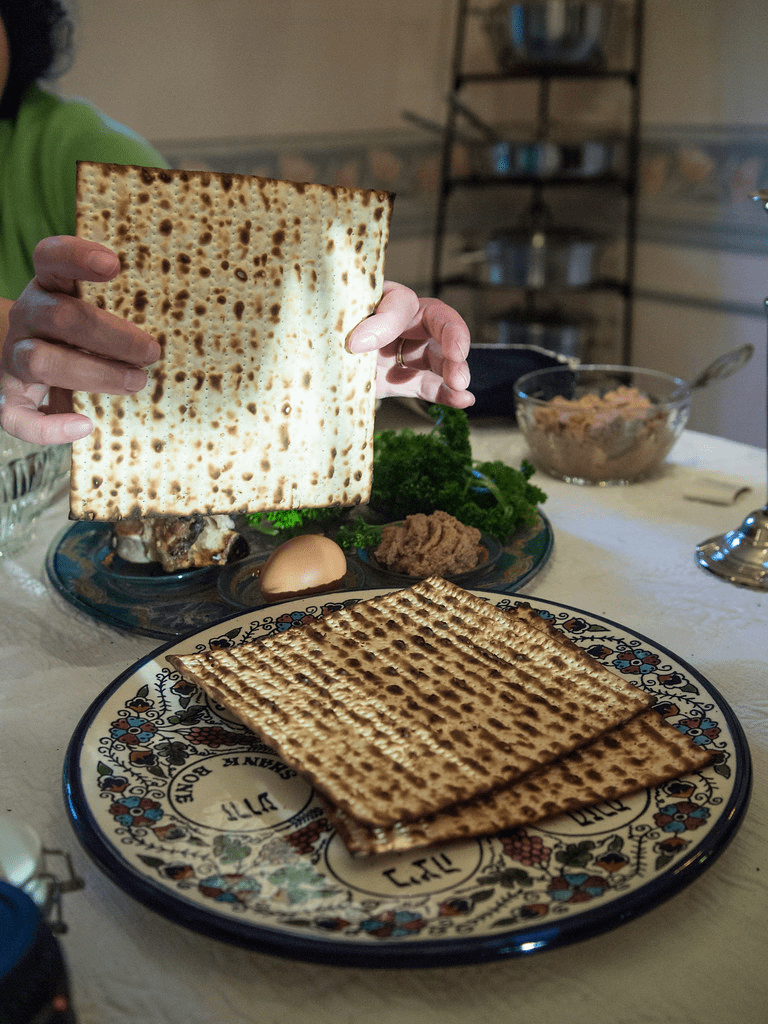
Once again, Passover and Easter coincide on the calendar, and many people are wondering how they can make through the holidays without completely blowing healthy eating habits out of the water. I have posted about how to best prepare for holiday eating in the past as well as how to respond when the efforts fall short, but I want to focus on one issue in particular: alcohol consumption.
From my limited knowledge of Easter observances, it does not seem like drinking is a big part of the celebration. Those taking communion may have a small sip of wine, but there is not Easter equivalent to spiked Eggnog or champagne enjoyed during the December holidays.
In Judaism, however, the drinking of wine (and other intoxicants) is baked into the observance of every Shabbat and holiday. It is the very way that these special days are sanctified. Passover brings it to a whole other level; participants in the Seder meal are “required” to drink four glasses of wine. Why? Wine is a symbol of joy and each glass represents the joy of the four different way God redeemed the Hebrews from Egyptian slavery (according to the Torah).
I am a firm believer in moderation, but four cups of wine hardly seems moderate! Of course, this is only two nights out of the year, but is there a way to keep it under control? This year, I am going to go for wine-tasting pours. If you have ever been to a winery and had a tasting, you know that the pours are relatively small–especially when compared with what you would get when you order a glass of wine with a meal. Since I have been working really hard at eating healthy and managing my weight, I do not want to drink so much that I begin to make poor decisions about what I am eating–how much Matzoh can you eat anyway? I find that I eat more moderately if I do not drink, so the Seder is always a challenge.
Aside from the way that alcohol can affect the choices we make, drink intoxicants can have other dietary effects. Alcohol is what is often referred to as empty calories; they are high in calories and do not bring a lot of nutritional value to the table. When we imbibe, our bodies also prioritize metabolizing the alcohol over burning fat which can stymie fat loss for over 24 hours. It really is a double-whammy in this regard. We may eat more than we had hoped and our bodies are less likely to burn it.
Wine is delicious, and I certainly enjoy it. I like a good cocktail now and again too. We should, however, be cognizant of how alcohol consumption figures into the bigger picture. Moderation is fine but on nights when we know there may be extra temptations, we should be aware of the pitfalls and plan for them.
Whatever you celebrate (or don’t), wishing everyone all the best for Passover and Easter!

 Kosher Fitness