
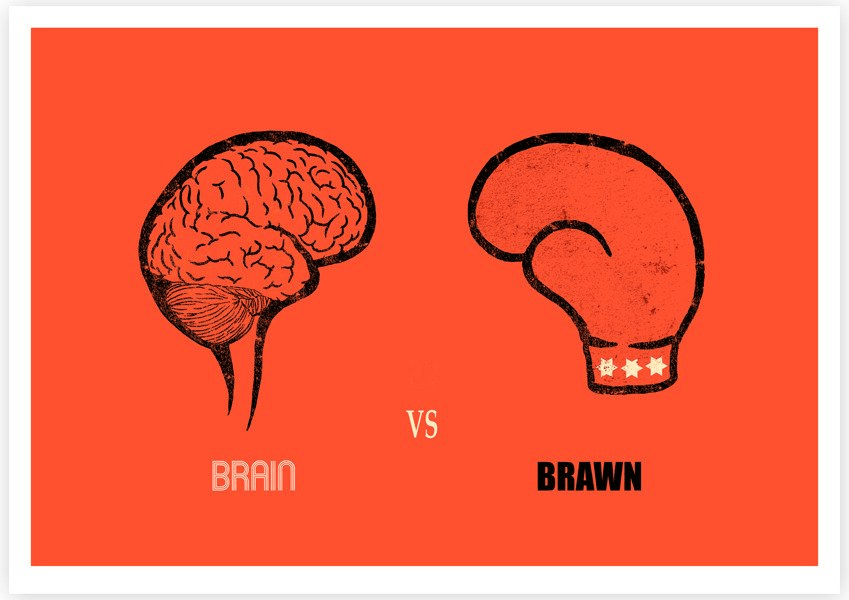
The question of which is more important in getting through life–brains or brawn–has been around for a long time. What brings the greatest success–physical strength or intellect? The truth is that at different times one or the other may be more critical to overcome an obstacle. The ability to pivot between them is key. A recent study shows that there is an important connection between them for older adults.
An article that came out in early December, 2024, in Medical News Today describes the results a study at Johns Hopkins Medical Institution that will be formally presented in the near future connecting sarcopenia and dementia. Sarcopenia is a condition in which a person loses strength and/or muscle mass; this generally occurs as a result of inactivity and is seen a great deal in older adults.
Researchers looked at the temporalis muscle in a statistically significant group of older adults; this is the muscle that is responsible for closing the jaw. A small temporalis is associated with smaller overall muscle mass in the body, and a larger temporalis points to larger overall muscle mass; this makes it an easy indicator to assess whether a person has sarcopenia or not. The temporalis of each study participant was evaluated and it was found that those with smaller ones (ie., with lower muscle mass) were much more likely to develop dementia at the end of the study (around six years later).
This news is significant because it points to another way that dementia can be identified early, and even how the odds of it developing can be reduced. The greater the muscle mass, the lower the risk. How can muscle mass be increased? Two main factors are at play. First is exercise; resistance exercises (using weights) help to increase muscle mass. There is a misconception that older adults necessarily lose muscle mass, but it can be prevented or slowed with continued exercise. The second is consuming enough protein; protein is what helps to maintain and build muscle. Protein can be found in meat, poultry, fish, and eggs, but there are many plant-based options such as beans, nuts, and lentils.
People ask me why individuals use a personal trainer in their senior years. The motivation, in general, is different than younger folks; it is less about appearance or sports performance and more about maintaining general health and independence. We have known for a while that cardio exercise (the kind that gets your heart pumping like running, cycling, dancing, etc.) is good for the brain; it gets the blood to circulate so that it brings rich nutrients to all the cells–including brain cells. Add to this now that resistance exercise is another brain healthy activity!
This study is just one more reason for us to ensure that we are getting both cardio and resistance exercise. It is not just good for our muscles, but for our brains too!

 Kosher Fitness