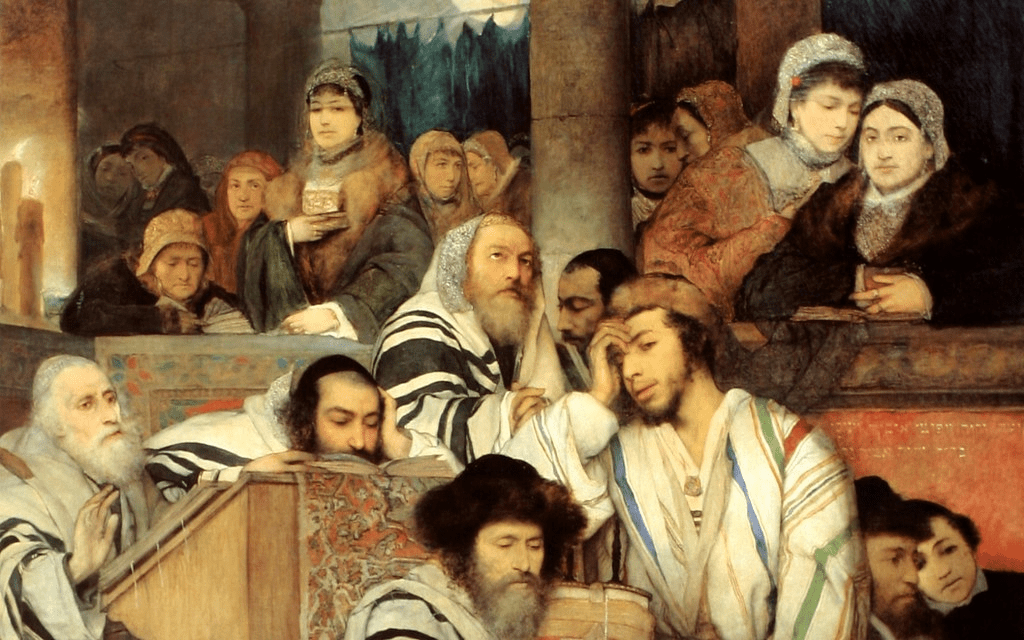
Rosh Hashanah, the Jewish New Year and one of the holiest days on the Hebrew calendar, begins this coming Friday at sunset. It marks the beginning of the Ten Days of Repentance, at period of prayer, introspection, atonement, and more prayer. A key aspect of the services–in fact, all Jewish services throughout the year–is that there are quite a few parts when the congregation stands. On Rosh Hashanah and Yom Kippur, when services are a lot longer (hours and hours), the sitting and standing is especially noticeable. There is even one service at the end of Yom Kippur, Ne’ilah, when worshippers do not sit throughout nearly it entirety.
In the past I have blogged about the benefits of prayer and repentance/forgiveness. Not only do they bring spiritual uplift, but they can also affect our physical being. This got me thinking about the physical demands of Jewish prayer (all that standing and sitting) how it might affect our health.
One of the best exercises for strengthening legs–which is important for activities like walking and climbing stairs–is the Squat. Many people mistake the Deep Knee Bend for the Squat, but they are very different; in general, I do not recommend Deep Knee Bends for older adults as it puts so much stress on the knees, which can damage them and lead to pain. During a Squat, the knees are bent, but not in a forward motion; the knees (ideally) stay directly above the ankles as the rear end goes back and down. If you have ever gone to sit in a chair and then, at the last moment, realized you do not have a soup spoon so you get up before your butt hits the chair…this is pretty much what a Squat is. Because older adults may have muscle loss and issues with balance, Squats are a scary proposition; for some, they are just an impossibility. A good substitute for Squats (wait for it….) is an exercise called a Sit and Stand; it is exactly what it sounds like and it works all the same muscles as a Squat: glutes and quads.
During the coming weeks, worshippers in synagogues will hear the Rabbi say “Please rise,” and “You may be seated.” It is good to know that not only will the sitting and standing add to the spiritual dimension of the holiday, but also to the physical. We are literally strengthened by the ups and downs.
Of course, if you are not the praying type (no judgment), remember that Sit and Stands are a great alternative to the Squat for those who are worried about balance and lower body strength.
Wishing all those who celebrate, a happy and healthy New Year!
 Kosher Fitness