New Year’s Resolution? Grab a Partner

It is that time of the year again. Hanukkah and Christmas are behind us, and in just a few days it will be 2024. I have blogged in the past about New Year’s Resolutions. You can read those posts here, here, here, and here. If you do not want to read all of those posts again, let me give you a summary.

  1. A resolution without a plan is just a resolution. If the goal is: ”I am going to get in shape,” what is the plan? A better resolution is: ”I am going to go to the gym 3 times each week.” The more specific you are the better the chances you will achieve your goal.
  2. Keep it simple. I know some friends who have a whole bunch of resolutions; it is like a grocery shopping list. In Hebrew there is an expression: Tafasta m’rubeh, lo tafasta, which translates as “if you try to grab too much, you grab nothing.” I like the Rule of 3. Choose three things and concentrate on them.
  3. Be realistic. Many of the resolutions that we make we have made before. Are they actually achievable? Can we identify the reasons why we failed? Socrates said, “Know Thyself;” be honest with yourself about what you can and will do and make the plan accordingly. It is better to have small successes that help to build a pattern.

What is the secret sauce to all of these? Grab a partner. Find someone who is willing to be with you on your fitness journey. It can be a spouse/partner, colleague from work, a friend at the gym, etc. Work together to plan goals and how to meet them. Once that is done, hold each other accountable.

Several years ago when I work at a gym, I was in charge of a fitness challenge. We divided into three teams. Not only did individuals win prizes, but the entire team could win if they met certain criteria. We had a very low drop-our rate for the challenge simply because team members looked out for each other, encouraged each other, and did not want to disappoint others in the group. The same dynamic can work one partner or even a small group. Have each other’s backs and watch the results.

The next week is a great opportunity to think about what went well and not-so-well in the past year. A New Year can be a new beginning. To make the most of it, have a plan (keep it simple and realistic), and grab a partner!

Wishing everyone the best in HEALTH and happiness in 2024!

Walking and Type II Diabetes

Readers of this blog know that I have written quite a bit about walking as exercise for older adults. The benefits are many and go beyond simple cardio activity; walking is associated with better health outcomes and disease prevention. Still, older adults wonder if walking is good enough; this was the topic of a post nearly 3 years ago. It is good, but the more intense it is, the greater impact it has on our health.

NBC News recently reported on a study that came out earlier this week in British Journal of Sports Medicine about walking and diabetes. In particular, it dealt with Type II Diabetes; according to the Mayo Clinic, Type II Diabetes is a condition that happens because of a problem in the way the body regulates and uses sugar as a fuel. That sugar also is called glucose. This long-term condition results in too much sugar circulating in the blood. The National Institutes of Health notes that a person is more likely to develop Type II Diabetes if they are not physically active and are overweight or have obesity. Extra weight sometimes causes insulin resistance and is common in people with Type II Diabetes.

The upshot of the new study is that it is now possible to quantify what kind of walking (slower vs faster) can prevent the development of Type II Diabetes. Walking at a pace of 2.5 mph can lower the risk by 15%. The faster the pace, the bigger impact it will have: 3-4 mph lowers the risk by 24% and over 4 mph reduces the risk by 39%. Obviously, the more vigorous the activity, the more it influences our overall health in addition to our chances of getting Type II Diabetes–but speed isn’t everything. Guidelines recommend that adults exercise for 150 minutes per week; so if a person walks vigorously, but only for 30 minutes a week, they are much less likely to make a dent in their chances of developing the disease.

As always, before beginning an exercise regimen, it is important to talk with your physician. Most doctors recommend walking because it requires no equipment (except for supportive shoes) and no instruction. Now there is another reason to like walking: we can help prevent Type II Diabetes.

Exercise before Surgery

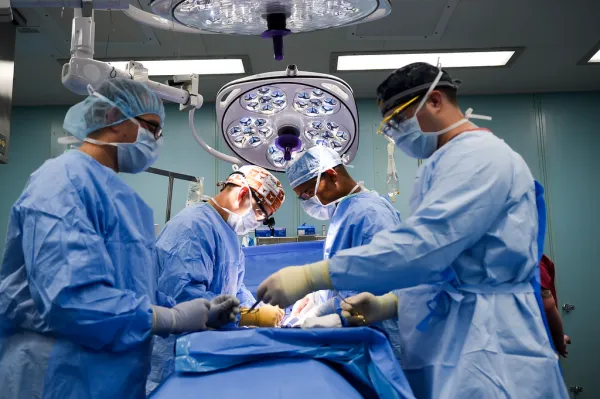
Early last week, one of the regular participants in an on-line class that I teach had hip replacement surgery. I teach the class 3 times/week and she is almost always there unless she is traveling. Even in the weeks leading up to the surgery, she has been participating fully with a few modifications.

I checked in with her a few days after surgery to see how she was doing. She told me that the surgery went well–no surprises–and that the recovery had thus far been better than expected. She further explained to me that she had no doubt that all the workouts had prepared her body for a speedier and easier post-surgical experience. I have a friend who had a benign brain tumor removed over 20 years ago; he had a couple of months before the surgery date and he did his best to get in as much exercise as possible. He wanted to give himself the best chance for a successful recovery; there were unrelated complications after surgery and his strength helped keep him alive. He made a full recovery and continues to work out regularly.

These two anecdotal stories illustrate something that medical research has backed up. Study after study shows that the better shape you are in before surgery, the more likely you are to have an easier recovery with positive results. For those who exercise on a regular basis, there is no need to pile on more workouts; those who engage in physical activity regularly are likely to have greater strength and improved cardiovascular capacity to begin with. There is an indication, however, that those approaching surgery may want to shift to more HIIT workouts. HIIT stands for High Intensity Interval Training; it is exactly what it sounds like: periods of intense exercise interspersed with periods of moderate or light exercise. For more info on HIIT workouts you can look at my post from July 2019 and a follow-up from August 2021.

Followers of my blog know that I have undergone a few surgeries over the past years. I have been fortunate to recover to 100% with each one. It is not because of luck alone, but rather because I have prepared my body to be strong and resilient. It goes without saying that if you have been scheduled for surgery, you should talk with your doctor to see what they recommend or discourage before going under the knife (or laser). Hopefully a regular regime of exercise, proper rest, and good nutrition will–like an apple a day–keep the doctor away…but when surgery is called for, the better we go into it, the better we are likely to come out of it.

You Are Free to Roam About the Cabin

With November right around the corner, we enter into a heavy travel season: Thanksgiving, Hanukkah, Christmas and New Year’s. Travel will be brisk this year as the pandemic has been (mostly) tamed and folks are feeling more confident about taking longer trips to see loved ones.

Many of my clients do quite a bit of air travel–some of it long-haul–and they have asked me about the best exercises to do while on a long flight to prevent problems. The number one issue of concern is DVT (deep vein thrombosis); this is when a blood clot forms deep inside the body (very often in the legs) and it is more likely to occur when we sit for long periods of time. The clot can move throughout the body and cause serious health issues.

In-flight exercises–in addition to plenty of water–can help prevent DVT. What are the recommendations–especially given how tight space is on most airliners?

  1. If you are able to get up and walk around (after the “fasten seat belt” sign has been turned off!) that is a great idea. This is more difficult in narrow-body planes, but you can carefully stand in place and look to see if the aisles are crowded or if in-flight service is in progresss. If the coast is clear, take a stroll. On wide-body jets with two aisle, it may be possible to do a big lap around the plane. Do this as often as feasible.
  2. Exercises that can be done while seated include: ankle rotations (lift your foot of the floor and rotate your ankle); “quick feet” (running in place tapping either heels or toes quickly on the floor–alternating sides); calf raises (lifting heels up and then lowering them); leg extensions (straighten alternating legs so the foot comes off the floor); knee-ins (bring both knees or one at a time up to the chest and hold with hands); glute squeezes (clench those butt cheeks together); forward bends (lean forward as far as you can bringing your head down). Upper body exercises include shoulder rolls, elbow flexes (like a bicep curl without weights), and punches (don’t hit the back of the seat in front of you).
  3. There are also many stretches that can be done while seated–both dynamic (active) and isometric (holding a stretch still).

A simple internet search will turn up lots of exercises to keep moving during the flight. Just make sure that whatever you do is in compliance with crew member instructions–and be aware of those seated around you who might be affected (ie, poked in the eye) if you are not careful.

Finally, these exercises work on long car, bus, and train rides as well. If you are the driver, make sure to stop with regularity in order to walk around and do some of these exercises as well. It goes without saying (I hope) that you should find a safe place to do this like a parking lot in a gas or EV charging station, or a rest area. The side of the road is more dangerous than a DVT.

I hope these tips help. Bon voyage!

Please Rise…. You May Be Seated.

Rosh Hashanah, the Jewish New Year and one of the holiest days on the Hebrew calendar, begins this coming Friday at sunset. It marks the beginning of the Ten Days of Repentance, at period of prayer, introspection, atonement, and more prayer. A key aspect of the services–in fact, all Jewish services throughout the year–is that there are quite a few parts when the congregation stands. On Rosh Hashanah and Yom Kippur, when services are a lot longer (hours and hours), the sitting and standing is especially noticeable. There is even one service at the end of Yom Kippur, Ne’ilah, when worshippers do not sit throughout nearly it entirety.

In the past I have blogged about the benefits of prayer and repentance/forgiveness. Not only do they bring spiritual uplift, but they can also affect our physical being. This got me thinking about the physical demands of Jewish prayer (all that standing and sitting) how it might affect our health.

One of the best exercises for strengthening legs–which is important for activities like walking and climbing stairs–is the Squat. Many people mistake the Deep Knee Bend for the Squat, but they are very different; in general, I do not recommend Deep Knee Bends for older adults as it puts so much stress on the knees, which can damage them and lead to pain. During a Squat, the knees are bent, but not in a forward motion; the knees (ideally) stay directly above the ankles as the rear end goes back and down. If you have ever gone to sit in a chair and then, at the last moment, realized you do not have a soup spoon so you get up before your butt hits the chair…this is pretty much what a Squat is. Because older adults may have muscle loss and issues with balance, Squats are a scary proposition; for some, they are just an impossibility. A good substitute for Squats (wait for it….) is an exercise called a Sit and Stand; it is exactly what it sounds like and it works all the same muscles as a Squat: glutes and quads.

During the coming weeks, worshippers in synagogues will hear the Rabbi say “Please rise,” and “You may be seated.” It is good to know that not only will the sitting and standing add to the spiritual dimension of the holiday, but also to the physical. We are literally strengthened by the ups and downs.

Of course, if you are not the praying type (no judgment), remember that Sit and Stands are a great alternative to the Squat for those who are worried about balance and lower body strength.

Wishing all those who celebrate, a happy and healthy New Year!

Daily Approaches to Back Pain

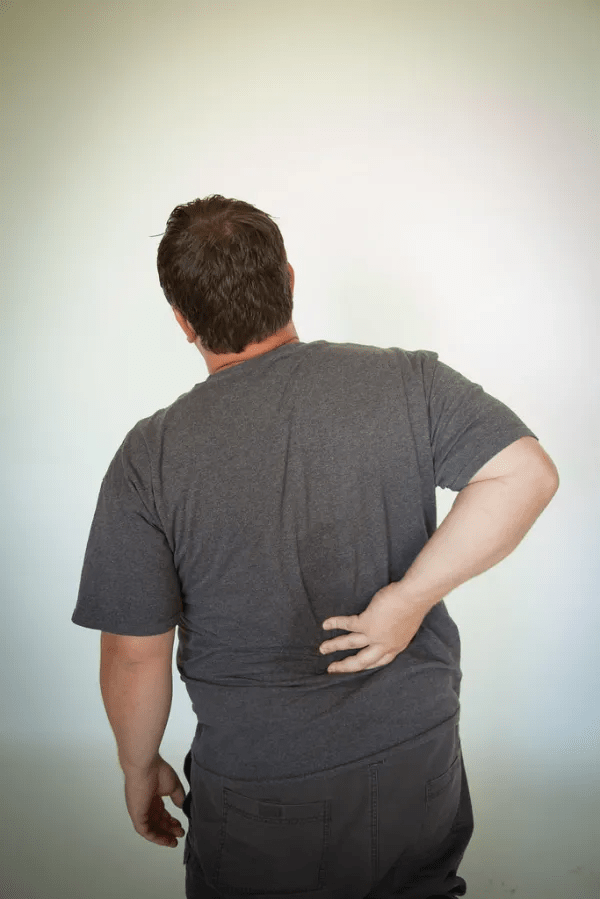
When I was much younger, I remember watching TV commercials for Doan’s Pills; they were supposed to bring relief for back pain. As a kid, I wondered just what that was all about; as I age, I understand just how much of an impact back pain can have on our ability to carry out our daily activities and the quality of our lives.

Dana Santas, a certified strength and conditioning coach and mind-body coach, explains in a recent article that rather than thinking about drastice measures, there are simpler actions we can take every day to ward off back pain.

  1. Move more. We used to think that when we had back pain we should just avoid movement until it gets better. Research shows the opposite is what is called for. Regular exercise is great, but even parking further from your destination and walking a little further, taking the stairs instead of an elevator, or a 5-minute burst of activity can make a positive difference. An increased heart rate helps circulate blood to the muscles to avoid stiffness.
  2. Switch sides. In all my work with clients, there are always imbalances because we are either right-handed or left-handed. Weakness on one side can cause back pain as we favor one side over the other. Santas suggests switching hands when carrying a bag or laptop, opening doors with the other hand, etc. Actions like this can help even out the differences.
  3. Correct imbalances. This is related to #2. When we walk, run, swim, or cycle our movements should be symmetrical. If you suffer from back pain, one of the reasons could be that our movements are not symmetrical. It may be worthwhile to have a health professional evaluate this and provide corrective measures.
  4. Stop slumping. This is a major problem with older adults which can be exacerbated by conditions like osteoporosis and Parkinson’s Disease. Santas explains that it is more than just a question of squeezing one’s shoulders together; pay attention to posture and breathing as well. Sitting or standing up straight and focusing on long, slower breaths can improve back pain.
  5. Stay present. This is the most interesting and perhaps most difficult to achieve. Many of us have stress in our lives that leads to back pain. By taking on some mindfulness practices like meditation or yoga we can reduce stress levels. Focus not on what happened in the past or what might occur in the future; be in the moment. Even taking a few minutes each day to focus on our breathing (see #4) can have an impact.
  6. Be proactive. This is Santas’ best piece of advice. There are certain things that we do on regularly to help maintain our health: brushing teeth, bathing, eating properly, etc. If we experience back pain, we should view it is a health need that should be attended to on a regular (even daily) basis. Find ways to make the first 5 strategies a set part of your routine.

Those who suffer from back pain–or have suffered in the past–know just how difficult it can be. It is helpful to know that there are strategies we can employ to help prevent and alleviate the pain. Be proactive and make it a priority!

More Adult Playgrounds

Two years ago, I blogged about an exciting trend in which municipalities are building public, outdoor fitness parks. They contain equipment designed to provide a workout for a wide range of abilities and age groups–except for kids.

The June 2023 issue of AARP Bulletin shared an update on this trend; AARP has been a key partner in providing grant money for these facilities. In 2019, AARP committed to build fitness parks in every state together with the organization FitLot. Currently there are 53 parks–with one in each state as will as the US Virgin Islands and Puerto Rico; in most communities classes and orientations are held at the parks.

This is very good news, but when I checked the nearest park to my home is an over 3-hour drive away. That means there is still a need for these kinds of facilities in much greater numbers. Contact FitLot and/or AARP to find out what it would take to get one in our community. In the meantime, there are more fitness parks that are not a part of this program. Check with your local municipality about availability where you live.

Keeping older adults active is key to remaining healthier and more independent. Fitness parks are another resource to help us all reach that goal.

Gardening as a Workout?

In my previous home, I enjoyed having a vegetable garden–especially when my kids were younger and they could see and join in the process of growing some of our own food. My new home is surrounded by many mature trees and is situated in such a way that there is not a whole lot of direct sunlight necessary for this kind of gardening. Although vegetables may be out of the question, I have gotten into annual and perennial flowers that are hardy enough to flourish in our mostly shady area. Suddenly, I know the names of many kinds of plants and flowers; I enjoy choosing varieties that will bloom at different times or thoughout the warmer months, providing a pop of color.

One of the side benefits of gardening for me is that it is relaxing. I enjoy tending to the plants and watering when necessary. My current fascination is watching my new clematis climbing a trellis and blooming with bold purple flowers. I feel like I am in the Garden of Eden in my backyard–even though I live in a condo development and there are other homes on either side and behind us. Still, it is a kind of a haven for me.

A recent article from CNN, discusses a new trend: gardening as workout. Some personal trainers are even recommending gardening for their clients. I have several clients who garden (one in her 90s!) and it does provide a measure of physical activity. Here is a short list of tasks which demand some exertion: carrying watering cans, digging in the soil, trimming or pruning trees and bushes, lifting bags of potting soil, raking debris, and mowing the lawn–even if it is a power mower. The article goes into some detail about the benefits as well as warning about where to be cautious. Gardeners should warm up before starting work (just as you would for any other exercise), and newbies should start out slow and then move to more grandiose gardens. What concerns me most with my clients is that they use proper posture and form, like lifting from the legs and evenly distributing weight when carrying objects.

The article seems to suggest that gardening could replace “going to the gym,” but I think this is a little far-fetched. In some climates where vegetables and plants grow all year that might work, but in the northern climes this activity may only last 5-6 months. There needs to be a plan for the rest of the year.

My two take-aways are that gardening is a great way to engage in physical activity, and that the benefits go beyond just the physical. So if you will excuse me, I must go check on my begonias….

Embracing Aging

A recent article in The Cleveland Jewish News by columnist Regina Brett was so good that I felt I had to share it. I do not usually post an article and ask you to read it, but here we are!

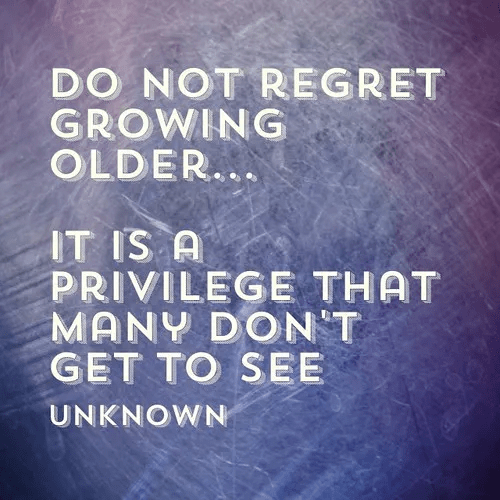
The above quote kind of sums it up. The only thing that I would add is that accepting aging does not mean that we should not do our best to keep ourselves healthy and in shape. In fact, the opposite is true; taking control of our futures in our senior years a key element of embracing the aging process. I know it is a part of my plan and those of my clients as well.

Free Weights or Machines?

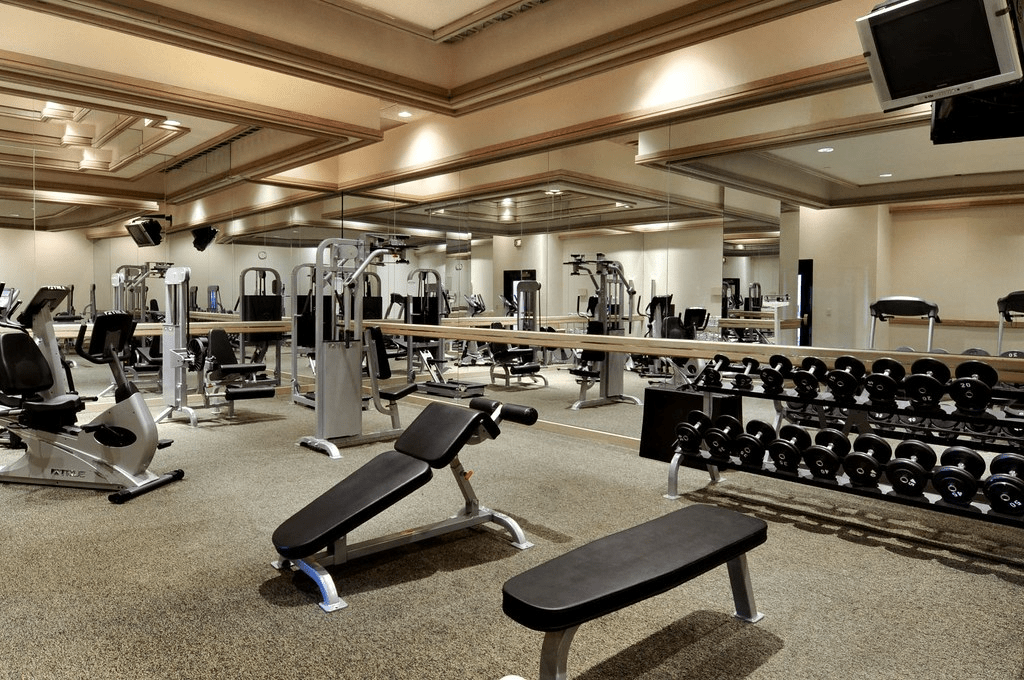
A lot has been written over the years about which is better overall: using free weights (dumbbells, barbells, kettle-bells, etc.) or weight machines? As we age, there are special considerations that can help us best answer the question. A recent article in IDEA Fitness Journal gives a good summary of the issues as well as recommendations.

Free weights have some advantages. If you do not belong to a gym, it is much easier and cost-effective to have dumbbells at home; this is the case with most of my clients. In general, exercises with free weights more closely resemble the kinds of activities we do on a regular basis like picking up bags of groceries, putting boxes on a shelf, or carrying suitcases. Because the machine does not do all the thinking for you, free weights require better form and more coordination. On the one hand that is a good thing because it replicates real life situations, but it can also result in injuries due to poor form or too much weight.

Weight machines also have advantages. Most have instructions right on the side telling you exactly how to do the exercise and what body parts will be affected. As long as you follow the instructions, it is difficult to get hurt on a machine. If you belong to a gym, there will be lots of machines and many opportunities to add more weight to the exercise to increase the degree of difficulty; with free weights, you have to go buy more equipment.

From a fitness standpoint, recent research indicates that both kinds of exercises are effective in different ways. For those looking to increase muscular strength, machines seem to be a bit more beneficial. For those looking to improve functional performance, free weights are better. The truth is that most older adults are looking to do both! As in many things in life, a combination of both is recommended for those who have access to free weights and machines and know how to use both safely. The guidance of a fitness professional can help to ensure that this requirement is met.

Most imporantly, make sure that resistance training is a part of your fitness regimen. Cardio is amazing, but we can raise our fitness and functional levels most when we include weights as part of the program.