Did you know that it September is National Breakfast Month? We have been told for a long time that breakfast is the most important meal of the day; the reality is that every meal is important.
For the last few years, I have eaten the same breakfast almost every day: a half-cup (uncooked) of 1-Minute Oats with a tablespoon of brown sugar and a bit of cinammon. It takes little time to prepare and the calorie count is relatively low, and it has many nutritional benefits for older adults: it is high in fiber, iron, and magnesium, and is a good regulator of gut health. I also find it quite filling when it is all prepared.
Not everyone is a fan of oatmeal, though, so what are some other good options for breakfast? [Hint: it is not sugary cereals!] According to the National Institute on Aging (NIA), every meal should contain 25-30 grams of protein; good sources are eggs, nuts, greek yogurt, cottage cheese, and peanut butter. Breakfast should be lower in carbohydrates as this is thought to prevent or delay cognitive decline. Whole grains are also important and are easy to find in breads, oatmeal, and some cereals–just make sure they are not also loaded with lots of added sugar. Another part of a healthy diet for older adults is nutrient rich vegetables and fruits–berries are especially recommended.
The NIA suggests the following options as healthy breakfasts as we age: smoothie made with spinach, fruit, and yogurt; vegetable omelet with whole-grain toast; avocado breakfast bruschetta; banana split oatmeal; and eggs over kale and sweet potato grits.
Of course, there are many other options that can help us get our day off to a great start. Most importantly, put some thought into breakfast so that it is healthy and filling…and whatever you do, avoid skipping this meal altogether! Good morning and good breakfast!
Time Magazine recently featured an article that was brought to my attention by one of my alert clients. Angela Haupt discusses the benefits of walking backwards. You have probably seen some folks doing this on a treadmill and wondered whether it is effective or just plain silly. It might even remind you of an old Monty Python sketch. Does it really help? According to the article there are at least five distinct benefits.
People of any age and fitness level can try it. It is especially effective for older adults because it helps to improve balance and coordination, which can in turn prevent falls.
It works different muscles than the ones we typically use or works the ones we do use in a different way. Studies have shown that walking backwards can increase muscle strength.
It has been shown to help those with injuries or pain. Walking backwards has long been a part of PT and OT strategies. Research has shown that it can reduce pain for those with arthritis in the knees, as well as alleviating the symptoms of plantar fasciitis and lower back pain.
Backward walking can increase flexibility. We know that sitting all day (being sedentary) is an epidemic and can cause muscles to tighten up. Walking backward can stretch muscles and lead to greater flexibility and reduce the risk of injuries.
It can improve gait. Physical therapists use this technique to help patients improve their gait patterns. It can assist with slight limps or range-of-motion issues. As mentioned above, it can help with balance control by forcing us to really focus on the way our muscles and joints are moving, as well as being aware of what is around us.
It is imperative to ensure safety when trying backward walking. Start slowly in an area that is free of hazards. Begin with just a few minutes a day and work toward more time and greater speed.
Typically, going backward is not seen as a positive. In this case, however, it can help us–especially older adults–to improve our health and fitness.
Many of us are familiar with the Beatles’ song “Help!” Not only is it a great tune, but the lyrics connect with so many of us. We have all been “down” and felt like we needed someone (not just anyone) to be ’round for us and help us get our feet back on the ground.
Since that song was released, however, there has been a societal shift in attitude. We are supposed to be strong and handle things on our own. Reaching out for assistance can be seen as a sign of weakness. Only more recently has the pendulum begun to swing back; we are once again being taught (in most, but not all, settings) that it is OK to need help. We can be vulnerable. It is a normal part of being a human.
In my interactions with many older adults, the question of when to seek help is ever-present. It is not just a matter of physical health, but mental well-being too. Older adults wonder when it is appropriate to seek medical attention, housekeeping services, psychological care, grief counseling, etc. How do you know when you need help?
For everyone this is highly personal. Some people are much more resilient…or stubborn. Here are some guidelines:
Most importantly, if your ability to function in a regular way is impaired, it is time to seek help. Everyone has aches and pains. We also experience emotional ups and downs. If, though, they prevent us from carrying out the activities of daily living (getting dressed, eating, working, exercisings, etc.), it is time to reach out for help.
If your mood has changed significantly and it lasts for two weeks, this is also a sign that something is going on. We all have days when we are bummed out. If we are depressed, down, or inconsolable for an extended period, it is time to seek assistance.
If your sleep patterns change significantly–sleeping too much or unable to sleep–this can be a sign of a problem. On a related note, inability to concentrate or enjoy the things you usually do (hobbies, being with friends, work) is noteworthy and should be discussed with a professional.
If you are engaging in behaviors that are risky, this is also a time to get assistance. If your behavior is affecting your work, studies, friendships, or if it could put you in legal trouble or physical danger, this an indication that you need help.
So where should you reach out for help? Friends and family that you trust are always a good first line of action. The people who love and care about you can help you see things more clearly and recommend strategies for improving the situation. Those strategies may include talking to a clergy-person, a primary care physician, or a therapist.
At one time or another, we all need some kind of help. It is nothing to be ashamed of. It does not show weakness. Rather, it shows that we are human. I hope this helps….
Working with older adults means that every once in a while a client of mine will become either too ill or frail to continue to work out with me. I have even had a few clients who have passed away; I blogged about this the first time it happened. The truth is that none of us will live forever; sometimes, however, we are fortunate to be able to “orchestrate” what the end will look like.
As a relatively young rabbi in Toledo, OH, I was invited by the local hospice to learn about what hospice is. In Judaism, it is taught that one of the greatest kindnesses that we can bestow upon a loved one is to choose for them a “beautiful death” (in Hebrew mitah yafah). What exactly does this mean? It means to provide someone with a death experience that is as dignified, peaceful, and pain-free as possible. At the workshop provided by the hospice in Toledo, I found that the hospice movement (intentionally or unintentionally) helps to fulfill the idea of a beautiful death.
What exactly is hospice care? Hospice care is a program that provides care, comfort, and quality of life for people who are near the end of their life and have stopped treatement to cure or control their disease. Hospice care focuses on treating the patient’s “total pain” which includes physical, emotional, social, and spiritual concerns. It also supports the patient’s family as they cope with the end of life and during bereavement. Years after that workshop, both of my parents were able to receive hospice care–my mother for Mesothelioma and my father for Parkinson’s Disease. In both cases, nine-and-a-half years apart, there were no further treatments that could make a difference; we focused instead on creating a quality of life rather than a quantity of life. What good, we reasoned, was it to stay alive longer if only in misery? For my mother, her passing was a meaningful experience over seven days with loved ones surrounding her. My father’s passing was different; none of his children was there, but he died before the situation got to a point that could have been much worse had it dragged on. None of us in the family–including my parents–really felt like we were giving up. We were making the best out of a situation that was clearly no longer in our control.
If you are looking for more information about hospice, a simple on-line search can tell you about organizations in your area. If you are part of a religious community, they may have their own hospice as well. Librarians can also be a great source of guidance.
The work that I do as a personal trainer for older adults is aimed at helping to improve the quality of life for my clients. As I said above, none of us lives forever. When the end is near (and sometimes not so near) there are still ways to help improve our quality of life. Hospice is not “giving up,” but rather continuing on the same path of living the best life possible for as long as we have. It is a way of choosing a “beautiful death.”
Over ten years ago, I was diagnosed with Tennis Elbow (lateral epicondylitis) even though I have never played a game of tennis in my life; it turns out that there are other causes. A few months ago, I began developing symptoms that reminded me of my Tennis Elbow; I saw a doctor in my primary care physician’s practice who suggest icing, wearing a brace, and treating the pain with acetamenophin (Tylenol). It did not improve much and then I took a tumble while traveling earlier this month; I landed on my knees, as well as (you guessed it) my elbow. The bruises were quite impressive.
After consultation with my PCP, I was able to get an appointment with a Physical Therapist (PT) for an evaluation. Imagine my surprise when she informed that she could only deal with my knee, since my elbow was considered to be in the realm of Occupational Therapy (OT)–at least that is how it works at the Cleveland Clinic. Instead of being able to have it all cared for at one time with one therapist, I now have two therapists and twice the number of appointments!
What is the difference between physcial therapy and occupational therapy? There is a lot of overlap, but some important distinctions as well.
Physical therapy focuses on improving a patient’s physical function, mobility, and strength. PTs treat patients of all ages with many different diagnoses, including neurological, cardiovascular, respiratory, and musculoskeletal conditions. They treat the whole body from head to toe (unless, apparently, it is your elbow!), and may focus on restoring range of motion.
Occupational therapy focuses on improving a patient’s ability to perform meaningful activities as independently as possible. OTs treat patients who have experienced birth injuries or defects, sensory processing disorders, traumatic brain or spinal cord injuries, autism, and other developmental disorders, or mental or behavioral health problems. OTs may work on the upper extremity, or the whole body, to help patients develop, recover, improve, and maintain the skills needed for day-to-day living. This could include helping a child with autism participate in classroom activities, a young adult with down syndrome develop job-related skills, or an older adult who had a stroke learn self-care tasks. OTs may adapt, modify, or change daily activities by altering the activity, the environment, or the patient’s skills. For example, they may teach stretches or exercises.
In my case, PT is dealing with my knee to improve my function, mobility, and strength. My OT is dealing with my elbow because the problems I am having interfere with my ability to carry out certain task with my arm and hand that I need to do on a daily basis.
In the final analyis, I wish I could get one therapist who could do both of those things…but that is not the way it played out here. At the very least, it has helped me to understand the different roles that each kind of therapy plays. I am confident that my therapist will both work in concert to get me back to 100%. After all, I have to learn to play tennis before it is too late!
As we age, we may find that more of our mental energies and even our conversations center on whether or not we have had a bowel movement, or too many BMs, or not enough, or even the consistency. This is not surprising given that our digestive habits change as we get older.
One of the key factors is how much dietary fiber we consume on a regular basis. Fiber is more important in our diets because we may have a slower metabolism, have less muscle mass, and get less physical activity than we used to when we were younger. For men over 50 the daily amount should be 28 grams, and for women it should be 22.4. Unfortunately, most Americans barely consume half of what they should. Getting the right amount of fiber is important to keep our digestive system in good operating order. Fiber can help improve your digestion and lessen the impact of other health concerns like constipation, high cholesterol levels, and high blood sugar levels.
There are two kinds of dietary fibers: soluble and insoluble. Soluble fiber absorbs water and helps to keep “things” moving along down there; it can be found in fruits, vegetables, legumes, whole grains and oats. Insoluble fiber passes through our system with nothing happening to them; they also help keep “things” moving through the system. Insoluble dietary fiber can be found in fruit and vegetable peels, seeds, cornmeal, brown rice, as well as some vegetables and cereals.
How can we introduce more fiber into our diets? Start slowly and gradually add more; a sudden increase can actually do harm. Add whole grains; add oat bran and wheat germ to foods, check food labels for products that have higher fiber content, use whole wheat flower, and switch to brown rice. Additionally, increase legumes as well as consumption of fruits and vegetables.
Not only will these changes help to keep us regular, but adding more dietary fiber has the potential to improve our overall health. And that, my readers, is the poop on dietary fiber!
It is getting to be that time of the year; the travel season in the northern hemisphere is almost in full swing. With warmer weather comes the desire to get out and see the world–nearby and further away.
Last year when I turned 60, my aunt (who is in her 80s) told me that the 60s are the years to travel. As she explained it, the kids have already launched, (and therefore) more money is usually available, and serious health issues hopefully have not started to crop up yet. My wife (who is 9 years younger than I) and I have decided to make the most of this decade, understanding that nothing is ever guaranteed. My mom’s motto could have been “Life is uncertain; eat dessert first.” In other words, take opportunities when they present themselves because they may not reappear. Unfortunately, too many people save up for their “golden years” to travel or engage in new adventures or hobbies, but by the time they retire they do not have the capability to really enjoy these things.
The National Institutes of Health and many other organizations have studied the benefits of travel for seniors. Among the findings were “that travel has a beneficial long-term health effect. Travel within the last two years reduced the risk of death by 36.6%…. The more trips taken, the lower the risk of death. An increase in the number of trips was associated with a 13.6% reduction in the risk of death.” Sounds like more fun than exercising and eating healthy, right?
Some of the other benefits that travel can provide for seniors according to Outlook Retirement are:
Rejuvenation and Active Lifestyle. Traveling often involves walking, sightseeing, and trying new things. These help to give us a “breath of fresh air” and encourage physical activity.
Social Connections and Personal Growth. Traveling allows us to meet new people and interact in different ways with others we may know already. This is especially true for group travel. Additionally, being exposed to new places, cultures, foods, etc., helps to broaden our perspective and challenges our ways of thinking about the world.
Cognitive and Memory Boost. Being in a new environment, having to navigate unfamiliar territory, and even learning a few words in a foreign language all have healthy benefits for the brain. One of the ways that we build and strengthen neural pathways is by problem-solving. The stimulation of the brain in these ways can also help with memory.
Stress Relief and Emotional Well-being. There is an expression in Hebrew, “change your place, change your luck.” What this really means is that being in a different place can get us out of our ruts. Getting out of our everyday patterns can reduce stress and help us understand ourselves and others more clearly. Depending on where we travel, we can also see stunning vistas, great human accomplishments, or even just beautiful sunsets that can help us to appreciate the world around us.
Lifelong Learning and Cultural Enrichment. Being in new places can expose us to new ideas. We can also explore museums, galleries, neighborhoods, historical monuments, etc., that add to our knowledge of the world and history. Learning about other cultures can also deepen our understanding of diversity and ourselves.
Not everyone has the means to travel abroad, but much of this applies to places that can be no more than a few hours drive or train ride away from home. I have lived in Cleveland for less than six years and I am still discovering new neighborhoods, museums, and parks. Getting out and seeing the world is fun. We also know that it has serious benefits–health and otherwise–for older adults. Let’s hit the road!
A few weeks ago I had the opportunity to sponsor a booth at the West Side Boomer Bash in Cleveland. It was an event for local older adults to interact with businesses and organizations that work with their demographic. We had some free giveaways and information, but I was looking for ways to engage in conversation with those passing by our table. I remembered the advice I learned at the 2024 IDEA & ACSM Health & Fitness Summit in Chicago; I blogged afterwards about a new way to look at the work that I do–focusing more on the term “movement” rather than “fitness.” I began by asking, “What are you doing to keep moving?” The answers were varied from “I don’t” to “I walk my dog” to “I go to the local gym several times a week.” It got people talking and gave me the chance to talk about the work that we do at At Home Senior Fitness.
A recent article on CNN.com discussed the idea of “movement” a little more in depth. The article focused on the advice of Melissa Boyd, a personal trainer and expert in the field of health and fitness. She explained that there are three kinds of movement, and that all are necessary for overall health and fitness.
The first is the kind of movement that is required by your body every day. This includes walking (which Boyd says is not really enough), bending, and stretching. Our bodies need these on a regular basis simply to allow us to do the activities of daily living.
Next is athletic movement; this is intentional exercise or movement with the aim of fitness or training for a sport. This should be done several times each week.
Last is social movement; this includes dancing and playing a sport. This is movement that allows us to interact with others and to have fun.
Unfortunately, many older adults focus only on the that first kind of movement–and for some that is a critical issue. Ideally, throughout our lives we should clear room in our schedule for athletic and social movement as well. Our bodies need all kinds of movement if we hope to stay healthy and fit as we age.
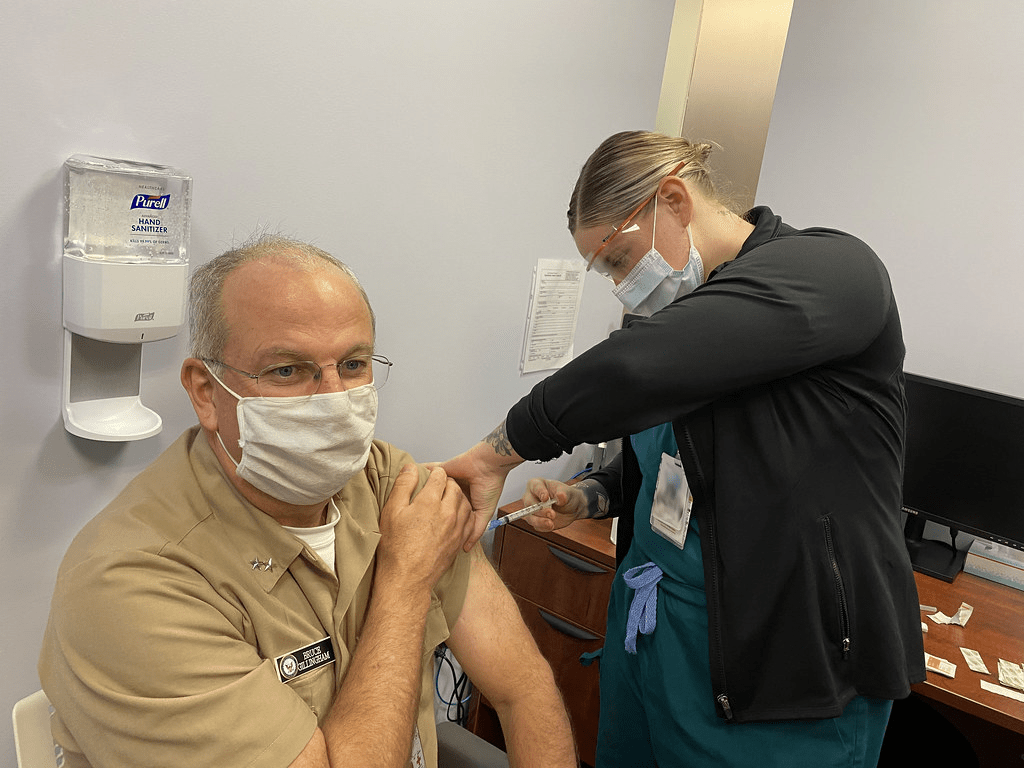
The last week in April of this year has been named World Immunization Week by the World Health Organization (WHO). According to the WHO’s website, “The global vaccine drives of the second half of the 20th century are one of humanity’s greatest achievements. Immunization campaigns have enabled us to eradicate smallpox, nearly defeat polio, and ensure more children survive and thrive than ever before.” Unfortunately, progress on immunizations has slipped in the last few years; according to the WHO, “Growing conflicts, economic downturns, and a rise in vaccine hesitancy are some of the threats to efforts to reach…children. As a result, the world is seeing sudden outbreaks of diphtheria and measles diseases that, until now, we’d had nearly in hand.”
When we think about vaccinations, we usually think about two things: babies and children, and the COVID-19 vaccines. Immunizations are not just for these two reasons. According to the Centers for Disease Control (CDC), there are vaccines that are especially important for older adults. Those aged 50-64 should be up to date on COVID-19, Flu, Shingles, and Tdap (Tetanus, Diptheria, and Whooping Cough). Others that might be recommended by a physician in this age cohort include Hepatitis B, MMR (Mumps, Measles, and Rubella), as well as RSV (Respiratory Syncytial Virus). Those older than 65 should add in the Pneumococcal vaccine. Depending on your lifestyle, there may be other important precautions to take; for example, last year I traveled to South America and the parts of Argentina and Brazil where I visited necessitated Yellow Fever and Malaria immunizations.
Some people worry that vaccines are dangerous. A report from the National Institutes of Health (NIH) last year concluded the following: “Vaccines play a crucial role in reducing mortality rates in the elderly by preventing severe infections and associated complications. Any vaccine-preventable infections, such as pneumonia, meningitis, and certain respiratory and bloodstream infections, are commonly associated with antibiotic use. By vaccinating older adults against these diseases, the incidence of infections can be reduced, thereby potentially decreasing the need for antibiotics and reducing the selection pressure for antibiotic-resistant bacteria. Older adults may be more susceptible to antibiotic-resistant infections due to factors such as weakened immune systems, higher rates of healthcare-associated infections, and more frequent antibiotic use. Despite these positive effects, vaccine resistance is observed specifically in the elderly population. Age-related changes in the immune system, the individual’s immune response, and the individual’s overall health status often limit vaccine efficacy. Certain medical conditions, such as immunodeficiency or chronic diseases, may impair the immune system’s ability to mount a robust response to vaccines. As a result, the level of protection provided by vaccines may be reduced in these individuals. Despite these factors, vaccination remains crucial for older adults as it can still provide significant benefits in terms of reducing the risk of severe illnesses, hospitalizations, and complications.”
In other words, the benefits outweigh the risks–especially as we age–since we are often less able to fight off infections. Even though the immunizations may be less effective due to a number of factors, the benefits are still there.
On a personal level, I did not get the immunization for shingles after I turned 50. My wife got shingles when she was 49. I saw how horrible it was and how much pain she was in. We both wondered how much older folks could possibly bear shingles, especially when you factor in other medical issues. The next day I made my appointment for my first shot. At my annual check-up, I make sure to review my immunizations with my doctor. I would rather be safe than sorry.
Observe World Immunization Week by checking with your health care providers. To paraphrase the musical, Hamilton, don’t waste your shot!
One of the greatest challenges facing older adults is loneliness. When we are younger, we are often surrounded by partners, children, and friends. As we age, though, spouses and friends may no longer be with us, and in our highly mobile society, children often move away from where they grew up. Being surrounded by loving and supporting people might be something we unfortunately take for granted in our younger years, but it becomes more and more precious as time passes.
Loneliness can also have an adverse effect on physical health. A recent article from AARP, highlights the way that friendships can influence our physical well-being. The article notes that a “new study of older adults finds that even momentary social interactions with friends reduce fatigue and stress. It follows a wealth of earlier research showing that friendships later in life forestall dementia, Alzheimer’s and physical decline.” Social interactions are thought to stimulate the brain much in the same way that some puzzles do: activating thinking, remembering information, and being mentally nimble. Lack of social interaction can be worse than the effects of obesity, smoking 15 cigarettes a day, and physical inactivity.
How can loneliness be counteracted? The answer is particular to each individual. Introverts may actually fare much better than extroverts in this regard; there are those who simply get more stimulation and fulfillment from reading a book, watching a movie, or going for a walk alone. For older extroverts, however, the need to be with others can be complicated. We make most of our friends at work, at school, through our children, and by being out and about; these opportunities are often limited as we age. The COVID-19 pandemic showed us, though, that even folks who have a hard time getting out of their homes can still find ways to meet new people. Those who do not have mobility issues or have better access to transportation can get involved in senior groups at houses of worship, community centers, or libraries. Many find new friends at the local gym, in adult education classes, and in group travel. It requires some effort, but ultimately there is a positive payoff.
Nobody wants to be lonely. Humans are social beings. Not only can strengthening and creating friendships be good for our emotions and spirits, but we should not forget that it can also impact the way we feel and how we age in a healthier way.







 Kosher Fitness