

Recovery Time

Sometimes less is more, and sometimes more is more. When it comes to fitness, both can be true.

When it comes to our workouts, more time spent on cardio exercises has a greater effect on the number of calories burnt, endurance, and circulatory and respiratory capacity. With regard to resistance training, the heavier the weight, the greater the number of reps and sets, the more likely muscle will be built. The more you do the, the more you accomplish. The Jewish sage Ben He-He said “the gain is in proportion to the effort,” and he had it right over two thousand years ago.

At the same time, there is such a thing as overtraining. Some people take “the more, the better” to mean that they should be working out seven-days-a-week, 365-days-a-year. Overtraining can cause all kinds of injuries that can set progress back. That is why recovery time is so important.

There are a number of factors to take into account when considering how long we should recover after a workout (or even after a specific exercise). When working with some of my clients I may alternate between a group of core, lower-body, and upper-body exercises to give the muscles an opportunity to recover before moving on to a second or third set; in other cases, when we are working the same set of muscles, we take a short break between sets. These all take place within one workout.

Between workouts, however, we must think about:

  1. The intensity of the exercise. The more strenuous it is, the longer recovery will take. This could be anywhere from 24-48 (or even longer) between working specific muscle groups; less time may be necessary if the exercise is more moderate.
  2. The type of exercise. For example, weight training usually requires more recovery time than cardio. Several sets of bench presses on Monday may necessitate waiting until Wednesday to do upper body resistance exercises, whereas a bike ride on Monday might easily be followed by a run or a hip-hop class on Tuesday.
  3. Your fitness level. If you are just beginning, it is all the more important to allow for recovery; going from 0 to 60 in 5.4 seconds might be great for your car, but the effect on our bodies is dangerous. It is important to slowly build up weight, number of reps and sets, while including recovery time. On the other hand, those who are more fit may find that recovery times are faster.
  4. Age. As we age, it takes longer to recover. This is not always the case, but in general it becomes more important to take rest between exercising muscle groups, as well as to have days with no exercise or light exercise.
  5. How well you sleep. A good night’s sleep is key to a good workout. Some of us sleep better than others, but if you have had a particularly rough night or simply did not get in the requisite number of hours, a recovery day is a good idea, or at least aim for a less intense workout.
  6. Stress. This seems like an odd thing to consider, but it can have several effects. Some of us, when we are stressed, have a tendency to work harder or at a faster pace because we are “wound up;” this can lead to overtraining, lack of attention to form, and even injury. Stress also saps our energy; we may think we have the power to do an exercise only to find that our strength is flagging.

We may worry that taking time off or resting is “cheating,” but it is an integral part of the process of staying healthy and boosting our levels of fitness. Recovery time allows muscles to build/rebuild and gives our metabolism a chance to adjust to activity. It is also key to preventing injuries due to overtraining. Regular allowances for recovery help ensure that we do not have to take an even longer time for recovery because we have “overdone it.” Anyone who has ever had a surgery due to an exercise injury knows just how far it can set us back.

Remember: Work hard. Rest hard.
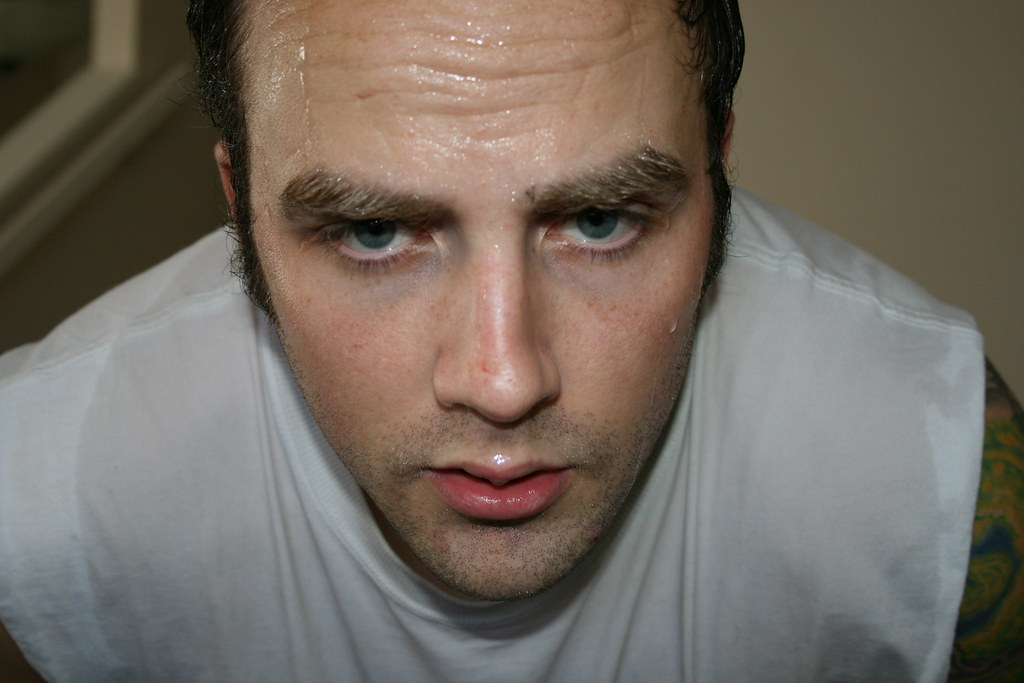
How Do I Know if I’m Working Out Hard Enough?

My last post tackled the question of how we know if we are making progress in our exercise program. That discussion took more of a long view of things, but how do we know if we are working hard enough in any given workout? This is a topic that I have blogged about in the past as well: once on 9/6/2020 and then a few days later on 9/10/2020.

To recap, when it comes to cardio exercise there is a formula that is often used to determine if the workout is effective. It is not exact, but the equation is 220 minus your age; that number gives you the maximum heart rate, but the goal is to be at 65-85% of that number. For instance, a person who is 70 should not exceed 150 beats/minute; the “sweet spot” is between 97 and 127. When it comes to resistance training (weights), it is a little more complicated as it will depend on what the goal is. Rather than going into detail here, consult your favorite fitness professional; recommendations will vary in relation to a number of factors such as age, current level of fitness, injuries, etc.

Still, in any given workout, is there an easy way to get a sense of things? For cardio, there is something called the “talk test.” If a person is able to talk while doing the exercise (running, biking, etc.) it would be considered moderate; if a person can talk with difficulty but not sing, that is a more vigorous level. If the person is unable to speak at all (like during a sprint), that is the highest level of exertion–one that can only be carried out for a limited amount of time. What level is appropriate? It will depend on a number of factors (are you just trying to stay fit, or are you training for a marathon?), but going back to the formula above will help.

For resistance training, I usually recommend a weight that allows the client to do 12 reps with the last few being difficult. If all 12 reps are easy, it is time to either add weight or reps, or in some other way increase the level of difficulty. Those looking to bulk up, will follow a different set of standards–generally, heavier weight with less reps. I also use the RPE or Rated Perceived Exertion; this is fairly subjective, but it asks the exerciser to rate how difficult an exercise is. I use a 1-10 scale with 10 being the most difficult; most clients are honest (although we all know the adage “never tell a personal trainer something is too easy!”) This is a relatively simple way to gauge the level of work for both resistance and cardio training.

The key is not to rest on one’s laurels. When an exercise becomes to easy, it will not help to accomplish the fitness goal. Progression to a more challenging level is what is called for.

Although it can seem confusing at times, we are usually our own best judges of how hard we are working. We need to be honest with ourselves, though, so as not to overwork or underwork. Being honest with ourselves is a good rule in every aspect of our lives.

At the Gym: To Mask or Not to Mask…

Face masks, Japan

Ohio has had in place masking orders for those in public for quite a while now. These orders are based on the solid science showing that wearing a face mask is one of the most effective ways to prevent the spread of COVID-19, and the more people masking the more effective it is.

There are, of course, exceptions to the governor’s order, including gyms and fitness facilities. Where I work, the policy is that a mask must be worn in the building except while you are working out–which, if you asked me (and you didn’t), is the same as having no policy at all.

I have seen the following scenarios where I work. Adults and especially teens will wear the mask into the building but take it off the minute they walk into the fitness center; some even place it in their mini-locker. I have seen unmasked members with earbuds singing out loud to their music–annoying during normal times, but especially germ-spreading during a pandemic. I have seen members sitting on different pieces of equipment or benches talking to each other across the gym without masks. I have seen members use equipment and not wipe it off afterwards.

To be fair, there are those who are very cautious. I have seen members wearing a mask at all times–even while doing cardio (as I do). I have also seen members being conscientious about wiping down equipment. In the final analysis, I don’t know how much good this does when there are so many others who seem to throw caution to the (literal) wind.

We have had one employee of the Fitness Center and one member in recent weeks diagnosed with COVID-19; neither was asymptomatic. I think we are lucky it hasn’t been worse. What solutions are out there? Some establishments (in the fitness industry and elsewhere) make a point of enforcing hygienic standards. Employees and supervisors make sure that folks are compliant, and if they are not they are made to leave the facility. They believe (and rightly so) that the “honor system” doesn’t work with this pandemic. I spoke with a family member a couple of days ago who teaches yoga at a fitness facility; the facility is “open” for 90 minutes then “closed” for 30 minutes during which time the entire building is fogged with disinfectant. This seems extreme, but I’m willing to bet that this place has a lot more people coming through their doors as opposed to the masses who are staying away out of concern for disease transmission. It seems to me that fitness facilities should be going above and beyond rather than aiming for the bare minimum; it would seem to fit into our mission of promoting health and wellness.

The fitness world has a long way to go in this pandemic to make facilities safer. In the meantime, my recommendation is to PUT ON THE DAMN MASK! If you are strong enough to bench press (insert your max.) pounds, you can do it with a mask on as well; remember, weight lifting is an anaerobic activity. As for cardio, unless it is really intense (like running), a mask should only impede airflow slightly; the Nu-Step or a stationary bicycle can probably be used with a mask.

As for my own practice, I keep the mask on always. I will find the days when it is warm enough outside to run outside. If I am doing a cardio workout, I will do it at home. If we all are a little more conscientious about safety/health precautions we can help bring an end to this pandemic. Start by wearing your mask.

Am I Working Out Too Hard or Not Hard Enough

Resting Heart Rate

It can be confusing knowing just how much to work out and how hard to work out. Fitness professionals toss in words like cardio and resistance and acronyms like BMI and BPM and it’s enough to scare newcomers away from any kind of physical activity at all. How do we begin to think about this?

Workouts are roughly divided into two kinds of activity. Cardio (short for Cardiovascular) means exercises that are designed to get the heart pumping and the blood circulating. Cardio exercises include running, elliptical, cycling (stationary or real!), swimming, and brisk walking. It is true that each of these will also work your muscles, but their primary effect is to circulate rich oxygenated blood to the rest of the body while exercising the heart muscle. Resistance (or weight) exercises are primarily designed to maintain or build muscles. Examples are most activities that are done on weight machines or with barbells/dumbbells, etc. These include bicep curls, lat pulldowns, and leg presses. Again, there is often a cardio component to these exercises but that is not their primary purpose.

Ideally, any exercise program should include a mix of cardio and resistance. Overall, we should aim for a combined total of 150 minutes of moderate to vigorous exercise each week. Additionally, those who have never really been active and are considering upping their game should check with their physician to discuss possible limitations based on medical history.

Assuming all that checks out, how can we tell if our cardio exercise is really doing its job? A lot of folks tell me that they walk (the dog, on the treadmill, around the block); this is a good thing, but is it really cardio? Is it raising the heart rate and exercising the heart?

There is a simple formula to determine this. It is not exact but gives a good estimate. Take your age and subtract it from 220. That number is your maximum heart rate. For example if you are 60 years old, your maximum heart rate during exercise should be 160 BPM (beats per minute). This can be calculated by taking one’s pulse or by any number of devices worn on the arm that can track this. Of course, training at the max is great if you are an elite athlete, but what about the rest of us? Ideally, we should aim for a heart rate (BPM or beats/minute) of 65-85% of our maximum. For a 60-year-old person this would be 65-85% of 160–or 104 to 136 BPM.

Don’t be shocked if you measure your heart rate during what you consider to be cardio and find it to be well below the number for the ideal range. First, if you are on a blood pressure medication, your numbers will be “artificially” kept low. Second, this is an indicator that you may not be working hard enough. If you are on a piece of gym equipment, it is easy to check miles/hour, strokes/minute, etc., and then work to increase that. Many machines also allow you to adjust incline or resistance; this is another surefire way to increase the heart rate. If you are walking the dog and your dog enjoys a sustained vigorous pace, you may find you hit the range; if, however, your dog (like mine) likes to stop and sniff every few yards, it is unlikely you will get into the cardio zone. Another activity on top of the dog walk may be necessary to hit that 150 minutes per week

The advantages of paying attention to heart rate are many. It prevents us from working too hard and causing harm through overtraining, and also prevents us from not working hard enough and not getting the full benefit. When we do cardio on a regular basis, we help to strengthen our hearts (the most important muscle in the body), increase blood flow to the cells, and to the brain. Cardio exercise is the only clinically proven way to prevent or delay the onset of dementia since it assists in the proper “feeding” of the brain with oxygenated blood.

As for resistance training, how do we know if we are working too hard or too little? Watch for an upcoming blog post on that topic.

In the meantime, check your numbers. You may be pleasantly surprised…or find that the hard work is still ahead.