Super Agers: What Are They and How Can We Become One?

It is no secret that Americans are living longer and longer. Just because the quantity of our years is going up does not necessarily mean that the quality of those years (especially closer to the end of our lives) is going up as well. In fact, one of the greatest fears of older adults is remaining physically sound while losing cognitive and mental capacity.

There are, however, those who manage to live well into their 80s and beyond while remaining “sharp as a tack.” Those who reach the age of 80 with the cognitive capabilities of someone decades younger is referred to as a Super Ager. Who would not want to be a Super Ager? It is the best of all worlds! The good news is that researchers have found six “habits” that Super Agers have in common that can guide us as we hope to achieve this status.

  1. Super Agers maintain a healthier diet. 2 servings of vegetables/day, 2 servings of berries/week, and one serving of fish/week have a positive effect on brain health. Other foods to include for better brain health include nuts, whole grains, olive oil, beans, and poultry.
  2. They have connected social lives. Studies show that more loneliness leads to greater chances of memory loss. Super Agers seek out social networks and meet new people.
  3. They are better at managing stress. Older adults who find ways to manage stress (through exercise, meditation, etc.) have better health outcomes. (More about this below.)
  4. Super Agers are intentional about getting enough rest. The more sleep-deprived we are, the lower our cognitive ability, the worse our mood, the weaker our immune system, and the more difficult it is to manage blood sugar. 7-8 hours of sleep per night is recommended.
  5. They engage in a variety of brain-stimulating activities. Aging can cause declines in our cognitive abilities due to increased dysfunction in the pre-frontal cortex of the brain. Activities like crossword puzzles, Sudoku, reading, listening to lectures and music, as well as some word games can actually improve brain function, problem-solving skills, and the ability to think nimbly.
  6. They exercise regularly. This very much related to #3 since exercise can be a stress-reducer. Regular exercise (both aerobic and non-aerobic) increases the production of Brain-Derived Neurotrophic Factor (BDNF), a protein in the brain and spinal cord that helps nerve cells survive and grow. Aerobic (or “cardio”) specifically reduces cognitive impairment and the risk of dementia.

The trend seems to be toward continued rising life expectancies. Medical science has focused on the quantity of years; our personal behavior, energy, and priorities should be focused on the quality of those years. Following the steps above are no guarantee that we will become Super Agers, but it is noteworthy that Super Agers share these commonalities.

For some of us, this will require a lot of adjustment (especially in our diet). Even modest changes can have an impact. The effort certainly seems to be worth the payoff.

Just One Little Snack….

As a child growing up, my favorite snacks were always Little Debbie treats (pictured above). I still love them on the rare occasion that I eat one, but my tastes have evolved over the decades. I am one-quarter Hungarian so I have a love of all things pastry: cakes, pies, tarts, you name it! Unfortunately, there are times (often) when I do not make the wisest choices when it comes to snacking. In this, I am not alone.

A recent study published by PLOS (Public Library of Science) Global Public Health concludes that Americans consume 400-500 calories per day in snacks; this is the equivalent of a meal’s worth of energy and accounts for about 20% of total caloric intake. The research involved 23,700 adults over the age of 30.

To break down the report, Americans consume two snacks per day; most often those snacks are of poor nutritional quality. The largest proportion of these snacks are those high in carbs, sugar and fats such as potato chips and donuts (yum); this is followed by sweets, alcoholic bevarages, and sugary drinks. Sadly, fruits and vegetables make up less that 5% of the total snacking, and protein only about 8%. Interestingly, individuals with controlled Type 2 Diabetes ate more healthfully compated to non-diabetics; this is most likely attributed to their efforts to control blood sugar levels through diet.

A separate study in the European Journal of Nutrition showed that those who eat unhealthy snacks may actually be undoing the good that comes from eating healthy/nutritious meals.

What does this mean for us? We should be more aware of the kinds of snacking that we do. Of course, a Little Debbie now and again is not the end of the world. Consistent unhealthy noshing, however, can lead to all kinds of health problems. When we think about our overall diet, perhaps we should focus not on the fact that we feel the need to snack (that is natural), but rather on the kinds of snacks we consume. Let’s aim to switch out an Oatmeal Creme Pie for some carrots and celery, or some blueberries, or a banana….

Beans, Beans….

Most of us remember the chant about beans being magical and good for your heart. All flatulence jokes aside, it turns out that beans actually do have a positive effect on health.

There has been a lot of talk recently about Blue Zones; these are areas where many people live up to 100 years and beyond. There have been books about it and a recent Netflix documentary on the topic. Much of the research on Blue Zones–which are found in different parts of the world–is trying to find the commonalities between them. What foods, lifestyles, and other conditions might contribute to the longevity of people in each of those places, and therefore might be added into the diet in other parts of the world? Beans are at the center of the story.

An article on this very topic from this past summer on CNN.com was recently shared with me by my mother-in-law. She knows I like beans, and that as a pescatarian I am always looking for ways to incorporate non-animal proteins into my diet. In each of the different Blue Zones there was a preference for a different kind of bean; for instance, in Nicoya, Costa Rica the black bean is favored, while in Sardinia the garbanzo (or chickpea) is more popular. Each variety of bean has different health benefits, and if we choose a diet that includes different kinds we can get the most out of what each has to offer. What is especially noteworthy is that beans are eaten more than once/day in most Blue Zones and that even a relatively small amount can make an impact.

The article also addresses the elephant (or skunk, as it were) in the room. Many people find that consumption of beans makes them gassy and uncomfortable. The authors suggest that individuals start with a small amount of beans–a couple of tablespoons–and gradually increase to a cup for a serving. Adding this into the diet slowly allows the natural biome in our guts to adjust.

Finally, one of the real perks of beans is that they are quite affordable–especially in the dry form. This is good news for folks who want to eat more healthily but simply cannot afford the higher prices of organic and other “healthy” products. And you will want to save some money; after all, you will need the cash if you plan to live to 100!

Leave the Cannoli

Many of us are familiar with the line from The Godfather, “Leave the gun, take the cannoli.” Research from JAMA Network Open, a publication of the American Medical Association (AMA), says we should think about leaving the cannoli as well.

The investigation found that the number of adults in the USA over the age of 65 with poor diet quality increased 10% from 2001-2018; the percentage rose from 51% to 61%–both of which are alarming. The percentage in the same demographic whose diet was considered “ideal” in the study was 0.4%–that’s just 4 in 1000! This may help to explain why so many adults are living with diet-related diseases.

What is to blame? Older adults are eating more processed meats, sugar-sweetened drinks, and foods with high salt content. Intake of healthier foods like fruits, vegetables, fish and whole grains has gone down. This is a trend nearly 20 years in the making, but the AMA hopes that by raising awareness it will be possible to reverse the trend.

The issue transcends older adults. Healthier foods are often more expensive and less readily available than processed foods and junk food. Restaurant food can vary widely from more healthy items to those that are downright artery-clogging. As adults age and are less able to prepare food for themselves–or less willing to do so–the choices become less and less healthful. Throughout many age groups this has contributed to the obesity epidemic in our country.

Older adults are living longer than in past generations. The question is whether those added years will be quality years or ones filled with poor health. A big part of the answer has to do with our diet. Improved eating habits can lead to better health outcomes and quality of life. The choice is ours.

The Most Wonderful Time of the Year?

Thanksgiving Dinner

Andy Williams sang, “It’s the most wonderful time of the year….” The holiday season ushered in by Thanksgiving is wonderful in so many ways: family gatherings, festive meals, joyous music, and fun family traditions. It is for many, though, the most difficult time of the year.

The holidays season puts a lot of stress on us. The continued emphasis on consumerism around Christmas and Hanukkah is not only stressful as we try to get the perfect gifts, but it also puts pressure on our financial situation. There is also the potential conflict that arises in families–you know that crazy uncle who always brings up politics! We may also be worried about meeting year-end goals. It is just a very intense time of the year.

I have blogged in the past about how to try to approach the holidays–and Thanksgiving, in particular–in a more healthy way. Last year, we had the added issue of families preparing smaller feasts given the isolation and reduced gatherings necessitated by COVID-19; for many, that is less of an concern this time around. For most people, this final part of the secular year becomes a battle against overeating; it is exacerbated by an extra busy schedule which might make finding time to exercise and get enough sleep challenging.

There are two key factors that I keep in mind as the holidays near.

1. Plan, plan, plan. Typically, my wife and I plan our menus out a week in advance. We know what we are going to have for each meal, create the shopping list accordingly, and thus avoid (mostly) purchasing foods that are less healthful. I plan as well for those days when I know there will be a lot of food around (Thanksgiving, Hanukkah, football games, holiday parties, etc.) so that I eat moderately the rest of the day; at the “event,” I do my best to drink lots of water and set simple rules for myself like “fill the plate one time only” or “skip the sides and save for dessert,” so that I do not gorge myself. As an aside, try to limit alcohol intake as it is dehydrating and often lessens our resolve to follow our rules. I also take a look at my week and day in advance to figure out when I will be able to work out; I am a personal trainer and I also teach fitness classes so this is a little easier for me, but there are days when I have to simply block out the time to make it happen. This time of the year calls for planning.

2. Be kind and forgiving to yourself (and others). It is almost inevitable that we will have a “bad” day. We may go into that holiday party with the best of intentions, totally prepared and planful, only to take one look at the baked salami, pecan pie, and spinach/artichoke dip and it’s all over. It happens to almost every one of us, including me. I do not beat myself up over it; I do not consider myself a failure. I am only human. Instead, I get back on track the very next morning. In the long run, one bad day is not going to ruin our health. What will be harmful is getting upset at ourselves, giving up, and turning one bad day into a bad week, month, or year. Recognize that there are times when we come up short; that is OK, and we just look forward. Be kind to yourself.

Finally, remember that this time of the year is not about obsessing about our eating habits and exercise. This should be a concern (not obsession) all year round. Take into consideration the special circumstances of the holiday season, but do not get overwhelmed. After all, with the gatherings, music, tradition, and treats–no matter what holiday(s) you celebrate or do not–it is really a most wonderful time of the year!

“You had a bad day…” or two…or three…

.bad daY

As you may have noted in my previous posts, a lot of preparation went into the celebration of the Passover holiday (today is day 3 of 8). There is, of course, all the cooking and cleaning, but when you are concerned about your diet and fitness this holiday provides extra challenges.

First, many of the foods we typically eat during the year are off-limits because they have some kind of leavening in them. Most of them do not, but the marketing of foods for Passover often causes us to stock up on less healthy options that we would not think to purchase during the rest of the year. Second, the first two nights of Passover are marked with the Seder feasts; traditionally, there are certain foods we eat as part of the meal and the accompanying story that goes with it. Like Thanksgiving, however, there is an emphasis on large quantities of food.

I had the added complication this year of not being able to track my calorie intake or activity; this is because I do not use electronics on the Sabbath or the Holy Days of the Festival (last 2 and first 2 days). Since the holiday began on Saturday night, I went three days without recording as I usually do (Friday sunset through Monday sunset). Yes, meals were planned in advance, but it was difficult to control the serving sizes. Tracking has been an important tool for me as I work to keep myself at a healthy weight.

The news was not so good when I got on the scale after the Holy Days. So, I had a bad day. One of the lessons from Noom–which I have long shared as a personal trainer–is that a bad day (or two or three) is not a cause for feeling defeated. It sounds corny, but every day is a new day. This morning I got back on the program and started tracking everything again; it was not that hard. I did not lay any guilt on myself; on the contrary, I was kind to myself and reminded myself that I should not begrudge a little extra “celebration” on a festive holiday. A couple of days is okay; a week or a month would be a different story.

Here I am, back on track. This is a healthy approach to setbacks. As they say, “hop back on that horse.” Not bad advice as Passover continues for five more days and as many approach the Easter holiday with all its peeps, chocolate eggs, and family dinners.

Making Sacrifices for Better Health

Chumash printed and commented by S.L. Gordon

This week in the Jewish lectionary cycle, synagogues around the world begin reading the Book of Leviticus. The very first Torah portion is called Vayikra after the first word in the first verse in Hebrew; the reading describes five of the sacrifices/offerings that Israelites were to make in the Tabernacle (and later in the Temple) on various occasions.

The Jewish view of sacrifices is different than what we often think about. In modern parlance, sacrifice is thought of as giving up something. Usually the sacrifice is made in order to accomplish something else–to appease a god, to give thanks, to request something from a god. The ultimate goal is to engage in the creation of holiness; this comes from the Latin root of the word sacrifice. In Judaism, the word used is Korban and, linguistically, it has nothing to do with holiness; rather it means to approach or come close. The goal of a sacrifice then is to come closer to God; this may better explain why Abraham was willing to offer up his son. The aim of a sacrifice is not transactional but rather to simply be in relationship with God.

In the world of fitness and health, we also talk about making sacrifices, but in a different way. Those who have ever tried to lose weight know that we have to “sacrifice” eating some of the foods we might like, or at least eat them in different quantities. Working out also requires setting aside time that might be spent watching TV, shopping, or doing other activities; belonging to a gym or hiring a personal trainer involves a financial commitment that may necessitate cutting something else out of the budget. There is only so much time in the day and only so many resources, and we have to make choices…or sacrifices.

A more positive way to look at these sacrifices is not as having to “give something up.” Rather, the Jewish view of sacrifice asks us to think about what our choices can do in order to “bring us closer.” Closer to what? Closer to our health and fitness goals. Closer to living the kind of life that we want. Closer to actions that reflect our values.

Over the last 6 weeks on my weight loss journey I have had to sacrifice a lot–mostly my beloved pastry! In the process, however, I have found that I am closer to who I want to be. I feel the way I want to feel. I look more like how I want to look. I find I have more energy and stamina. I am indeed “closer” to where I want to be…and I did it by making “sacrifices.”

As we reflect on the beginning of the Book of Leviticus, let us consider the sacrifices we are willing to make (and are not willing to make) in order to bring us closer to who we really should be.

Wishing all a great weekend and Shabbat Shalom!

Let My Diet Go? Planning for Passover

Olives, Matzoh, Radishes, Liver Pate, and Sweet Pickled Peppers

The holiday of Passover is about 10 days away and for most Jewish people across the globe, preparation is in full swing. Why is this Passover different than all other Passovers?

You might think the reason is because of the pandemic, but by Passover last year we were already in “lockdown” mode and most Seder meals were done with only a few people and/or virtually with family and friends. The real difference this year has to do with the changes that I have made in my diet over the last five weeks or so. As I have noted in previous posts, I have been tracking all my exercise and all my calorie consumption; as of this morning, not only have I taken off all my COVID weight, but I am also 2 pounds away from my goal weight. It is an amazing feeling; I like the way I feel and the way I look!

This year, my wife and I are approaching Passover in a different way when it comes to food. For those not familiar, during the 8 days (7 in Israel), we eat no leavened foods: no bread, no pasta, no cake, etc. Over the years, however, many substitutes have been produced so that now it is possible to make Passover “bagels,” brownies, noodles, etc. They use ingredients that are permitted on Passover, but from the standpoint of being healthy…well, let us just say, that maybe they should not be permitted. It is still a carb nightmare. We are planning ahead so as not to lose all the progress we have made since we began this journey.

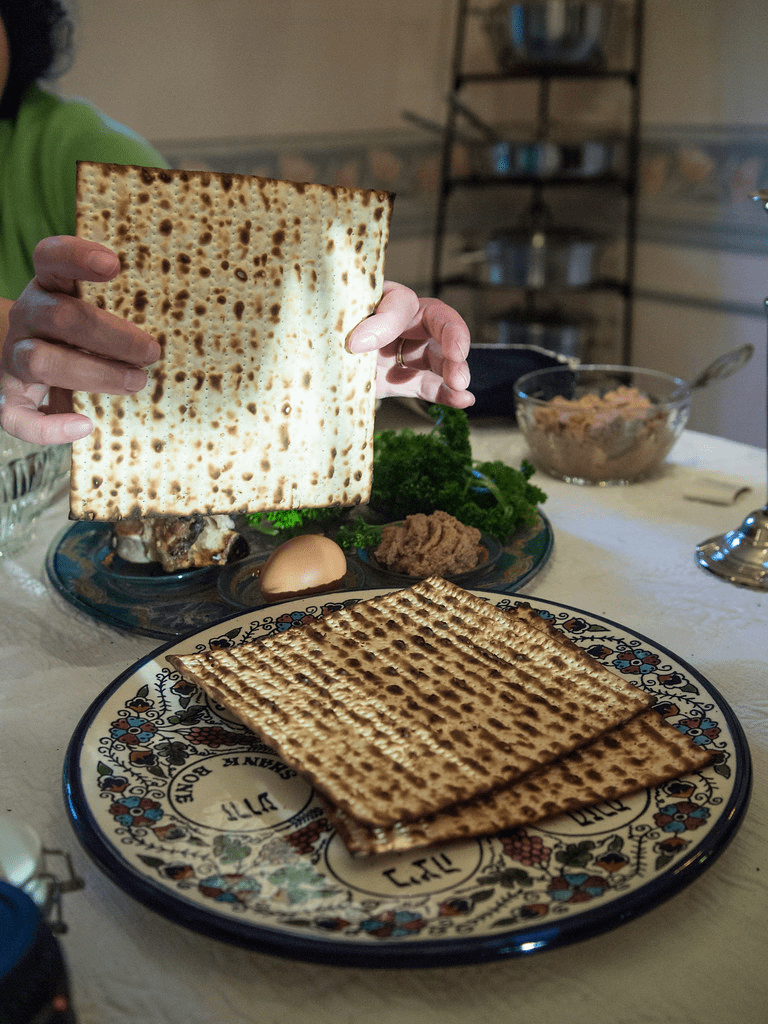
Typically, we make lots of recipes that use Matzoh (unleavened bread); recipes call for using it in “lasagna,” desserts, and even (the ever-popular) Fried Matzoh. This year we mapped out EVERY. SINGLE. MEAL. You read correctly. For the entire 8 days, we have charted out what we will eat, and it involve as little Matzoh as possible (which clocks in at 140 calories/piece). We are going heavy on vegetables and lean proteins (lots of fish since we do not eat meat or poultry). During the Seders, we are supposed to drink 4 cups of wine; we will not use such big cups this time around. Most years, Passover seems like a lost cause when it comes to eating healthy…and when it comes to the Passover Seders, think Thanksgiving-sized feasts two nights is a row. This year will be different from all other years. We have planned for it to be different.

Of course, it will not be easy. We are only shopping, though, for what we will eat (as listed on our menu) so that we do not have the temptation of lots of junk food to snack on. We are also going to drink LOTS of water to combat the famously constipating effects of many foods served on the holiday.

I will keep you posted on how it goes during the holiday, but I am actually looking forward to not feeling bloated and stuffed for much of the week. It will be worth the effort for that reason alone. Continuing to make progress toward my health goals will be icing on the (Kosher-for-Passover) cake!

How Logging My Meals is Working Out

Keat takes notes

Earlier in February, I blogged about the impact of logging meals and exercise on the success of weight loss efforts. At the time, I noted that this is an effective tool for many. Especially if you are using an app designed for this, it can help more accurately determine calories in food being consumed, how many calories are burned during exercise, and bring discipline (think avoid snacking because it is too much trouble to log a Hershey Kiss–26 calories!). Knowledge is power, and that power can lead to greater success in keeping healthier and fit.

I discovered another benefit. Now that I am more aware of how many calories are in certain foods, my grocery shopping and meal planning have changed. I am spending more time in the produce section and less time picking up processed foods. Fish is a great choice as it is low in calories (unless it is slathered in sauce) and has many health benefits. Vegetables are low in calories and can be filling and add color to the plate. Some foods (Thomas’ Whole Grain English Muffins and Dave’s Killer Breads) are not the evil carb monsters we believe them to be. This is not to say that I do not enjoy the occasional cookie or ice cream, but it is more in the context of an overall plan of eating healthier.

Usually when I am trying to lose weight, I find myself hungry quite a bit of the time. Logging has now given me the tools to plan meals that will be filling and still lower in calories. It is working. I am fueling my body in a more appropriate way rather than giving in to cravings (which seem less frequent now). Most importantly, I have lost 10 pounds in 4 weeks. I have been really disciplined and have managed to take off my COVID weight. Just a few more pounds to go and I will be at the ideal weight for my height. I feel great, my clothes are no longer tight, and I like what I see when I look in the mirror. Logging is a bit of a pain but it has paid off.

You know what they say: no pain, no gain. In this case: no logging, no losing. It does not work for everyone, but it sure seems to be giving me success.

No, I Wouldn’t Like Fries with That

french fries

Most of us know that eating fried foods is not the healthiest choice. A study published in the journal, Heart, on 1/18/2021, looked at existing research and concluded that even small amounts of fried foods can have a negative effect on our health.

According to an article on http://www.cnn.com: “Compared to those who ate the least, people who ate the most fried food per week had a 28% higher risk of major cardiovascular events, a 22% greater risk of coronary heart disease and a 37% heightened risk of heart failure….” Additionally, the article explained that: “Each additional weekly serving of 114 grams or 4 ounces (½ cup) of fried foods increased the risk for heart attack and stroke by 3%, heart disease by 2% and heart failure by 12%, the study found. A medium McDonald’s french fry serving, for example, is 117 grams.”

The risk is further increased because many fried foods contain trans fats–fats that have been hydrogenated in order to improve taste and increase shelf life–which is bad for cholesterol. The FDA has banned trans fats, but the ban is not fully in place and there are loopholes. Frying allows the food to absorb the fats thereby adding calories and increasing health risks.

Every once in a while, a little fried food would not be the end of the world. A plate of fries will not kill a person, but the research does indicate that over time there is a marked difference between the health outcomes of those who eat fried foods on a regular basis and in higher quantities than those who do not.

As we make our way into 2021 and many of us work on New Year’s Resolutions to be healthier, this research helps us to understand just how important our choices can be.

Here is the link for the article on CNN.com: https://www.cnn.com/2021/01/18/health/fried-foods-heart-disease-study-wellness/index.html