
Recovery Time

Sometimes less is more, and sometimes more is more. When it comes to fitness, both can be true.

When it comes to our workouts, more time spent on cardio exercises has a greater effect on the number of calories burnt, endurance, and circulatory and respiratory capacity. With regard to resistance training, the heavier the weight, the greater the number of reps and sets, the more likely muscle will be built. The more you do the, the more you accomplish. The Jewish sage Ben He-He said “the gain is in proportion to the effort,” and he had it right over two thousand years ago.

At the same time, there is such a thing as overtraining. Some people take “the more, the better” to mean that they should be working out seven-days-a-week, 365-days-a-year. Overtraining can cause all kinds of injuries that can set progress back. That is why recovery time is so important.

There are a number of factors to take into account when considering how long we should recover after a workout (or even after a specific exercise). When working with some of my clients I may alternate between a group of core, lower-body, and upper-body exercises to give the muscles an opportunity to recover before moving on to a second or third set; in other cases, when we are working the same set of muscles, we take a short break between sets. These all take place within one workout.

Between workouts, however, we must think about:

  1. The intensity of the exercise. The more strenuous it is, the longer recovery will take. This could be anywhere from 24-48 (or even longer) between working specific muscle groups; less time may be necessary if the exercise is more moderate.
  2. The type of exercise. For example, weight training usually requires more recovery time than cardio. Several sets of bench presses on Monday may necessitate waiting until Wednesday to do upper body resistance exercises, whereas a bike ride on Monday might easily be followed by a run or a hip-hop class on Tuesday.
  3. Your fitness level. If you are just beginning, it is all the more important to allow for recovery; going from 0 to 60 in 5.4 seconds might be great for your car, but the effect on our bodies is dangerous. It is important to slowly build up weight, number of reps and sets, while including recovery time. On the other hand, those who are more fit may find that recovery times are faster.
  4. Age. As we age, it takes longer to recover. This is not always the case, but in general it becomes more important to take rest between exercising muscle groups, as well as to have days with no exercise or light exercise.
  5. How well you sleep. A good night’s sleep is key to a good workout. Some of us sleep better than others, but if you have had a particularly rough night or simply did not get in the requisite number of hours, a recovery day is a good idea, or at least aim for a less intense workout.
  6. Stress. This seems like an odd thing to consider, but it can have several effects. Some of us, when we are stressed, have a tendency to work harder or at a faster pace because we are “wound up;” this can lead to overtraining, lack of attention to form, and even injury. Stress also saps our energy; we may think we have the power to do an exercise only to find that our strength is flagging.

We may worry that taking time off or resting is “cheating,” but it is an integral part of the process of staying healthy and boosting our levels of fitness. Recovery time allows muscles to build/rebuild and gives our metabolism a chance to adjust to activity. It is also key to preventing injuries due to overtraining. Regular allowances for recovery help ensure that we do not have to take an even longer time for recovery because we have “overdone it.” Anyone who has ever had a surgery due to an exercise injury knows just how far it can set us back.

Remember: Work hard. Rest hard.

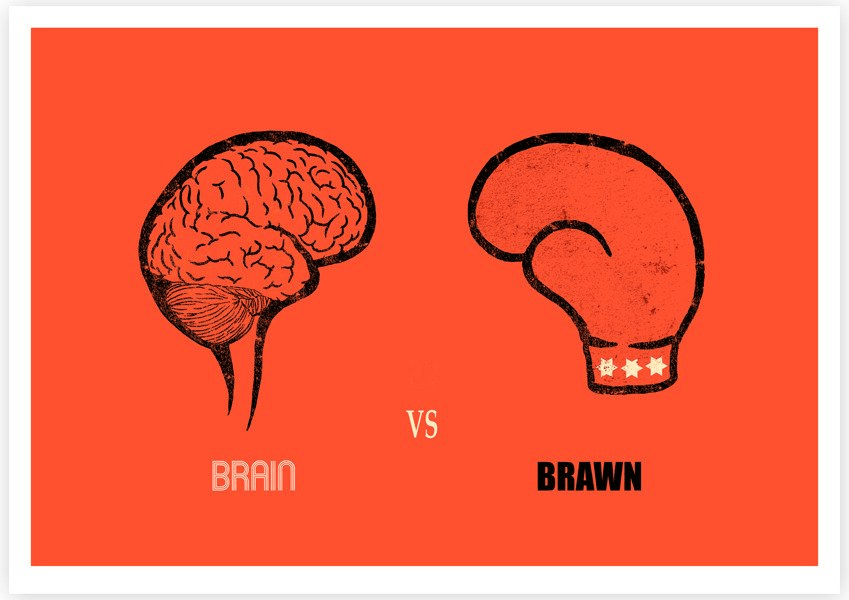
Brain and Brawn

The question of which is more important in getting through life–brains or brawn–has been around for a long time. What brings the greatest success–physical strength or intellect? The truth is that at different times one or the other may be more critical to overcome an obstacle. The ability to pivot between them is key. A recent study shows that there is an important connection between them for older adults.

An article that came out in early December, 2024, in Medical News Today describes the results a study at Johns Hopkins Medical Institution that will be formally presented in the near future connecting sarcopenia and dementia. Sarcopenia is a condition in which a person loses strength and/or muscle mass; this generally occurs as a result of inactivity and is seen a great deal in older adults.

Researchers looked at the temporalis muscle in a statistically significant group of older adults; this is the muscle that is responsible for closing the jaw. A small temporalis is associated with smaller overall muscle mass in the body, and a larger temporalis points to larger overall muscle mass; this makes it an easy indicator to assess whether a person has sarcopenia or not. The temporalis of each study participant was evaluated and it was found that those with smaller ones (ie., with lower muscle mass) were much more likely to develop dementia at the end of the study (around six years later).

This news is significant because it points to another way that dementia can be identified early, and even how the odds of it developing can be reduced. The greater the muscle mass, the lower the risk. How can muscle mass be increased? Two main factors are at play. First is exercise; resistance exercises (using weights) help to increase muscle mass. There is a misconception that older adults necessarily lose muscle mass, but it can be prevented or slowed with continued exercise. The second is consuming enough protein; protein is what helps to maintain and build muscle. Protein can be found in meat, poultry, fish, and eggs, but there are many plant-based options such as beans, nuts, and lentils.

People ask me why individuals use a personal trainer in their senior years. The motivation, in general, is different than younger folks; it is less about appearance or sports performance and more about maintaining general health and independence. We have known for a while that cardio exercise (the kind that gets your heart pumping like running, cycling, dancing, etc.) is good for the brain; it gets the blood to circulate so that it brings rich nutrients to all the cells–including brain cells. Add to this now that resistance exercise is another brain healthy activity!

This study is just one more reason for us to ensure that we are getting both cardio and resistance exercise. It is not just good for our muscles, but for our brains too!

News About Arthritis and our Knees

CNN.com recently shared an article about new research on Osteoarthritis of the knee. It caught my attention because, as a personal trainer for older adults, one of the key complaints I hear about is knee pain. I also work with clients who have had knee replacements or other knee surgeries. This is not surprising since nearly 800,000 knee replacements are performed each year in the USA.

Osteoarthritis is a chronic disease that causes the cartilage of a joint to deteriorate; this leads to pain and stiffness and is especially seen in the hips, hands, lower back and knees. As we age, osteoarthritis can have a negative effect on our quality of life; depending on where it is found it can even influence our ability to remain independent.

The new research was published in the Journal of the American Medical Association and based on data from studies conducted in the Netherlands. The key finding is that the effects of the disease can be lessened or even eliminated by strengthening leg muscles. The research indicates that there is no link between a person’s total physical activity and the odds of their developing the disease. The subjects were then divided into two groups: those whose activity was non-weight bearing (like swimming and bicycling) and those who activity was weight bearing (like walking or running). The latter group was at greater risk for knee osteoarthritis–but only if they lacked sufficient lower limb strength. It has long been thought that one of the best ways to protect the knees is to build mass in the muscle groups around the knee. This research bears this out; the more muscle mass around the knee, the more it is “cushioned” from the forces that affect it through weight bearing movement.

This research reinforces the work of doctors and physical therapists who work with patients to strengthen the muscles around arthritic joints. While those who participate in non-weight bearing exercise have less cause for concern, it is important to know that runners and walkers have a strategy that can help ease pain, increase movement, and even prevent the need for joint replacement.

Is Going Backward Ever OK?

Time Magazine recently featured an article that was brought to my attention by one of my alert clients. Angela Haupt discusses the benefits of walking backwards. You have probably seen some folks doing this on a treadmill and wondered whether it is effective or just plain silly. It might even remind you of an old Monty Python sketch. Does it really help? According to the article there are at least five distinct benefits.

  1. People of any age and fitness level can try it. It is especially effective for older adults because it helps to improve balance and coordination, which can in turn prevent falls.
  2. It works different muscles than the ones we typically use or works the ones we do use in a different way. Studies have shown that walking backwards can increase muscle strength.
  3. It has been shown to help those with injuries or pain. Walking backwards has long been a part of PT and OT strategies. Research has shown that it can reduce pain for those with arthritis in the knees, as well as alleviating the symptoms of plantar fasciitis and lower back pain.
  4. Backward walking can increase flexibility. We know that sitting all day (being sedentary) is an epidemic and can cause muscles to tighten up. Walking backward can stretch muscles and lead to greater flexibility and reduce the risk of injuries.
  5. It can improve gait. Physical therapists use this technique to help patients improve their gait patterns. It can assist with slight limps or range-of-motion issues. As mentioned above, it can help with balance control by forcing us to really focus on the way our muscles and joints are moving, as well as being aware of what is around us.

It is imperative to ensure safety when trying backward walking. Start slowly in an area that is free of hazards. Begin with just a few minutes a day and work toward more time and greater speed.

Typically, going backward is not seen as a positive. In this case, however, it can help us–especially older adults–to improve our health and fitness.

Super Agers: What Are They and How Can We Become One?

It is no secret that Americans are living longer and longer. Just because the quantity of our years is going up does not necessarily mean that the quality of those years (especially closer to the end of our lives) is going up as well. In fact, one of the greatest fears of older adults is remaining physically sound while losing cognitive and mental capacity.

There are, however, those who manage to live well into their 80s and beyond while remaining “sharp as a tack.” Those who reach the age of 80 with the cognitive capabilities of someone decades younger is referred to as a Super Ager. Who would not want to be a Super Ager? It is the best of all worlds! The good news is that researchers have found six “habits” that Super Agers have in common that can guide us as we hope to achieve this status.

  1. Super Agers maintain a healthier diet. 2 servings of vegetables/day, 2 servings of berries/week, and one serving of fish/week have a positive effect on brain health. Other foods to include for better brain health include nuts, whole grains, olive oil, beans, and poultry.
  2. They have connected social lives. Studies show that more loneliness leads to greater chances of memory loss. Super Agers seek out social networks and meet new people.
  3. They are better at managing stress. Older adults who find ways to manage stress (through exercise, meditation, etc.) have better health outcomes. (More about this below.)
  4. Super Agers are intentional about getting enough rest. The more sleep-deprived we are, the lower our cognitive ability, the worse our mood, the weaker our immune system, and the more difficult it is to manage blood sugar. 7-8 hours of sleep per night is recommended.
  5. They engage in a variety of brain-stimulating activities. Aging can cause declines in our cognitive abilities due to increased dysfunction in the pre-frontal cortex of the brain. Activities like crossword puzzles, Sudoku, reading, listening to lectures and music, as well as some word games can actually improve brain function, problem-solving skills, and the ability to think nimbly.
  6. They exercise regularly. This very much related to #3 since exercise can be a stress-reducer. Regular exercise (both aerobic and non-aerobic) increases the production of Brain-Derived Neurotrophic Factor (BDNF), a protein in the brain and spinal cord that helps nerve cells survive and grow. Aerobic (or “cardio”) specifically reduces cognitive impairment and the risk of dementia.

The trend seems to be toward continued rising life expectancies. Medical science has focused on the quantity of years; our personal behavior, energy, and priorities should be focused on the quality of those years. Following the steps above are no guarantee that we will become Super Agers, but it is noteworthy that Super Agers share these commonalities.

For some of us, this will require a lot of adjustment (especially in our diet). Even modest changes can have an impact. The effort certainly seems to be worth the payoff.

You Say “OT,” I Say “PT,” Let’s Call the Whole Thing Off?

Over ten years ago, I was diagnosed with Tennis Elbow (lateral epicondylitis) even though I have never played a game of tennis in my life; it turns out that there are other causes. A few months ago, I began developing symptoms that reminded me of my Tennis Elbow; I saw a doctor in my primary care physician’s practice who suggest icing, wearing a brace, and treating the pain with acetamenophin (Tylenol). It did not improve much and then I took a tumble while traveling earlier this month; I landed on my knees, as well as (you guessed it) my elbow. The bruises were quite impressive.

After consultation with my PCP, I was able to get an appointment with a Physical Therapist (PT) for an evaluation. Imagine my surprise when she informed that she could only deal with my knee, since my elbow was considered to be in the realm of Occupational Therapy (OT)–at least that is how it works at the Cleveland Clinic. Instead of being able to have it all cared for at one time with one therapist, I now have two therapists and twice the number of appointments!

What is the difference between physcial therapy and occupational therapy? There is a lot of overlap, but some important distinctions as well.

Physical therapy focuses on improving a patient’s physical function, mobility, and strength. PTs treat patients of all ages with many different diagnoses, including neurological, cardiovascular, respiratory, and musculoskeletal conditions. They treat the whole body from head to toe (unless, apparently, it is your elbow!), and may focus on restoring range of motion.

Occupational therapy focuses on improving a patient’s ability to perform meaningful activities as independently as possible. OTs treat patients who have experienced birth injuries or defects, sensory processing disorders, traumatic brain or spinal cord injuries, autism, and other developmental disorders, or mental or behavioral health problems. OTs may work on the upper extremity, or the whole body, to help patients develop, recover, improve, and maintain the skills needed for day-to-day living. This could include helping a child with autism participate in classroom activities, a young adult with down syndrome develop job-related skills, or an older adult who had a stroke learn self-care tasks. OTs may adapt, modify, or change daily activities by altering the activity, the environment, or the patient’s skills. For example, they may teach stretches or exercises. 

In my case, PT is dealing with my knee to improve my function, mobility, and strength. My OT is dealing with my elbow because the problems I am having interfere with my ability to carry out certain task with my arm and hand that I need to do on a daily basis.

In the final analyis, I wish I could get one therapist who could do both of those things…but that is not the way it played out here. At the very least, it has helped me to understand the different roles that each kind of therapy plays. I am confident that my therapist will both work in concert to get me back to 100%. After all, I have to learn to play tennis before it is too late!

Three Kinds of Movement

A few weeks ago I had the opportunity to sponsor a booth at the West Side Boomer Bash in Cleveland. It was an event for local older adults to interact with businesses and organizations that work with their demographic. We had some free giveaways and information, but I was looking for ways to engage in conversation with those passing by our table. I remembered the advice I learned at the 2024 IDEA & ACSM Health & Fitness Summit in Chicago; I blogged afterwards about a new way to look at the work that I do–focusing more on the term “movement” rather than “fitness.” I began by asking, “What are you doing to keep moving?” The answers were varied from “I don’t” to “I walk my dog” to “I go to the local gym several times a week.” It got people talking and gave me the chance to talk about the work that we do at At Home Senior Fitness.

A recent article on CNN.com discussed the idea of “movement” a little more in depth. The article focused on the advice of Melissa Boyd, a personal trainer and expert in the field of health and fitness. She explained that there are three kinds of movement, and that all are necessary for overall health and fitness.

  1. The first is the kind of movement that is required by your body every day. This includes walking (which Boyd says is not really enough), bending, and stretching. Our bodies need these on a regular basis simply to allow us to do the activities of daily living.
  2. Next is athletic movement; this is intentional exercise or movement with the aim of fitness or training for a sport. This should be done several times each week.
  3. Last is social movement; this includes dancing and playing a sport. This is movement that allows us to interact with others and to have fun.

Unfortunately, many older adults focus only on the that first kind of movement–and for some that is a critical issue. Ideally, throughout our lives we should clear room in our schedule for athletic and social movement as well. Our bodies need all kinds of movement if we hope to stay healthy and fit as we age.

Why Are Rates of Alzheimer’s Disease in the US Dropping?

The most recent issue of AARP Bulletin (March, 2024) has a cover story on Alzheimer’s Disease. It reports that, for the first time in close to 20 years, new drugs are being approved for the treatment of the disease. Not only that, there may soon be better ways to diagnose it–including a simple blood test. The focus among researchers has shifted as well from only looking at the plaque which is found in the brain of those with Alzheimer’s Disease to also looking at neural connections and inflammation. The article is full of information and definitely worth a read.

What I found most compelling was the surprising news that Alzheimer’s Disease diagnoses are actually on the decline. From 2000 to 2016, the rate dropped 30% in the United States according to a 2022 Rand Corporation study! What accounts for this stunning trend?

As noted above, it is NOT because of any new drugs. Instead, researchers believe that the focus placed on heart health over the last 20 years has paid dividends in other areas such as dementia. According to another 2022 study–this one from the University of Minnesota–“41 percent of Alzheimer’s and related dementias were attributed to a dozen modifiable risk factors, of which high blood pressure, obesity and physical inactivity had the most impact.” In other words, we can change our behaviors and lower our odds of getting dementia.

A sidebar in the article pointed out a number of behaviors that can prevent Alzheimer’s Disease.

  1. Don’t smoke! Enough said.
  2. Keep blood pressure and blood sugar at healthy levels. Hypertension and Diabetes increase the risk of memory and thinking problems by 41%.
  3. Get regular exercise. Get moving and lower your risk for all dementias by 28% and Alzheimer’s by 45%.
  4. Eat more healthy foods. A diet limited in red meats, saturated fats, and added sugars that is also high in produce can lower your chances of getting AD and dementia by 48%. Berries and spinach are thought to protect brain cells.
  5. Take a multivitamin. Multivitamins cannot replace a good diet but they have been shown to have a beneficial effect on the brain.
  6. Care for your ears and eyes. A University of Toronto study in 2022 showed that hearing and/or vision loss increase the risk for cognitive problems by 20-50%. Hearing aids and vision care can help.
  7. Be attentive to mental health issues. Stress, depression, anxiety, and loneliness over time can contribute to cognitive decline. Seek help for these conditions.
  8. Get quality, regular sleep. Sleeping is what allows our brains to clear out waste; sleeping problems can prevent that from occurring. Take appropriate steps to improve sleep.

Alzheimer’s Disease and other dementias are frightening–to those who receive the diagnosis and for their loved ones. It is reassuring to see that progress is being made in research for diagnosis and treatment. What is most exciting to me is knowing that our own actions can have a positive impact. It is not just a crapshoot (or even based solely on genetics). We can (up to a point) help prevent cognitive decline as we age!

Working Out with Chronic Conditions

While the gentlemen in this picture look hale and hearty, I am willing to guess that if they are still alive today, they are probably dealing with one or more chronic health conditions. The CDC defines chronic health conditions as those “that last 1 year or more and require ongoing medical attention or limit activities of daily living or both. Chronic diseases such as heart disease, cancer, and diabetes are the leading causes of death and disability in the United States.” At Home Senior Fitness works with clients who are 55 and older, and nearly all of my clients deal with such conditions. How does it affect the way that we train and what results can be expected?

At the 2024 IDEAfit / ACSM Health and Fitness Summit in February, I took a course offered by Dr. Carol Ewing Garber entitled, “Prescribing Exercise to Clients with Chronic Diseases: A Cast Study Workshop.” Garber is Professor of Movement Sciences and Education and Chair of the Department of Biobehavioral Sciences at Teachers College (which is incidentally two blocks from where I attended Seminary in New York). The course looked at different hypothetical cases of individuals of various ages and backgrounds living with different chronic conditions. We worked together to determine the best course of action for training the individual to bring them to greater levels of fitness and health.

Over the years as I have worked with older adults, I have found myself in the same kind of “workshop,” just not in a large hotel with dozens of other people. It is, rather, a one-on-one with myself figuring out what would be most effective and what to avoid. I have had clients come to me with long-time diagnoses like atrial fibrillation (A-fib), dementia, and Parkinson’s Disease. I have also had clients come to me with new diagnoses like epicondylitis and camptocormia (look both of those up!). When we aware of such diagnoses, it is necessary to take into account how not to worsen a condition as well as what exercises might improve it. Many of these conditions I learned about when I was studying to become a personal trainer, but others required me to do research. I have even reached out to a client’s physical therapist on occasion for guidance. These chronic conditions cannot simply be ignored.

Garber’s class was a good reinforcement for me. It reminded me of the importance of understanding where my clients are (not just physically either) so that I can meet them there and then make a difference. If you or someone you loved is diagnosed with a chronic condition, make sure your fitness professional knows about it, knows what it is, and knows how to work with it. Personal trainers can be allies with doctors and therapists in building a better quality of life while living with a long-term condition.

Just for the Women

This is my third report on the IDEA/ACSM Health and Fitness Summit in Chicago at the end of last month. The third session I attended was entitled “Everyday Strength for the Older Female Client;” the instructor was Keli Roberts. I was very interested in this class because approximately half of my clients are older women. Over the years I have learned a lot about the needs of older adults, so I was looking forward to finding out what particular issues women face as they age.

In all honesty, most of the class really applied to older adults of any gender. We talked about different categories of aging: chronological, functional, biological, psychological, and social. Each contributes to the overall picture of a person’s health and fitness, and helps to determine the needs of the client and how best to meet them as a personal trainer. The class was mostly aimed at group or small-group fitness strategies; nevertheless, there was a lot to be learned.

There are a number of issues that relate directly to women. Because women have often been caregivers, it may mean that they did not have the time or opportunity to take care of themselves in the past; the result is that there may not be a history of exercise and other healthy habits. How do we create new patterns of behavior? Women may also be less likely to avail themselves of health services or have access to them in the first place. Some women, then, may not even be aware of the health conditions particular to themselves. All this needs to be taken into account so that an exercise program can be successful.

Older women may experience heart disease, diabetes, obesity, stroke, cancer, anxiety, and other mental health challenges. These are mostly shared with men. Osteoporosis, however, is much more prevalent in women. Osteoporosis a medical condition in which the bones become brittle and fragile from loss of tissue, typically as a result of hormonal changes, or deficiency of calcium or vitamin D. Research has shown that women can benefit from resistance exercises that involve weight bearing and weight lifting. This can be done safely and effectively as long as all the other co-morbidities are taken into account.

I have already put some of my newfound knowledge into practice with my clients and my exercise class. Roberts made me more aware of areas of weakness for women and how to compensate for them. My main takeaway is that while all older adults share much in common when it comes to fitness, women have their own unique sets of circumstances that cannot be ignored. I will definitely be more aware in the future.