
Exercise and Parkinson’s Disease

April is Parkinson’s Awareness month. This disease affects nearly 12 million Americans, and April is the month set aside to learn about Parkinson’s Disease (PD), its treatments, and the people who are affected by it.
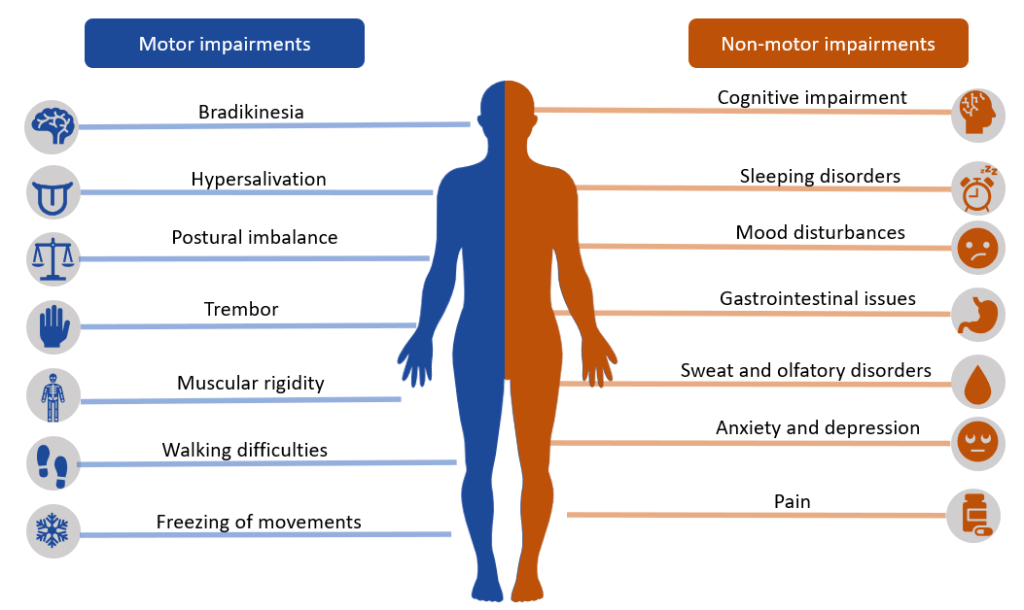
I have blogged about this in the past–especially after I attended a personal trainer’s conference in Denver in March, 2025, where I attended a session about PD and exercise. In the interim, I have done more research and am still hoping to be able to get special certification to better serve clients with PD.

While there are medicines and even medical procedures for delaying the progression of the disease, exercise still remains a powerful strategy for helping those living with PD. Exercise works best when it is part of a consistent program that involves aerobic exercise, strength training, balance and agility, as well as flexibility. Recommended activities for aerobic/cardio exercise include brisk walking, cycling (either outdoors or on a stationary bike), swimming, water aerobics, and dancing. Strength training can use various modalities such as resistance bands, light free weights, and weight machines. Tai chi, yoga, boxing (non-contact), and dancing can help with balance and agility while preventing falls which are a big risk for those with PD. Finally, activities like stretching, yoga, and Pilates can all help with flexibility. In line with generally accepted guidelines for healthy individuals, those with PD should aim for 150 minutes of moderate-to-vigorous exercise each week.

Many communities have agencies that provide structured exercise activities for those with PD. Other gyms may also provide some programming. In either case, it is essential that trainers have the necessary training and certification to work with those who have PD. In some instances, those with less severe symptoms can function well in classes aimed at the regular population.

If you or a loved one is living with Parkinson’s Disease, talk to your physician before beginning any new programs of exercise. A good neurologist or movement disorder specialist can recommend the best course of action. Exercise is a powerful tool for a better quality of life with PD. This month in particular, be aware of what you can do to help yourself and your loved ones.
Training People with Parkinson’s Disease

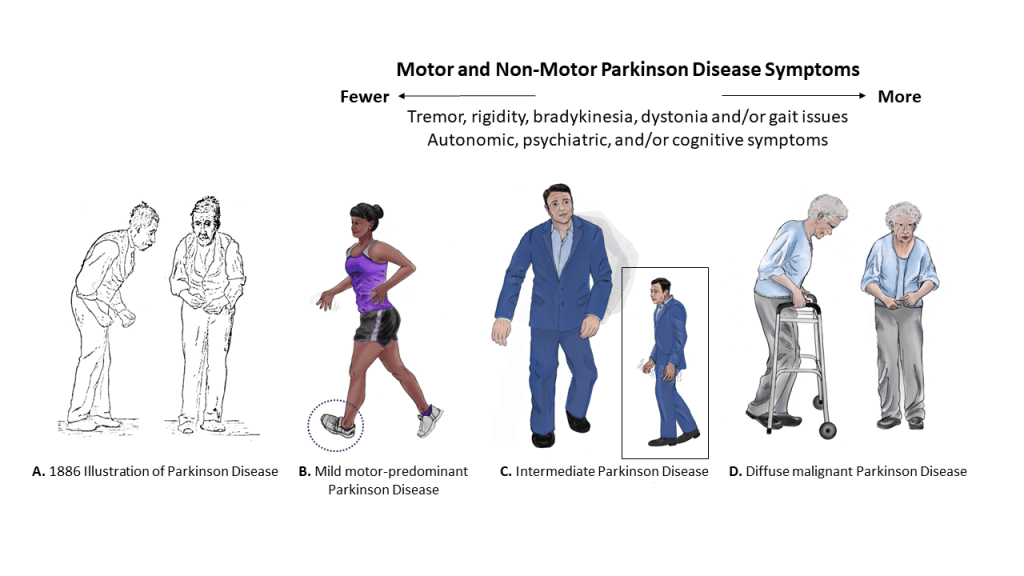
In my next installment of “What I Learned at the IDEA / ACSM Health & Fitness Summit in Denver,” let’s talk about Parkinson’s Disease (PD). This is an issue that is near and dear to me. My father (of blessed memory) had Parkinson’s Disease and I have a client living with it as well. Most of us know someone who lived or lives with it–most notably, the actor Michael J. Fox.

While at the conference, I signed up for a session aimed at trainers who might be working or interested in working with someone living with PD. The session had three speakers: one from the Parkinson’s Foundation, one who is a researcher on PD, and a third who trains people with PD. A young woman with early onset PD was also there to talk about her own experience and to serve as a “client” for the demonstrations. It was an excellent program giving us a mix of information about the disease, how to work with it, and how to find more resources. The most important thing I learned, though, was just how effective exercise can be in delaying the progress of the disease; it is truly remarkable.

One of the ideas that what was stressed to us was to get in touch with local resources for more guidance and education. There are on-line resources and certification programs that are available too. I am accustomed to training with what are called “special populations” in my work with older adults; I have special certification that has taught me the best practices for training this group. Just as I would not train a 70- or 80-year-old in the same way as a student athlete, individuals with PD require a different approach. I knew a tiny bit more than when I went to Denver, but I was inspired to dig a little deeper.

I contacted my local Parkinson’s Foundation and the next day they called me to let me know that one of the best (if not THE best) resources in the United States was located about two miles from my home; they encouraged me to contact InMotion, a free community-based program for people with PD. I called InMotion and got a return call very soon afterward from the co-founder and Chief Program Officer, Ben Rossi. It turns out that we have similar backgrounds although he has been in the fitness industry much longer than I. He invited me to come see the place; this surprised me a little bit since my company, At Home Senior Fitness, could be seen as competition.

Today I visited what I would say is one of the most impressive facilities I have seen in a long time. InMotion has fitness facilities, group therapy, individual therapy, and classes that cater to the entire person. I sat with Ben for a while and discussed my interest and got some great advice about where to go next. It turns out that we really are not in competition; the truth is they are much better at working with people with PD than I will probably ever be. What I can do is help to provide a continuum of treatment for my clients and partner with this organization.

I will do some more digging in the weeks ahead and see if there is a certification program that makes sense for me and my business. In the meantime, it is heartening to know that there are amazing professional, volunteers, and supporters who make this place a hub of activity and healing. It is a resource for those with PD and for those of us who care about and for them.