How Do I Know If I’m Making Progress?

A client recently asked me how it is possible to know if progress is being made while engaged in an exercise program. There are a number of ways to answer this.

Progression (from the word progress) is an important concept in fitness. It refers to ways that exercises are made more challenging. For instance, the amount of weight being lifted can be increased. The number of reps can be increased. An element of difficulty can be introduced like doing an exercise on one foot. In general, an exercise program needs to take into account progression so that “progress” can be made. If the same exercises are done over and over with the same intensity, duration, and resistance, there is little reason to expect that there will be increased muscle mass or endurance…or whatever the particular goal might be.

How can it be tracked? There are apps on phones and devices like Fitbits that can monitor and record workouts. Even without such technology there are ways to follow this. For example, if it took 15 minutes to walk a mile at the beginning of April and at the beginning of May it took 12, that is progress. If a person is running and they are able to go further each time (by adding a block or lap), that is also progress. These kinds of progressions are most effective when they are recorded in some way–even if on a piece of note paper.

By the way,progress may not always appear in the mirror as bigger muscles or greater definition or a smaller waistline–although those can be signs of progress. Sometimes the best indicator is a sense of feeling healthier, more fit, or energetic.

Progress does not just happen. It needs to be figured into the equation. A fitness professional is trained how to introduce this into a workout in a safe, effective way. This is particularly important for older adults. On the one hand, older adults may be more prone to injury by overtraining or training the wrong way. On the other hand, older adults may go to easy on themselves and not really effect change. A trainer–especially one who has certification to work with older adults–will know how to strike that balance.

Most importantly, know what your goals are. Once those are established it is easier to set a course that includes progressions so that you do not go from 0-60 in 10 seconds…and then hit a brick wall. Put those progressions in place, monitor results, and re-evaluate as necessary. And always remember, if it does not challenge you, it will not change you!

A *Foot*note to the Last Post

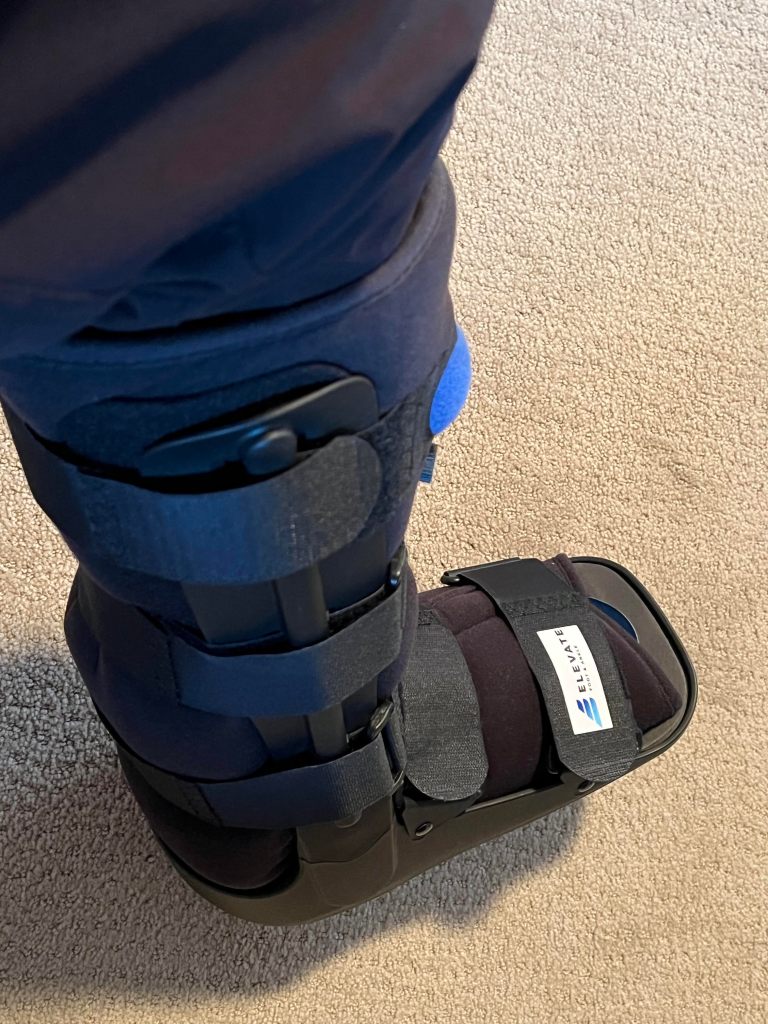
In my last blog post, I discussed the importance of taking care of one’s feet. To be honest, my post was motivated by some pain I had been experiencing in my left foot that was to be addressed at an upcoming appointment with my podiatrist. After an x-ray, I was diagnosed with a stress fracture and now have to wear a boot for four weeks. Stylish, no?

What is a stress fracture? According to the Mayo Clinic’s website: “Stress fractures are tiny cracks in a bone — most commonly, in the weight-bearing bones of the lower leg and foot. Stress fractures are tiny cracks in a bone. They’re caused by repetitive force, often from overuse — such as repeatedly jumping up and down or running long distances.” The first time I had a stress fracture, my podiatrist showed me how they happen. He took a regular #2 pencil and tapped it repeatedly on top of my quad muscles; under my quads is the femur–which is the strongest bone in the human body. The doctor told me that if he just kept tapping, eventually he would fracture the femur; it is like erosion that does its job slowly but continually.

I looked at the x-ray this week, and could not really see anything; it is not like a regular fracture where it is pretty obvious that the bone is broken. A podiatrist, however, is trained to identify these tiny cracks. The most common treatment is to immobilize the foot to allow the bone to grow back and heal the fracture. That is why a boot is most often prescribed.

Are stress fractures preventable? Yes, and no. According to the Mayo Clinic, ways to prevent stress fractures are: 1) start new exercise programs gradually so as to allow the bones to strengthen as new demands are put on them; 2) use proper footwear–I discussed that in the previous post linked above; 3) cross train–in other words, exercise different parts of the body in different ways rather than repeating one singular exercise over and over; and 4) maintain proper nutrition to ensure the proper vitamins, minerals, and other nutrients that keep bones strong. The “no” is that even when you do all these things (as I do), it is still conceivable that this can happen. I was on a hike in Arizona recently with a very uneven trail; I rolled my ankle at least a dozen times and I think this may have contributed to the stress fracture.

I will heal. This has happened before and, after some inconvenience, things will go back to normal. In the meantime, I will immobilize my foot as best I can. I will also continue to follow the recommendations about exercise, footwear, and nutrition. No 100% guarantees, but injuries will occur now and again–and they are small price to pay to avoid the negative health consequences of a sedentary lifestyle.

Don’t Forget those Feet

About fifteen years ago, when I was working full-time as a congregational rabbi, I faced a dilemma that I needed to resolve. I was the associate rabbi but would in a few years become the senior rabbi; that is not the problem. The issue was that I knew that being “in charge” would require me to do a lot more standing–especially when conducting services, and even more so at the important high holidays. How would I be able to do it when after only an hour or so my feet would start aching? Some days, after work I would take off my shoes and my feet would be throbbing.

I decided to visit a podiatrist (a medical doctor that specializes in the feet and lower legs) to see if there was something wrong. It turns out that I was pronating when I walked or stood and this was causing the discomfort; the good news was that it could be corrected with custom orthotics. It took about a week or so to get used to them, but afterwards I could feel a huge difference. My feet did not ache and I could stand, walk, and even run much longer than before.

Over the years, I have had the orthotics adjusted and even gotten new ones. I have ones that I use in my “regular” shoes and others that I put in my athletic footwear. The results are remarkable.

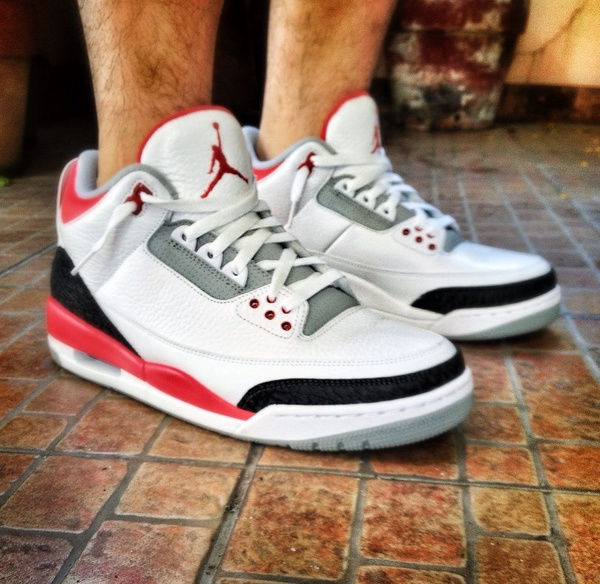
Of course, not everyone needs orthotics or the special care that a podiatrist can provide. Even so, at any age it is important to have proper footwear, in particular when engaging in athletic activities. Some of you may recall a related blog from a few years ago. It is noteworthy as well that, like tires on a car, athletic shoes have will wear out and need to be replaced. Having the proper footwear will not only protect the feet (from falling dumbbells!) but also provide proper support and alignment for the rest of the body.

How do you know if you have the right shoes? I recommend to all my clients that they go to a store that specializes in athletic footwear and has staff that is well-trained. I love DSW, but that is not the place to get properly fitted. There are some chains, but most metro areas have a locally-owned store that can provide shoes especially for cross-training, tennis, running, etc. There are others as well that are geared toward older adults and their unique requirements. Local stores have a vested interested in treating you right to keep you as a customer and rely on your referrals.

Most of us do not really give a great deal of thought to our feet….that is, until there is a problem. When they are unable to do their job the impact is huge. Do not wait until there is an issue; have the proper shoes and see a medical professional when something is not right. God gave us two feet; “Oh, the places you will go” with them–but only if you care for them!

Dementia and Physical Fitness

I recently had a discussion with a loved one about doing personal training with individuals who have irreversible medical conditions and/or cognitive decline. The focus was on whether it is ethical to accept payment to work with someone when there is little chance that the work we are doing will improve the situation.

I wrote about this tangentially in a blog post a couple of years ago in which I talked about the statement “All Lives Matter,” concluding that many people who say that really do not act in way that truly reflects it. I shared a story about an incarcerated individual with whom I have corresponded and visited for over twenty years. He is currently serving a life sentence. In 2002, he was diagnosed with a terrible cancer and called on me to counsel him on what he should do. Ultimately, he decided to undergo treatment and beat the odds by becoming cancer-free (he did the same again with a later diagnosis). One might wonder what the point is of curing one’s cancer if when it is all over s/he will still be still be incarcerated for the rest of one’s life. Is the life of an incarcerated person somehow not worth living? I learned that it is, and I have seen it played out over and over again since 2002.

In a similar vein, one could ask whether there is any point to training someone with Alzheimer’s or another end-stage disease. I addressed this in a more recent post, remembering a client who was on hospice care when I began training him. He had been athletic his whole life and his family knew that he loved to work out; in the last several months of his life, that is what we did together. Did it hold off the disease? Did it cure him? No. Did it add quality to his life on the days we were together? I would like to think so.

I do work with clients who experience cognitive decline. There are all kinds of considerations that go into carrying out this kind of training and my certifying organiation, The American Council on Exercise, has even written about it. There is research that indicates that aerobic exercise can actually help maintain (and perhaps even improve) cognitive function, but even if there was not, the quality time spent together is worth it. As with all my clients, I meet them where they are–physically, emotionally, spiritually, and mentally. I consider it a special honor to work with older adults; I believe that I make a difference in the lives of these clients (and in their families), and I know it has made a difference in mine.

Protecting those Knees

As we age, we hear more and more about people requiring knee surgery or even knee replacement. While the knee is not the most complicated joint, it is one that gets a lot of use and bears a lot of weight. It is important to be cognizant of the proper form while exercising to avoid injury; in particular, doing lunges or squats the wrong way can put a great deal of pressure and stress on the knee.

When we talk about the knee, we cannot just talk about the bones (the femur, tibia, patella, etc.) but also about the tendons, ligaments, and cartilage. All of these are susceptible to strain and injury. Working with a fitness professional is one way to help ensure that knees stay healthier–or at least avoid serious damage.

A new study referenced in the most recent issue of IDEA Fitness Journal reaches some enlightening conclusions about the connection between exercise and the risk of physical harm to the knees. As a runner (although I run less now than I used to), I always worried about the risk to this all-important joint; I assumed that our knees were like tires: they last for certain amount of miles and then they need to be replaced! Researchers at the University of Southampton and University of Oxford (both in England) found that the benefits of exercise–even for the frail and elderly–outweights the risks with regard to our knees. The study focused on the likelihood of developing knee osteoarthritis from physical activity. 5000 participants were followed for 5-12 years and the data suggests that neither the amount of energy spent in physical activity or the length of time were associated with a risk of developing arthritis.

This is good news; my last blog post focused on a related idea. Many people are afraid to work out for a variety of reasons–including injury. Studies show that the more information that can be shared with those beginning an exercise regimen, the greater the chances of success; that information should include debunking myths and stressing the benefits of exercise (versus the risk of not) as well as setting proper expectations of what the process will be like.

My knees have not worn out (yet), but it is good to know that it does not appear that years of running and physical activity might lead to knee arthritis in the future. One more reason to go boldly ahead keeping myself fit for whatever the future brings.

Overcoming Fear of Exercise

On an intellectual level, most people understand that exercising is good for us. On an emotional level, it is a little more complicated. Many of us are afraid to begin a program of exercise because we may think that it is too late, that we will get injured, that it will be too difficult, that it will not make a difference, etc. This becomes even more challenging for older individuals and/or those with long-term health conditions (LTCs).

I was diagnosed with Crohn’s Disease when I was 12 years old. This auto-immune digestive disease has all kinds of “embarassing” symptoms, but one of the main problems for me was that it was difficult to maintain a healthy weight (I was underweight), and my energy levels were lower than normal. As a result, in high school, I was excused from Physical Education classes; this did not set me on a path of healthy habits and fitness. It took over 25 years for me to realize the importance of taking care of my whole body and actually do something about it. Thank goodness, I have been in remission for a long time and am in great physical condition.

A recent statement in the British Journal of Sports Medicine, addresses this issue. The Physical Activity Risk Consensus group at University of Edinburgh in Scotland advises that while the benefits of physical activity for those with LTCs outweigh the risks, work needs to be done to properly prepare these individuals for what they will face when they begin exercising. It is all about setting proper expectations and readying them for how their bodies may react. The statement addresses 8 specific concerns: 1. neuromuscular pain, 2. fatigue, 3. shortness of breath, 4. cardiac chest pain, 5. palpitations, 6. elevated blood sugar levels, 7. cognitive impairment, and 8. falls and frailty. This all sounds kind of scary, right? The researchers say that those with LTCs can be helped to overcome their fears and reticence by having informed conversations with healthcare providers about the risks; this is why we always say, “Talk with a healthcare professional before beginning any exercise program.” Each case is different, so concerns will vary, conditions will not be the same, and point of entry will be unique. Looking at some of the 8 concerns above, it can be explained that some muscle pain is normal and that it will lessen as the body acclimates to the new routine. Fatigue and shortness of breath are normal when exercising. This should be accompanied with a clear description of the benefits of physical activity and how it can lead to reducing the occurrences of these 8 concerns.

Working with older adults, I am constantly reminding my clients of why we are doing what we are doing. I will say things like: “this exercise is strengthening the muscles that will help you walk better,” or “the more you practice doing this activity, the better your balance will be and the less likely you will be to experience a fall.” Fear is real. It stopped me when I was younger–when more physical activity was actually what I needed; I wish that there would have been a doctor who would have prepared me to leave my comfort zone. Thankfully, I eventually did…but it took a quarter of a century.

Manage expectations–both in terms of results and challenges–and most individuals, including those with LTCs, will have a greater chance of better health outcomes. The research backs it up.

Cover All Your (Muscle) Bases

In youth, there are certain “rules” that many follow when engaging in resistance training. The reasoning goes that for men to be more attractive they need to concentrate on their arms and chest. Women may feel the need to focus on abdominals and glutes. These rules do not apply in the same ways as we enter older adulthood.

Do not take this to mean that older adults are not concerned about their appearance; rather, as we age we need to take a more holistic approach to the muscles we exercise. It is important to pay attention to the muscle groups that help us to perform the activities of daily living (ADL) such as walking, climbing stairs, carrying groceries, bending down to pick up something we have dropped on the floor, etc., not just the ones that get us noticed when we wear tight clothes! After all, what good is having gigantic biceps and a huge chest if we cannot make our way across the room?

A recent article on AARP’s website by Michele Wojciechowski highlights some of the often-ignored muscle groups that deserve our attention and exercise. The author highlights the following areas: 1) The hip area (the glutes and hip flexors); these are key to walking and getting up from a seated position. 2) The core; this part of the body is from the shoulders through just below the hips and serves as support for the entire upper body. Often, older adults with poor posture have weakened core muscles. 3) The knees–which are not a muscle, but a joint; they are supported by the quads and the hamstrings; keeping those strong and limber is key to walking, climbing stairs, standing, and maintaining balance. 4) Ankles and feet; again, vital to walking but also important in maintaining balance and stability; ask anyone who has had feet or ankle problems and they will tell you that it seriously inhibits mobility. 5) The neck; not keeping the supporting muscles strong and limber will literally cause “a pain in the neck.” It is not uncommon at all to see older adults whose heads are perched out well in front of the chests; this causes problems beyond appearance, possibly affecting sleep, posture, and the ability to drive a car. 6) Hands and wrists; while many are hit by arthritis in this area, others simply allow the lower arm muscles to weaken, which limits the ability to perform fine motor skills like writing, eating, typing.

As I age, I am concerned about my appearance. I always want to put the best version of myself forward. For me this means not only working on the “sexy” muscles, but also on the ones that will keep me active and independent. Do not overlook these muscle groups or they will have a way of calling your attention to them in a way you might not enjoy.

Osteoporosis and Weight Training

It has been a long-held perception that as we age we need to be more careful and not “overdo it.” While it is true that older adults should take appropriate caution with physical activities, research overhwelmingly shows that being active–including weight training–is associated with better health outcomes. Sometimes it happens in unexpected and surprising ways.

Osteoporosis is a condition in which bones bones become weak and brittle; this condition is especially prevalent in older women. Under normal circumstances the cells in our bodies are constantly dying and being regenerated; this includes our bones. Osteoporosis occurs when bone tissue is reabsorbed into our bodies at a faster rate than it is replaced. The bones (osteo) become porous (porosis) as shown in the picture above. They become especially susceptible to fracture.

How can it be treated? Proper diet and medications are effective, but so is weight training. Wait! What? We are going to ask people with brittle bones to lift dumbbells?!?! As a matter of fact, this is a great way to strengthen bones. Our bodies respond to stimuli according to the SAID principle. SAID stands for Specific Adaptation to Imposed Demands. What this means is that when we make our bodies act in a certain way, it will change physiologically to accomodate those new requirements. As an example, postal workers who have a walking route (as opposed to sitting in the mail truck) often have stronger legs and amazing calves. Likewise, folks whose work requires them to do heavy lifting of packages will develop larger arm, shoulder, and back muscles. Their bodies have adapted specifically to the demands opposed on them.

How does this work with Osteoporosis? When we train with weights, our bones get the message that they need to work harder and get stronger; the bones respond by creating new tissue at a faster rate. Lower body bones can also be strengthened by weight-bearing exercises like walking.

Is this dangerous? Like any physical activity, there are always risks. Those with Osteoporosis should be aware of their surroundings to avoid injuries and falls which can result in broken bones. They should also avoid high impact activities like jumping or those that require jerky or sudden movements. Otherwise, there are few restrictions with regard to just how heavy those weights can be.

It seems somewhat counterintuitive to put stress on brittle bones but, in fact, it is one of the best things to do for Osteoporosis. As always, consult a healthcare professional before embarking on any new fitness regimen, and let your fitness professional know of any conditions that might impact your health and safety. Otherwise, do not be afraid to pick up those weights; your bones will thank you!

Important Info for Older Adults about Organ Donation

As some of you may know, I just got my brand new “Donate Life” license plate–just in time for National Organ Donation Day, February 14. The plate reads: GV1KP1 (Give 1, Keep 1)–referring to my kidney donation this past May. I am pretty excited to have it on my car, as I hope it will encourage others to consider organ donation.

Those of you read my previous posts know that I was quite surprised that I was able to donate my kidney in the first place; this was because of my past and current medical history. Although I am in good shape, keep myself physically fit, and in a healthy weight range, I am by no means in perfect health. I was also approaching 58 years of age; the surgery took place the day after my birthday. If I am being honest, I was fairly certain that I would not qualify and was somewhat shocked when I did.

When people think organ donation, I believe they mostly consider organs donated when someone has died; this gets a fair amount of press–and rightly so–when something positive is able to come from something tragic. This is certainly a source for many of the organ donations that take place, but it is preferable to have a living donor for certain procedures; obviously, heart donations cannot come from a living donor (or at least one that will survive the operation!). For kidneys and livers, it is preferable to have the tissue come from a living donor.

Is there an age at which one is too old for a transplant? For recipients, the question is a complicated one. Age is a number and there are some 80-year-olds who could not tolerate such major surgery, whereas others might come through it with flying colors. Each hospital system’s transplant program has its own guidelines. When it comes to donating an organ, many of the same factors are taken into account. There are some people into their 70s and even 80s who have been qualified to donate–and the recipients have benefitted from their lifesaving gift.

As I wrote in another blog post, never assume that you cannot make a difference. Do not automatically believe that you are not going to qualify to do something that will save another person’s life or dramatically increase its quality. Age is just a number. The better we take care of ourselves, the more likely we are to live life to the fullest and be able to give to others in meaningful ways.

Interested in learning more about organ donation? Visit http://www.donatelife.net.

I’m a Contributor

It’s official! The latest issue of Northeast Ohio Boomer & Beyond is out and I am proud to be an official “contributor” to this publication on matters of Fitness for Older Adults.

In speaking with the editors several months ago, they told me that they had felt that this topic was one that had been missing from the magazine. Luckily, someone in the advertising department was a client of mine at a gym where I worked previously and recommended me. I have been interviewed for radio programs and articles in the Cleveland Jewish News on older adults and fitness, but this is my first regular gig. Now I will appear in every forthcoming issue; the magazine is published six times per year. Additionally, some of my blog posts will be featured on their website.

I am honored to have been chosen to be a regular contributor. It is always satisfying to be recognized for one’s hard work and expertise.

If you are in NE Ohio, check it out or hit the link above to see the article.