Recalculating…

This is the last installment of what I learned at the IDEA / ACSM Health & Fitness Summit in Denver. The last session that I took was about making modifications in exercises to avoid pain for clients and class participants with joint or muscle issues. Since I deal exclusively with older adults, almost all of my clients have at some time or other needed modifications to the exercises we do so I was looking forward to brushing up on my skills and knowledge.

There are lots of exercises. There are also lots of muscles and joints. There is rarely one single exercise that will benefit a certain part of the body. For instance, the triceps can be worked in a number of ways: bench triceps extensions, overhead triceps extensions, cable push-downs, triceps dips, push-ups, triceps kickbacks, etc. If doing one of them causes pain, that does not necessarily mean that it is impossible to train the triceps; on the contrary, there are almost always other forms of the exercise that do not create discomfort. Additionally, there are ways to adjust the amount of weight, the speed of the exercise, or the number of sets to achieve the same goal without pain.

I have to be honest that I out of the four courses I took, this was the one that I found least helpful to me. There was more technical jargon than necessary (presenters do not need to call it the glenohumeral joint; among professionals there is no need to show off–just call it the shoulder) and, frankly, my work over the past 7 years has required me to come up with all kinds of adjustments to the exercises we do one-on-one and in a group setting. One of the things I enjoy the most in my on-line group fitness class is seeing the variations of movement on the screen among the participants based on their abilities; they have learned how to achieve the same goal in a different way. It is a win-win.

Even so, I did pick up a few new “tricks.” I also think it is important for trainers who do not necessarily work with special populations to understand that not everyone comes to a personal trainer to become an elite athlete. Many are looking to maintain strength, agility, balance, and independence; the path for older adults and those with disabilities looks very different from the one followed by a 19-year-old basketball player.

The human body is a wonder. We all have certain assets and liabilities in our physical fitness. It is reassuring to know that in almost any condition there are ways to build better fitness. We just need to be flexible and recalculate how to keep it pain-free.

Training People with Parkinson’s Disease

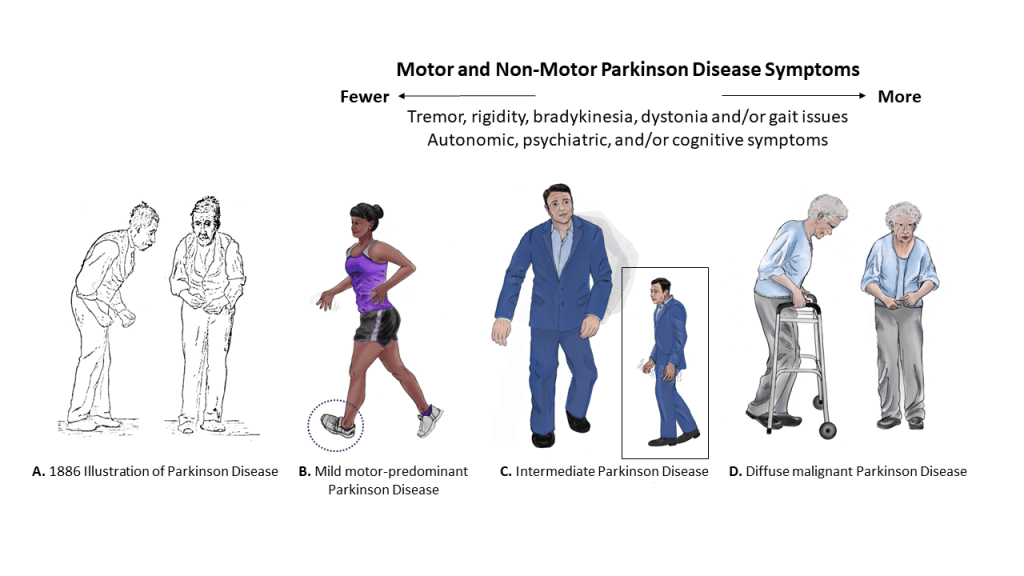
In my next installment of “What I Learned at the IDEA / ACSM Health & Fitness Summit in Denver,” let’s talk about Parkinson’s Disease (PD). This is an issue that is near and dear to me. My father (of blessed memory) had Parkinson’s Disease and I have a client living with it as well. Most of us know someone who lived or lives with it–most notably, the actor Michael J. Fox.

While at the conference, I signed up for a session aimed at trainers who might be working or interested in working with someone living with PD. The session had three speakers: one from the Parkinson’s Foundation, one who is a researcher on PD, and a third who trains people with PD. A young woman with early onset PD was also there to talk about her own experience and to serve as a “client” for the demonstrations. It was an excellent program giving us a mix of information about the disease, how to work with it, and how to find more resources. The most important thing I learned, though, was just how effective exercise can be in delaying the progress of the disease; it is truly remarkable.

One of the ideas that what was stressed to us was to get in touch with local resources for more guidance and education. There are on-line resources and certification programs that are available too. I am accustomed to training with what are called “special populations” in my work with older adults; I have special certification that has taught me the best practices for training this group. Just as I would not train a 70- or 80-year-old in the same way as a student athlete, individuals with PD require a different approach. I knew a tiny bit more than when I went to Denver, but I was inspired to dig a little deeper.

I contacted my local Parkinson’s Foundation and the next day they called me to let me know that one of the best (if not THE best) resources in the United States was located about two miles from my home; they encouraged me to contact InMotion, a free community-based program for people with PD. I called InMotion and got a return call very soon afterward from the co-founder and Chief Program Officer, Ben Rossi. It turns out that we have similar backgrounds although he has been in the fitness industry much longer than I. He invited me to come see the place; this surprised me a little bit since my company, At Home Senior Fitness, could be seen as competition.

Today I visited what I would say is one of the most impressive facilities I have seen in a long time. InMotion has fitness facilities, group therapy, individual therapy, and classes that cater to the entire person. I sat with Ben for a while and discussed my interest and got some great advice about where to go next. It turns out that we really are not in competition; the truth is they are much better at working with people with PD than I will probably ever be. What I can do is help to provide a continuum of treatment for my clients and partner with this organization.

I will do some more digging in the weeks ahead and see if there is a certification program that makes sense for me and my business. In the meantime, it is heartening to know that there are amazing professional, volunteers, and supporters who make this place a hub of activity and healing. It is a resource for those with PD and for those of us who care about and for them.

Differentiating My Brand

While attending the IDEA / ACSM Health and Fitness Summit, I availed myself a class taught by Billy Polson about differentiating one’s brand. That is just fancy for what makes my business stand out from the rest.

In the fitness world there are lots of big box gyms, community centers, and garage-style fitness centers. When I came up with the idea for At Home Senior Fitness, I knew that it would stand apart from all of those because of two main components. Our training would be limited to older adults (55+)–also meaning that all the trainers working with me would have training, experience, and/or specialization in that area. The other distinguishing factor would be the “at home” aspect; I do not own a brick and mortar gym, but rather provide services to my clients on Zoom or in their own homes (or in a fitness center located where they live).

These two factors differentiate me from any other business in Northeast Ohio and, as I have found out, from most other fitness firms in the USA. Many cater to older adults and many do at home training; very few do both. Even though I have my niche and have stuck to that core mission, there are still ways that I can further set my company apart from the rest. This was part of Polson’s challenge to each of us–no matter how unique our business model, we have to continue to differentiate.

What can I do to make At Home Senior Fitness excel even more? I have long talked about filming videos that demonstrate how to do various exercises safely; I have even toyed with putting together entire workouts and courses in video format. I do have regular communication with my clients, as well as someone who does social media for me, but I can probably improve on this as well. Perhaps I could also provide clients with better direction about what they should be doing on the days when they are not working with me. There are lots of ways that I can better the work that I am doing…but that all takes time.

This is why it is important for me to schedule in time (which I now do) to work on the business instead of just in the business. Once a week, I will spend one hour working on these projects. Of course, the goal is to expand my business from a financial standpoint, but more essentially the aim is to be able to reach more older adults who can benefit from physical activity and exercise.

The challenge has been put forth by Polson, and now I will do my best to rise to the challenge.

Is Your Trainer still Certified?

I just returned from the Health & Fitness Summit in Denver. This is the fifth conference sponsored or co-sponsored by IDEA that I have attended. IDEA is an educational organization that provides on-line courses and in-person events that allow fitness professionals to stay up-to-date on the newest research and trends in the industry, as well as to work toward new areas of expertise. Aside from gathering with our fellow trainers, for many of us, it is an opportunity to obtain the all-important Continuing Education Credits that we need to keep our certification(s).

Just as attorneys and doctors have to keep learning after they finish their formal school training, fitness professionals are required to participate in continuing education. It varies for each certifying agency, but usually is around 10-20 hours of study per year. I have two certifications and they require 10 credits per year; luckily, I can use the same course for both accreditations.

Why is this important? No one wants an attorney who is not up on the latest changes in the laws where they practice; there is perhaps nothing worse than paying big bucks to get out-of-date or otherwise incorrect legal advice. The same is true of doctors; would you want a procedure that was standard in the 1960s or do you want the latest techniques that offer the greatest chance for success with the least difficult recovery? Research about human physiology and exercise continues on a regular basis–although some of it is in jeopardy based on current threats to funding of the NIH and CDC. What trainers thought was best for older adults and clients with chronic illnesses such as Parkinson’s, Diabetes, or cognitive decline in the past is not necessarily what is recommended today. Every year, when I attend these conferences–as well as when I do on-line courses–I learn more about how to best get my clients the results they desire while keeping them safe and injury-free. CECs are not just what I need to keep my certification current; they are what keeps me at the top of my game and of value to my clients. If your trainer has let their certification lapse, it is not just a formality; it means you may be getting inferior services.

In the next blog posts, I will discuss some of what I learned this year. I will share some of the latest research–which I can do because I take my continuing education seriously.

Dental Health & Physical Fitness

Earlier today I went to the dentist for the final step of having a crown replaced–unfortunately, not the kind worn by royalty! As the dentist was making sure the crown fit perfectly, I wondered just how much dental health impacts physical fitness and vice-versa.

When I was studying for my personal training certification, I remember briefly learning about overall physical health (including oral) as part of the big picture. We were taught that having good oral hygiene was not only beneficial for teeth and gums, but also for overall wellness.

Some of the key connections are:

  1. Brushing and flossing regularly prevent cavities, gum disease, and bad breath. Having a “fresh” mouth (not the kind that gets you in trouble) is important during exercise. Besides, who wants to work out with someone whose breath could knock over a horse?
  2. Having healthy teeth and gums are necessary for eating the proper foods to promote fitness. Certain foods can help with this (leafy greens, fruits, dairy), while others are harmful (sugary snacks and drinks). If your teeth and gums are unhealthy, the proper diet will suffer.
  3. When we exercise it is important to keep well-hydrated. Drinking plenty of fluids can help wash away food particles reducing the odds of developing plaque and gum disease. It also can help produce healthy saliva to protect tooth enamel.
  4. Chewing (and jaw exercises) help maintain stronger bite and jaw muscles. When we exercise we often think of the building of muscles like biceps, calves, pectorals, and abs, but what would happen if the muscles we use in the eating process got so weak that we could not eat on our own?
  5. Avoid bad habits like consuming too many sugary drinks, excessive alcohol, and smoking. They increase the risk of damage to teeth and gums…and can cause bad breath! They are counterproductive to our fitness as well.
  6. Just like our physical fitness routines work best when done on a regular basis, have a regular habit of visiting the dentist for check-ups and cleanings. Dentists can spot little problems before they become serious; they now even check for different forms of oral cancers.

Other benefits of exercise are a stronger immune system which can fight infections (including those of the mouth) and other oral health issues. Working out can reduce stress, which can in turn lead to reduced teeth-grinding and jaw-clenching; these take a real toll on dental health.

Make it a regular habit–just like exercising–and you will find that improved oral health will lead to improved overall health and fitness. On the flipside, exercising regularly can help ensure that our teeth and gums will be there for as long as we need them.

Recovery Time

Sometimes less is more, and sometimes more is more. When it comes to fitness, both can be true.

When it comes to our workouts, more time spent on cardio exercises has a greater effect on the number of calories burnt, endurance, and circulatory and respiratory capacity. With regard to resistance training, the heavier the weight, the greater the number of reps and sets, the more likely muscle will be built. The more you do the, the more you accomplish. The Jewish sage Ben He-He said “the gain is in proportion to the effort,” and he had it right over two thousand years ago.

At the same time, there is such a thing as overtraining. Some people take “the more, the better” to mean that they should be working out seven-days-a-week, 365-days-a-year. Overtraining can cause all kinds of injuries that can set progress back. That is why recovery time is so important.

There are a number of factors to take into account when considering how long we should recover after a workout (or even after a specific exercise). When working with some of my clients I may alternate between a group of core, lower-body, and upper-body exercises to give the muscles an opportunity to recover before moving on to a second or third set; in other cases, when we are working the same set of muscles, we take a short break between sets. These all take place within one workout.

Between workouts, however, we must think about:

  1. The intensity of the exercise. The more strenuous it is, the longer recovery will take. This could be anywhere from 24-48 (or even longer) between working specific muscle groups; less time may be necessary if the exercise is more moderate.
  2. The type of exercise. For example, weight training usually requires more recovery time than cardio. Several sets of bench presses on Monday may necessitate waiting until Wednesday to do upper body resistance exercises, whereas a bike ride on Monday might easily be followed by a run or a hip-hop class on Tuesday.
  3. Your fitness level. If you are just beginning, it is all the more important to allow for recovery; going from 0 to 60 in 5.4 seconds might be great for your car, but the effect on our bodies is dangerous. It is important to slowly build up weight, number of reps and sets, while including recovery time. On the other hand, those who are more fit may find that recovery times are faster.
  4. Age. As we age, it takes longer to recover. This is not always the case, but in general it becomes more important to take rest between exercising muscle groups, as well as to have days with no exercise or light exercise.
  5. How well you sleep. A good night’s sleep is key to a good workout. Some of us sleep better than others, but if you have had a particularly rough night or simply did not get in the requisite number of hours, a recovery day is a good idea, or at least aim for a less intense workout.
  6. Stress. This seems like an odd thing to consider, but it can have several effects. Some of us, when we are stressed, have a tendency to work harder or at a faster pace because we are “wound up;” this can lead to overtraining, lack of attention to form, and even injury. Stress also saps our energy; we may think we have the power to do an exercise only to find that our strength is flagging.

We may worry that taking time off or resting is “cheating,” but it is an integral part of the process of staying healthy and boosting our levels of fitness. Recovery time allows muscles to build/rebuild and gives our metabolism a chance to adjust to activity. It is also key to preventing injuries due to overtraining. Regular allowances for recovery help ensure that we do not have to take an even longer time for recovery because we have “overdone it.” Anyone who has ever had a surgery due to an exercise injury knows just how far it can set us back.

Remember: Work hard. Rest hard.

Trying New Adventures

7350787431356042944-1

I have to admit that as I get older, I sometimes get skittish about trying new adventures. When some friends from Columbus suggested we “meet in the middle” to go snow tubing in Mansfield, OH, I was not so sure about it. My wife, on the other hand, was totally into it…and I did not want to be a party pooper. The weather forecast for the day was very cold (low- to mid-20s) and I was secretly hoping we might cancel and go for something a little more tame. Nobody backed out, so we met for lunch before heading to the tubing site. We laughed at the table as we all admitted that we were a little scared about this new experience; I was sure we would need an EMS to carry us out of the place!

As we approached our first run (pictured here-that’s me in the orange hat), I was more than a bit concerned. The moment we started going, though, it all turned in to laughing and whooping. The snow on the chutes was well-packed and icy, and we flew! We could not wait to do it again and again. We even forgot about the cold. What a great day with good friends.

I bring this up because I think many older adults are afraid to try new experiences. There is fear of the unknown, fear of injury, and fear of not enjoying it. These are all legitimate, but there is a price to be paid for not attempting new things: it can be harmful to our emotional health. Research shows, as well, that novel experiences are good for our brain health.

I am not suggesting that everyone has to go snow tubing on a cold winter day, but rather that even with our decades of experience, there is a lot out there that can be new and exciting to us. There are adventures that are more tame like going to a new museum, a state or national park, or volunteering for a cause you care about. More challenging might be going camping, taking a canoe trip, or traveling overseas. Then there are more serious adventures like snorkeling/scuba diving, going on an ATV ride, jumping out of a plane (with a parachute!), or even running for office. Each one of them has the potential to stimulate our senses, our minds, our imagination, and our sense of self-confidence. Doing them with friends or family members can create special memories and opportunities for social interaction and growth.

I don’t know if I’ll ever go sky-diving, but this year does hold plans for some domestic and overseas travel. I will be going to a conference to pick up continuing education credits to keep my Personal Trainer credentials current, and look forward to learning a lot. I may also consider taking on a new language!

Keep your life exciting–and remember your limitations so that you can keep yourself healthy and safe. Remember, it is not the years in your life that matter, but the life in your years!

Brain and Brawn

The question of which is more important in getting through life–brains or brawn–has been around for a long time. What brings the greatest success–physical strength or intellect? The truth is that at different times one or the other may be more critical to overcome an obstacle. The ability to pivot between them is key. A recent study shows that there is an important connection between them for older adults.

An article that came out in early December, 2024, in Medical News Today describes the results a study at Johns Hopkins Medical Institution that will be formally presented in the near future connecting sarcopenia and dementia. Sarcopenia is a condition in which a person loses strength and/or muscle mass; this generally occurs as a result of inactivity and is seen a great deal in older adults.

Researchers looked at the temporalis muscle in a statistically significant group of older adults; this is the muscle that is responsible for closing the jaw. A small temporalis is associated with smaller overall muscle mass in the body, and a larger temporalis points to larger overall muscle mass; this makes it an easy indicator to assess whether a person has sarcopenia or not. The temporalis of each study participant was evaluated and it was found that those with smaller ones (ie., with lower muscle mass) were much more likely to develop dementia at the end of the study (around six years later).

This news is significant because it points to another way that dementia can be identified early, and even how the odds of it developing can be reduced. The greater the muscle mass, the lower the risk. How can muscle mass be increased? Two main factors are at play. First is exercise; resistance exercises (using weights) help to increase muscle mass. There is a misconception that older adults necessarily lose muscle mass, but it can be prevented or slowed with continued exercise. The second is consuming enough protein; protein is what helps to maintain and build muscle. Protein can be found in meat, poultry, fish, and eggs, but there are many plant-based options such as beans, nuts, and lentils.

People ask me why individuals use a personal trainer in their senior years. The motivation, in general, is different than younger folks; it is less about appearance or sports performance and more about maintaining general health and independence. We have known for a while that cardio exercise (the kind that gets your heart pumping like running, cycling, dancing, etc.) is good for the brain; it gets the blood to circulate so that it brings rich nutrients to all the cells–including brain cells. Add to this now that resistance exercise is another brain healthy activity!

This study is just one more reason for us to ensure that we are getting both cardio and resistance exercise. It is not just good for our muscles, but for our brains too!

Baby, It’s Cold Outside

Here in Northeast Ohio, winter has definitely arrived (albeit several weeks before the winter solstice). Temperatures have been in the 20s (Fahrenheit) and the snow has been falling. I happen to love snow, but am not a fan of the cold. Others could do without both, and for still others “it’s the most wonderful time of the year!”

What effect, though, does the cold weather have on our bodies–especially for older adults? It turns out that seniors are more affected by the lower temperatures than most of the rest of the populations. As we age, our bodies are less efficient at regulating their own temperatures and retaining heat. Our blood vessels are not as elastic as they once were and warming blood may not make it out to extremities as well as they once did. The layer of fat under our skin typically thins out as we age leaving us less “insulation.” Additionally, there are some medical conditions and medicines that can interfere with the regulation of our body temperature. All of this leaves older adults more vulnerable to the cold.

The National Institute on Aging (part of the National Institutes of Health) has a number of recommendations to prevent serious conditions that can occur as a result of exposure to the cold such as frostbite and hypothermia. As for being outside, “check the weather forecast for windy and cold days. A heavy wind can quickly lower your body temperature — try to stay inside or in a warm place. If you must go out on windy, cold, or damp days, don’t stay outside for long. Let others know when you’re planning to spend time outdoors and carry a fully charged mobile phone. Keep warm blankets and extra cold-weather clothing in your car. Wear a hat, scarf, and gloves or mittens to prevent loss of body heat through your head and hands. Also consider using disposable or rechargeable hand- and foot-warming products. Wear warm and loose layers of clothing. The air between the layers helps to keep you warm. Wear a waterproof coat or jacket if it’s snowy or rainy. Change out of damp or wet clothes as soon as you can.”

Believe it or not, exposure to cold can also be an issue inside. The NIA recommends the following: “Set your heat to at least 68°F. Even mildly cool homes with temperatures from 60 to 65°F can lead to hypothermia in older adults. Place a rolled towel in front of doors to keep out drafts. Keep your blinds and curtains closed, and if you have gaps around the windows, try using weather stripping or caulk to keep the cold air out. Dress warmly on cold days, even if you are staying inside. Wear socks and slippers and make use of throw blankets. When you go to sleep, use extra covers. Wear long underwear under your pajamas and consider wearing a head covering. Make sure you eat enough food to maintain your weight — some body fat is necessary for staying warm. Avoid or limit alcohol intake. Alcoholic drinks can make you lose body heat. Ask someone to check on you during cold weather. If a power outage leaves you without heat, try to stay with a relative or friend.”

Winter in northern climes presents unique challenges to older adults. With the proper precautions–outside and inside–we can enjoy (or at least survive) what the season has to offer.

Stay dry. Stay warm. Stay safe!

There’s the Rub

For many years, I have taken advantage of the opportunity to pamper myself with massages. I began during the days when I was a serious runner and was living with daily aches and pains. I found the right massage therapist who was able to work out the knots, stretch what was tight, and also provide a level of relaxation. I really view massage not so much as a pampering, but as a form of self-care.

As we get older, however, is massage still a good idea? The answer is “yes,” but there are certain factors to take into account to make sure it does not become a “no.”

The advantages of massage are many. As I found out, it can provide pain relief–even for chronic conditions such as arthritis, injuries, and overtraining. Many of us have more irregular sleep patterns as we get older, and massage can help improve the quality of our sleep. Older adults have many things to worry about and massage can be an ideal way to relieve stress and anxiety; human touch has a healing effect. It has been shown that it can even reduce blood pressure. One of the things that I focus on with my clients as well as my fitness class is stretching; massage can integrate stretching which leads to a better range of motion in the joints, tendons, and ligaments. Not surprisingly, massage improves blood circulation; this is especially important for those with diabetes, but is helpful for all of us. Finally, it can be an effective part of recovery treatment for stroke by increasing blood flow to areas that have been impacted.

What are the factors to take into account? Everyone reacts to massage differently. Some of us have a higher tolerance for pain than others. Some of us have more sensitive skin. If you have concerns, definitely discuss it with a doctor first.

A massage therapist should check in with you about whatever disabilities, chronic conditions, or pain you are experience before beginning. If s/he jumps in without checking those things, that is a red flag. Additionally, many of us may need a more gentle touch; as we age our skin gets thinner, and we do not want a level of pressure that is so strong that skin is abraded or even torn. Pressure should also be modulated to account for osteoporosis or other conditions. Often a massage therapy establishment will have someone on staff who is specially trained to work with older adults; find out who it is and see if that person might be the best fit for you.

Massage has been around for centuries. The advantages are indisputable. As we age, though, it is in our best interest to be more careful so as to avoid making things worse. Find a therapist who is patient, tolerant, and kind, and enjoy the benefits of a great massage!