
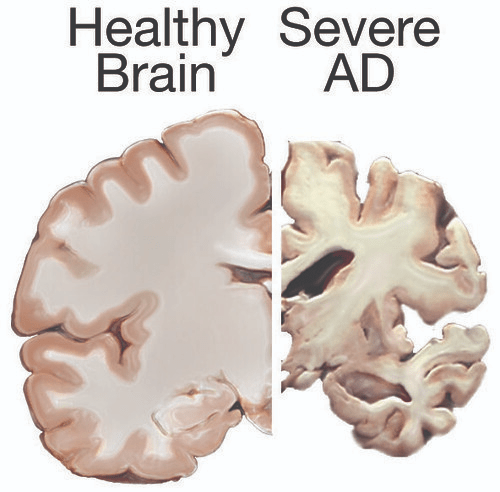
Training Clients with Dementia

September is World Alzheimer’s Month; it is a time to raise awareness about Alzheimer’s disease, promote brain health, and support those affected by the condition. 

As part of my education to become a Personal Trainer, I had to learn about working with “special populations;” this can refer to youth, those with chronic diseases, and those with disabilities. After my certification as a trainer, I studied to become a Functional Aging Specialist. After obtaining that specialization, I was better prepared to work with older adults living with a wide variety of physical and cognitive conditions. I thought I knew all that I needed to know to work with people living with dementia.

Book-learning and seminars, however, are no substitute for hands-on experience. Over the last seven years, I have had the opportunity to work with several clients at various stages of Alzheimer’s Disease or other forms of cognitive decline. It is interesting and challenging work, and I have learned a lot.

There is a question, though, about what the benefit of such an exercise program might be. I have posted about this in the past, but it bears repeating as we work our way through World Alzheimer’s Month. The only non-medical way in which brain health can be improved is through exercise in conjunction with a proper diet and sufficient rest. The heart pumps and circulates nutrient rich blood to all parts of the body; when we exercise (especially cardio) that process speeds up and brings more nourishment to the cells, including those in the brain. Research shows that regular exercise can help to slow the progression of the disease.

There is another aspect though which should not be overlooked. For some of my clients with dementia, the time that I spend with them is an opportunity to engage socially with someone aside from family or caregivers. I always come prepared for a workout especially designed for the client and his/her capabilities; in that respect, they are no different than my other clients. What is different is the way the session may proceed. I usually need to demonstrate exercises several times–even after we just completed a set; this requires patience on my part, but I have gotten accustomed to this and it has changed the way that I cue all my clients for the better.

Related to this is that I must modulate the conversation that I have with my clients with dementia. Ask any of my clients and they will tell you that I love to chat during our sessions; it helps to engage the client and make the session appear to move more quickly–while still getting the same amount of work done. The kinds of questions I may ask clients with Alzheimer’s Disease and the topics we might discuss are different. In most cases, I cannot ask “how was your weekend?” as they may not remember. I can usually ask about things that happened many years ago (those memories are often preserved), but most of the time I focus on the present moment. I may talk about what is going on in my life or the weather or the local sports teams. I like to focus on the present moment and making the most out of it for my client–from an exercise and social standpoint.

World Alzheimer’s Month is a time to reflect on the way that this disease has affected so many individuals and families. It is a time to advocate for more research (rather than cuts in funding). It is also a month in which we can reach out to those around us with dementia and help to make their present moment just a little bit brighter. I am proud of my role as Personal Trainer in helping to make that a reality.


Is Fitness Discretionary?

Most of us do not have unlimited resources, so life involves regular decisions about what we can afford to do and what we cannot afford to do. Those who follow a budget know that there are certain items that are non-negotiable and need to be accounted for each month like rent/mortgage, groceries, transportation costs, etc. What is discretionary? Going to get a $6 cup of coffee, seeing a movie in a theater, attending a concert, buying that umpteenth pair of shoes….

Where does keeping fit and healthy fit in?

In the United States this is a sticky issue. I recently returned from a trip overseas and had a few conversations with folks who live in countries where health insurance is provided to the public through their taxes. Everyone is insured. No one goes bankrupt because they become ill. No one is denied care because of a “pre-existing condition.” These people find our system in the US to be quite puzzling–especially since our country has the resources to provide medical care for all its inhabitants if only we would set our minds and resources to it. (As a point of interest, these people come from countries like Canada, United Kingdom, Australia, and Portugal–all of which have higher life expectancies than the US and all of which provide free healthcare to legal residents).

This, however, is not the system we have in the US. We have to look out for ourselves and our loved ones at our own cost. Even though the Affordable Care Act (aka Obamacare) is meant to increase the number of people with health insurance, there are still far too many who do not have access to affordable healthcare. Tough choices have to be made all too often.

What can we do to lower the cost of staying alive and free of illness? As always, a proper diet, exercise, sufficient rest, as well as avoiding smoking and excessive drinking are a big part of the solution. Much of what I do in my work as a personal trainer is helping individuals stay fitter, stronger, and healthier for longer–but the services I provide are not free. For some people, the cost is prohibitive. Even those who can afford it often view fitness expenses as discretionary. Belonging to a gym, taking yoga classes, or working with a personal trainer are seen as luxuries rather than healthcare necessities.

As long as we have the system in place that we do in our country, we need to think about the money spent on fitness and self-care not as discretionary, but rather as an investment in our present and our future. The better job we do of taking care of ourselves now, the more likely that we will have better health outcomes in the future.

I am not sure why the US stands nearly alone in the world in its broken system of healthcare, nor why so many people are so opposed to systems that work with more success in other countries. We should ask ourselves and our elected representatives about this.

In the meantime, consider what is discretionary and what is not. Where does your health and fitness fit in for you?

Looking for Older Adults who Want to Feel Better

Thanks for all the feedback on the exciting news about At Home Senior Fitness’ growth. In case you missed it, my personal training business now has a new trainer: Sam Kalamasz. Like me, she has a specialization in working with older adults and has many years of experience. I consider myself fortunate that we have connected, and clients are already complimenting her good work.

What this means in practical terms is that there is more capacity to help older adults who can benefit from greater strength, increased flexibility, and improved balance. The need out there is tremendous and I often have a waiting list. Having Sam on board means that it is more likely that we can meet the demand with less of a wait time.

While I am covering in-person training at client’s homes in Beachwood, Pepper Pike, and the Heights (Cleveland’s eastern suburbs), Sam will cover Brunswick, Medina, and Strongsville (southern suburbs).

As the pandemic has eased up, many new clients have expressed a desire to do in-person training. This may not always be an option (if it is outside our territory or the schedule does not mesh). It is important to note that half of At Home Senior Fitness’ clients train virtually, that is to say, via Zoom. This allows us train clients as far east as New Jersey and as far west as California–not to mention clients overseas. Yes, we are global!

Even so, many folks are intimidated by a virtual workout, or are concerned that it will not be as effective as in-person; I blogged about this over two years ago. I have a few clients who have trained (and still train) in a combination depending on availability; virtual clients (who range in age from mid-50s to mid-80s) will attest to the safety and effectiveness of on-line training. Back in the early days of the pandemic, many older adults were not familiar with the technology to make it happen, but as time has elapsed the majority have learned to navigate Zoom and other virtual platforms. They have learned that it usually involves no more than the click of a mouse to start the live video.

The continued good news from At Home Senior Fitness is that we are looking for clients who want to feel better as they age. If you are interested in staying strong, preventing falls, and being mobile while minimizing injury and exposure to COVID-19, get in touch with us at http://www.athomeseniorfitness.net or michael@athomeseniorfitness.net. Let’s talk about what we can do for you! It will be worthwhile and fun!

One Year as a Self-Employed Trainer

Champagne

Today marks one year since I left my position as a trainer at the local JCC. I had worked there for over two years and it was the first position I got after my certification. I am grateful for the friendships and experience that I got, and that management was willing to take a risk in hiring an “old guy” like me. Being new to the Cleveland area, it was a great way to connect with the local Jewish community as well.

In late summer 2020, though, I decided that I wanted to branch out and try training privately. It was certainly slow at first, but the pandemic actually helped. Many folks felt uncomfortable/unsafe going into fitness facitilies and either wanted to train virtually or one-on-one at their home. Within a few months it was apparent that I was onto something; there was a need for someone who worked exclusively with older adults, understood their particular needs, was affordable, and convenient. I knew it was a big leap to go out on my own, but I also knew that, as they say in Yiddish, “you can’t dance at two weddings.” In other words, it is difficult if not impossible to grow a new business while still employed somewhere else. If I wanted to At Home Senior Fitness to thrive, I would need to give it my full attention. November 15 was my last day at the JCC and I have not looked back.

I am really happy to report that I have a full book of clients. I am working with a great group of older adults and am gratified to see the progress they are making. I have clients from as far west as the Bay Area in California and as far east as Ashkelon in Israel. I am training virtually, in-home (within 5 miles of my home), and leading a regular fitness class on-line three times/week. My clients range in age from 58 to 93. Some are quite agile and active; others are recovering from strokes and other serious health conditions. A hallmark of At Home Senior Fitness is that the program is never “one size fits all;” each client has a fitness plan designed especially for them that will keep them safe, injury-free, and working toward their goals.

The biggest news is that I was recently tapped by a local publication for older adults to be their “expert” on fitness. I will be a regular contributor with a column appearing in each issue. This is really exciting and a great opportunity to expose many seniors to the idea of keeping fit as we age. I will share more details as I am able.

I look forward to what the next year will bring. Stayed tuned for more exciting announcements about what is planned for 2022.

Finally, a big thank you to my clients and to all those who have supported me on this journey (especially my patient wife!). You all give me a reason to be up and at ’em each day!

A New Venture!!!

I am thrilled to announce the opening of my new venture: At Home Senior Fitness, LLC.

At Home Senior Fitness offers at-home and on-line personal training and fitness guidance for older adults. Individual sessions and the overall fitness plan are personalized and focus on maintaining and increasing strength, mobility and balance. All workouts are conducted in a safe setting under the direction of Certified Personal Trainer, Functional Aging Specialist and Rabbi, me! AHSF is not a one-size-fits-all service, but rather meets clients where they are in terms of fitness, motivation, equipment available–and in their own homes within Cleveland’s east side suburbs or virtually. AHSF is the fitness solution for older adults seeking convenience, safety, excellent customer service, and results.

I look forward to working with you and receiving referrals you might have.

Visit my website for more details. http://www.athomeseniorfitness.net