How To Keep Your Fitness Resolution

Image result for new years resolution meme 2020

It is that time of the year. At gyms across the country, the “resolutionaries” are making their presence known…for the next few weeks anyhow.

If this is the year when you really want to work on a “new you,” remember that there is no such thing as a “new you.” At best, we can only hope for a better version of ourselves. Total transformations are rare; incremental long-term change is more realistic.

How can we best keep our resolutions? As I have blogged in the past, we should focus less on a weight we want to get to or a size we want to fit into. The emphasis should be on building a healthy lifestyle. When we focus on lifestyle, we are more likely to make a sustained change than simply starting a diet…and falling off of it in a week.

Another way to stick to the resolution to get healthier is to surround oneself with others who can give us positive encouragement or who are on the same journey as we are. That is why joining a gym is so popular…but it is important to take advantage of the professionals there to help build a program that is safe, effective and keeps us motivated. It is easy to give up if we feel we are in this alone.

Try to keep goals as specific as possible so that there is a way to measure success. “I will go to the gym” is not as effective as “I will go to the gym 3 times a week,” which is not as effective as “I will go to the gym on Monday, Wednesday and Friday before I go to work.” Create simple rules that are easy to stick by that are specific as well like: “no eating after dinner,” or “limit desserts to Friday and Saturday dinner only, ” etc. When we keep our goals fuzzy we have no way to really see if we are making headway. Even if we may not see the results in terms of weight loss, when we keep our gaols specific we will see that we are building a healthy lifestyle–which is the best for our health in the long run.

Finally, look back at past attempts to get healthy. Why did they fail? What were the obstacles? Take some time and strategize how to overcome them. If we realize that we are too tired to work out in the evening, figure out a better time to do it. If we always feel like we are in it by ourselves, find a friend or family member to engage in the journey too. We should not expect to do the same things that failed before over and over again and get different results. Plan ahead for success.

Wishing everyone a happy, healthy and fit 2020!

Weight Lifting on a Salad and a Piece of Cheese

Image result for dizziness gym

Twice today at the gym I had conversations with individuals that came back to questions of nutrition and fitness goals.

In the first case, it was someone who signed up for an indoor triathlon. He and I were discussing the best strategies to prepare for a race that is just over a month away. During our talk, he mentioned that he is trying to lose weight and that he is starting a diet in January that is basically all animal-based proteins, fruits and vegetables (and nothing else!). Under other circumstances, such a diet might be a great way to lose weight, but while training for a triathlon it may not be the best approach. It is essential to make sure that we are properly fueling our bodies for the intense training we are doing. By the way, most folks training for races find that the rigorous regimen causes them to lose weight in any case. I directed him toward resources about how to best train for the triathlon and what would be the best way to fuel his body. That diet may have to wait until after the race.

Just as I was about to leave the gym a person came to the trainer’s office and asked for a cup to get some water for her husband who was feeling dizzy. I went out onto the floor to find a young man lying on an incline bench looking pretty pale; he had been doing incline dumbbell presses. I adjusted the bench to put his head down and then we put his legs (knees up) on the bench as well. After some water, he began to feel better. I asked him what he had eaten that day. “Salad and some cheese. Oh, wait, I think a piece of fruit. Maybe a slice of bread.” Yikes! This was the early evening and that was his total consumption for the day. I understand that young men and women want to get that “cut” look and try to eat very lean, but again, we have to make sure our bodies are properly fueled for what we are asking them to do. Lifting weights on that few calories–and carb-free–was not a good idea.

I am not a nutritionist or a dietitian, but my education as a personal trainer does include the background science on how we digest foods, how we fuel our bodies and how we build muscle.

There are lots of resources on the web; before you embark on a serious exercise regimen or training for a race check those our or talk to a nutrition expert. This second young man was lucky that he was with someone else and that he wasn’t on a piece of equipment where he could have really hurt himself had he passed out.

Here are a couple of good articles on the topic:

https://www.heart.org/en/healthy-living/healthy-eating/eat-smart/nutrition-basics/food-as-fuel-before-during-and-after-workouts

https://www.self.com/story/signs-youre-not-eating-enough-before-a-workout

With the New Year approaching and lots of resolutions to consider–including weight loss–do not forget that we need to eat smart and make sure that our bodies get what they need.

Will We Fight the Evil Influences Around Us?

Menorah

Why is this Hanukkah different than all other Hanukkahs?

While many people around us think that Hanukkah is all about oil that should have only lasted for one day but lasted for eight, we know that there is much more to this holiday.  It is a celebration of the Maccabee’s defeat of the Syrians.  More than just a military victory, Hanukkah recognizes the miraculous efforts of our ancestors to keep Judaism alive in the face of growing Greek influence.  Hanukkah is really about the miracle of Jewish survival and thriving throughout the millennia.

We now live at a time when we face threats as individual Jews and as a community that are unprecedented in this country.  It seems that every day there is another news story about attacks on Jews or Jewish institutions; in the last few days we have seen a deadly shooting at a Kosher supermarket in New Jersey, an assault of a Jewish woman on a New York subway, vandalization of a synagogue in California, and the desecration of cemeteries and the American Jewish University.What should be our response?  Throughout the centuries Jews have always been ready to move, to head to the next place that would take us in after our adopted homelands became too dangerous.  Are we there yet?  Is it time for us to pick up and leave?  Or do we look to the Maccabees as an example and come together to battle the forces that would seek to destroy us?

We cannot wait any longer.  On this Hanukkah, as a community we must confront the very real threats that exist.  This year, it’s not just about the menorah, the latkes, and the jelly donuts; it is about what we will do to ensure a thriving Jewish future.  May the Maccabees inspire us to fight for what is right; our very lives depend on it.

Too Much Truth in Advertising?

nutrition label

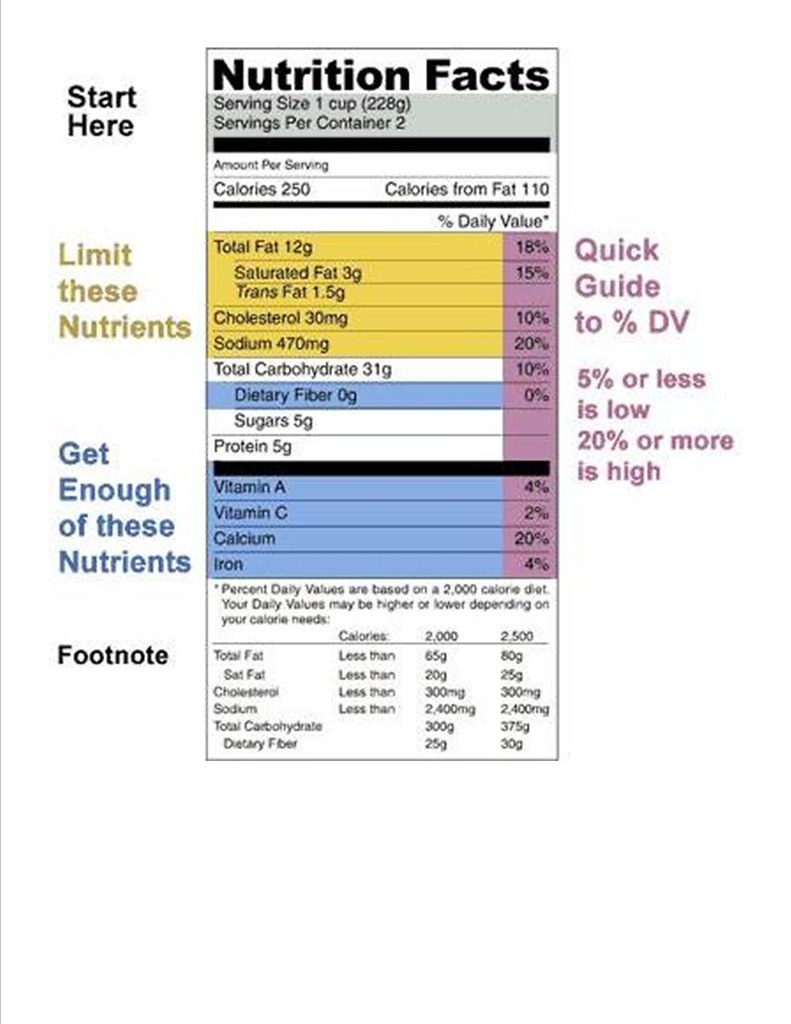
I am old enough to remember when cigarettes did not have health warnings and when they were regularly advertised on TV. I also remember when food products did not have nutrition information on their packaging. Much has changed over the decades–overwhelmingly for the good of our health. Now, it is possible to find many restaurants–especially fast food establishments–that list calorie amounts for everything on the menu.

Researchers in the United Kingdom are suggesting that yet another level of labeling on food products could help to combat obesity. They studied the effect of PACE (Physical Activity Calorie Equivalent) labeling on calorie consumption. PACE is a fancy way of saying what activity, with how much intensity and for how long would a person need to do in order to burn off the calories in the product they are eating. For instance, PACE labeling could tell you that a cupcake has X number of calories and that a person would need to run for 15 minutes at 4 miles/hour to burn off those calories.

Here is a link to the press release on the study: https://www.lboro.ac.uk/media-centre/press-releases/2019/december/labelling-foods-amount-of-physical-activity-needed/ and here is the link to the article on http://www.cnn.com: https://www.cnn.com/2019/12/11/health/physical-activity-food-labels-wellness-scli-intl-gbr/index.html .

The research seems to indicate that when people have a greater sense of what those calories actually mean, they will make wiser choices about the food they eat. This is similar to the way that many weight loss apps allow users to know the exact number of calories in what they are eating while also “crediting” users for exercise they do.

There is some concern that this information could have a negative effect–in particular on those with or vulnerable to eating disorders. The PACE labeling could be used incorrectly and force such individuals to feel that they must burn off all or most of what they eat.

It will be interesting to see if this trend makes its way to other side of “the pond.” What will the reaction be here in the US? There was opposition to cigarette labeling and nutritional information on packaging–mostly by those who had the most to lose when the public knew the true health impact of their products. What the public think though? Too much info, or information is power?

How to Keep the Weight Off

Christmas Break 2008 10

This time of the year, many people are thinking about New Year’s Resolutions and a popular one is to lose weight. Just ask anyone who is a regular gym-goer and they can tell you that the first few weeks of January are always the busiest; fitness facilities are loaded with what I call “resolutionaries.”

Of course, a better way to look at this is to go beyond the mere number on the scale. While weight as a number is a data point, our fitness level depends on other factors as well: endurance, strength, power, cardiovascular health, etc. A better resolution might be to “become more fit” or “pursue a healthier lifestyle.” What both of those mean is up to individual interpretation, so it is important to come up with goals that are beyond merely a number on a scale such as “I want to be able to run a mile without stopping” or “I will do 30 minutes of cardio 3 times per week” or “I will begin training regularly with a Personal Trainer.”

Numerous studies have pointed out that we should take a more holistic approach rather than simply focusing on the readout on the scale. In fact, when we focus more on overall health we actually have greater success at weight loss and especially keeping the weight off.

Research shows that those who put an end to their sedentary lifestyle and become more active will do a better job of losing weight and keeping it off compared to those who simply diet. Studies show that dieting can take the pounds off but unless we engage in a healthy lifestyle that includes diet, exercise and other healthy habits (not smoking, getting enough rest, etc.) , there is a higher chance that the pounds will return.

There is no easy fix to getting healthier. Diet alone or exercise alone won’t cut it for the long term. It is all about a lifestyle that promotes healthy habits. A lifestyle isn’t just something that lasts for a month or six months or a year until we achieve our goal weight; a lifestyle is about what we do from this point forward.

As the New Year approaches consider not only the changes you want to see right now, but also how to make them last for a long and healthy lifetime!

How to Eat Healthy at Thanksgiving Dinner

Thanksgiving Dinner @ Boston Oak Room

Reality Check: For most of us, this won’t be happening. Those trying to watch their weight or just not overdo it will find that Thanksgiving Dinner is a huge challenge.

Here are some helpful suggestions:

–Stick to healthier appetizers like raw vegetables. If we fill up on those, we are less likely to eat the richer stuff that are part of the entree.

–Drink lots of water; water makes us feel more full and can prevent us from eating too much. Plus, it’s always good to hydrate.

–Fill your plate once…and then don’t refill it. Pile it as much as you want the first time, but then stop. A good way to do this is to remove your plate from the table.

–Eat until you feel about 3/4 full. Our sense of being full is slower than our mouths; if we stop eating at 3/4 (or earlier) we can avoid the overstuffed feeling.

–Choose one or two desserts and then ask for a small serving. Don’t deprive yourself of pumpkin pie or other treats; rather, enjoy with a small portion.

–Don’t fall for the idea of going to the gym and working out like crazy so that you can eat more at dinner. Unless we are running a marathon on Thursday morning (and some of us might be) we’ll never burn enough calories to make up for what we’re about to eat. More likely, we will be hungry from our workout and eat even more. Avoid this trap!

Finally, if all else fails:

If you get on the scale on Friday and the news isn’t good, be kind to yourself and realize that Thanksiving day is one-of-a kind. Don’t get down on yourself for “being weak.” Accept that we all have days when we eat healthier than others. Commit to getting back on the program.

It probably won’t take too long to undo the damage…before Hanukkah and Christmas come in four weeks! Lather. Rinse. Repeat.

Vegetarians…We Are Not Alone

Impossible Burger at Hell's Kitchen, Minneapolis

It used to be a pretty lonely business going out to eat in a restaurant as a pescatarian/vegetarian. Other folks see 100 items on the menu, but we see 5 or 6…or at least we used to.

There is a boom in the plant-based food industry and it is not because there are suddenly more vegetarians or vegans. The NPD group, a market research firm based in New York State, is reporting that of all those purchasing and eating plant-based burgers 89% are not vegetarian or vegan! 89%!!!

This is according to an article which recently appeared on http://www.nbcnews.com. Here is the link: https://www.nbcnews.com/business/consumer/almost-90-percent-people-eating-non-meat-burgers-are-not-n1082146

My wife and I went out to dinner with friends this evening and one of them ordered an Impossible Burger (so did I!). He is a meat eater, but we convinced him to give it a try. He liked it. As the article states, it seems that plant-based foods have crossed a threshold; taste has finally caught up to what consumers are looking for. Those looking for variety in their diet want to try new things, but will only stick with it if the taste holds up. Products like the Impossible Burger or nearly everything made by Gardein (www.gardein.com) hold their own against animal-based products.

Of course, just because something is plant-based doesn’t mean that it is necessarily healthier to eat. When you order a burger at a restaurant, it may have some salt, pepper, and other spices mixed in but it is otherwise usually not highly processed. Compare this with an Impossible Burger’s ingredients and you’ll see that it is quite processed indeed.

Even so, as the taste meets a higher standard and profitability grows for plant-based food companies, we can expect to see more variety and more healthy options available for everyone–not just vegetarians. Given the impact of the meat industry on the environment, this could be a win for the planet as well.

This is an interesting and exciting trend and it is nice to know that as vegetarians we are not alone.

Vegetarian at the Bell

Taco Bell

Many of you may recall a couple of months ago that my wife and I tried the Impossible Whopper at Burger King. Overall reviews on that: really good but not necessarily any more healthy than the “regular” stuff. We’d do it again.

I had seen ads for the new vegetarian menu at Taco Bell, so my wife and I have been talking for a while about checking it out.

Before my review, let me share that I am a pescatarian–a vegetarian who eats fish (but not shellfish). When I travel, I usually find vegetarian stuff to eat; this is true even at local restaurants. It is a lot better than it used to be as most people are trying to eat more healthy.

I give you this background to explain the difference between the Taco Bell experience and the Burger King one. At Burger King, it felt like they were trying to replicate the sensation of eating a meat Whopper; a meat substitute was central to that proposition. At Taco Bell, it seems more like their vegetarian menu is just meals without meat. This is not a negative, but just a different expectation; there was no fake ground beef or fake chicken–just meals that contained no meat. I have a feeling I could have accomplished this without an ad campaign to lure me in.

My take on the Taco Bell vegetarian experience? OK. I think the last time I ate there I was in high school (Carter was in the White House), so not a whole lot to compare it to. My wife and I both got one meal; they were OK but not nearly as filling as the Impossible Whopper. I guess I’m supposed to get more than one thing from the menu?

Like the Impossible Whopper, it is nice to know that there are vegetarian options at Taco Bell. Like Burger King, do not think that because it is vegetarian it is any more healthy; although the sour cream is low-fat, this is by no means “health food.” Would I try it again? Perhaps…but not necessarily rushing back.

When it Comes to Weight Loss, One Size Does Not Fit All

Bathroom Scale

An article that appeared today in the health section of http://www.nbcnews.com highlighted the story of a woman and her husband who embarked on a weight loss journey together. A big part of the article talks about what sparked the change and how the two of them set out to make healthy changes in their lives. Their choices and approach are instructive and are highlighted in the article in a sensible way.

Samantha Cassety, a dietitian and weight-loss expert in NYC whose articles I have referenced in the past, drew some conclusions from this story.

  • Any diet that leaves you feeling deprived has less of a chance of success in the long run. Recognize what you need and make sure you get at least some of it.
  • Having a supportive partner–or someone who is going through the process with you–can bolster chances of sticking to the plan. Joining forces with someone else to get healthy is a powerful thing.
  • In contrast to the top bullet point, identify not only what doesn’t work for you, but what does work for you. The process is highly personal and what is beneficial for one person won’t necessarily be effective for someone else. One size does not fit all.
  • Watch your weight in a way that makes sense. Monitoring is important–whether it is daily, weekly or at some other interval. This is especially helpful in triggering you back to the right path after vacations, holidays, etc., where eating habits may have changed. One size does not fit all, so find what is best for you.
  • Don’t just focus on the numbers; be aware of what comes with healthy habits: increased energy, greater mobility, ability to participate in activities, clothing fitting better, etc.

The main point is really that the process must be specialized to each person. Recognize negative triggers. Understand what you need. Understand your weaknesses and strengths. Find others who will support you or join you in your journey.

The healthy choices we make today, affect the health we have tomorrow.

To read the full article, go to: https://www.nbcnews.com/better/lifestyle/how-woman-lost-80-pounds-visual-cue-sparked-her-weight-ncna1059276

What Happens When You Only Read the Headline

Police arrest Batman

An interesting article appeared on http://www.cnn.com a few days ago with the following headline: “Vegetarians might have higher risk of stroke than meat eaters, study says.” NOOOOOOOO!

I have been a pescatarian for nearly 15 years and this news was shocking to me…or, at least, the headline was. Read the article, and one gets a very different story.

Although there is a higher risk of stroke (which some believe was a conclusion reached incorrectly by the researchers due to their misuse of “weighting” in the study), vegetarians are at a much lower risk of heart disease. In fact, the lower risk to heart health far outweighs the risk of stroke.

What was the “weighting?” The study took into account in classifying study subjects that vegetarians are, in general, more healthy than meat-eaters. Well, duh. The study comes from BMJ, a very well-respected journal out of London, UK. The article from CNN, though, suggests that more research is needed. So, nothing like publishing a misleading headline about an inconclusive and possible flawed study. I guess that is what they mean by click-bait.

By the way, pescatarians are not at the same risk of stroke and reap most of the benefits with regard to heart health. So you may still want to put those ribs down and reach for some halibut or salmon.

A warning: don’t just get your news from reading headlines–be they about health or any other topic–spend the few minutes needed to read the article–especially before you post it online or share it with friends.

Here is the link: https://www.cnn.com/2019/09/04/health/vegetarian-vegan-diet-stroke-heart-disease-risk-intl/index.html