
Thinking Ahead to Thanksgiving

Thanksgiving Turkey [327/366]

Last year I wrote a post before the holiday with tips for how to get through Thanksgiving without hating yourself afterwards for overeating. Here is the link: https://kosher-fitness.com/2019/11/27/how-to-eat-healthy-at-thanksgiving-dinner/.

The advice still holds, but this year there is an added wrinkle to take into account. Most years we are accustomed to having a large crowd, which calls for a large turkey, large casseroles, large stuffing, large, large, large…. In the pandemic, most of us are finding ourselves dining within our “COVID-19 Bubbles.” Generally, this will mean much smaller crowds. What to do?

I learned the lesson the hard way at Rosh Hashanah when we prepared large meals for just the two of us. It was not a pretty picture (although a delicious one)! We ate more than we should have–not a good idea during a time in the Jewish Year when we are aware of our transgressions!

As always, the key is to plan ahead. We’ve got several weeks to plan to downsize the festivities or commit to a plan with what to do with the leftovers.

Here are some suggestions:

–Do not purchase an entire turkey, but rather a turkey breast instead.

–Take out the family recipes now and start halving or quartering the amounts to fit the number of diners at your meal.

–Investigate now places to donate meals for Thanksgiving. There is a good chance that a neighbor or relative or friend may be eating alone this year; how about giving a small part of your meal to them (put together a few plates). Remember to be especially cautious about following hygiene standards.

–Get some freezer-friendly storage containers. If you can only prepare large, right after making everything, divvy it up and put it in the freezer, leaving only enough for the Thanksgiving meal. The leftovers can be used for future meals.

Hopefully this gets the wheels turning and gives you some ideas for how to stay on track. An early Happy Thanksgiving!

At the Gym: To Mask or Not to Mask…

Face masks, Japan

Ohio has had in place masking orders for those in public for quite a while now. These orders are based on the solid science showing that wearing a face mask is one of the most effective ways to prevent the spread of COVID-19, and the more people masking the more effective it is.

There are, of course, exceptions to the governor’s order, including gyms and fitness facilities. Where I work, the policy is that a mask must be worn in the building except while you are working out–which, if you asked me (and you didn’t), is the same as having no policy at all.

I have seen the following scenarios where I work. Adults and especially teens will wear the mask into the building but take it off the minute they walk into the fitness center; some even place it in their mini-locker. I have seen unmasked members with earbuds singing out loud to their music–annoying during normal times, but especially germ-spreading during a pandemic. I have seen members sitting on different pieces of equipment or benches talking to each other across the gym without masks. I have seen members use equipment and not wipe it off afterwards.

To be fair, there are those who are very cautious. I have seen members wearing a mask at all times–even while doing cardio (as I do). I have also seen members being conscientious about wiping down equipment. In the final analysis, I don’t know how much good this does when there are so many others who seem to throw caution to the (literal) wind.

We have had one employee of the Fitness Center and one member in recent weeks diagnosed with COVID-19; neither was asymptomatic. I think we are lucky it hasn’t been worse. What solutions are out there? Some establishments (in the fitness industry and elsewhere) make a point of enforcing hygienic standards. Employees and supervisors make sure that folks are compliant, and if they are not they are made to leave the facility. They believe (and rightly so) that the “honor system” doesn’t work with this pandemic. I spoke with a family member a couple of days ago who teaches yoga at a fitness facility; the facility is “open” for 90 minutes then “closed” for 30 minutes during which time the entire building is fogged with disinfectant. This seems extreme, but I’m willing to bet that this place has a lot more people coming through their doors as opposed to the masses who are staying away out of concern for disease transmission. It seems to me that fitness facilities should be going above and beyond rather than aiming for the bare minimum; it would seem to fit into our mission of promoting health and wellness.

The fitness world has a long way to go in this pandemic to make facilities safer. In the meantime, my recommendation is to PUT ON THE DAMN MASK! If you are strong enough to bench press (insert your max.) pounds, you can do it with a mask on as well; remember, weight lifting is an anaerobic activity. As for cardio, unless it is really intense (like running), a mask should only impede airflow slightly; the Nu-Step or a stationary bicycle can probably be used with a mask.

As for my own practice, I keep the mask on always. I will find the days when it is warm enough outside to run outside. If I am doing a cardio workout, I will do it at home. If we all are a little more conscientious about safety/health precautions we can help bring an end to this pandemic. Start by wearing your mask.

Three Months after Bicep Tendon Surgery

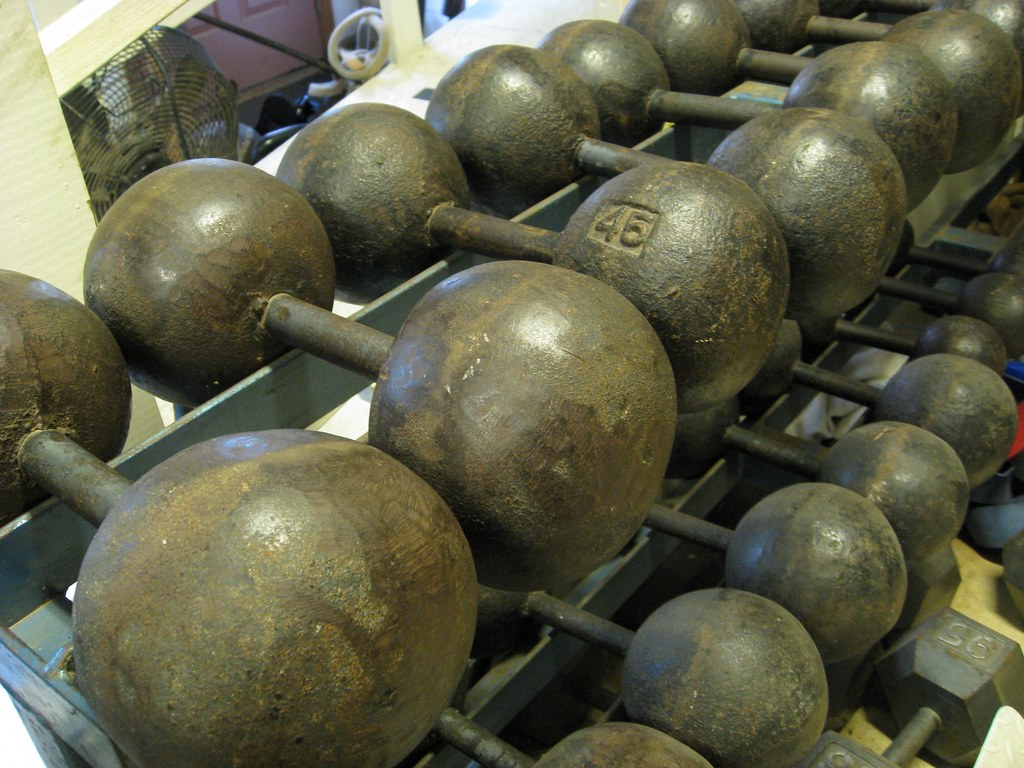
Dumbbells

Ah…. Time flies when you’re doing physical therapy! It’s been just over three months since my surgery and I’m happy to report that progress is happening.

Last week, I met with my surgeon virtually who was pleased with my progress and re-assured me that the pain and discomfort I sometimes get are nothing to be worried about. It will continue to improve. In terms of beginning to add weight to my therapy and my own workouts, he told me to follow the instruction of my physical therapist since she is on the front lines and knows how I am doing. He reminded me that the recovery from this surgery is a long one and that I’ll need to be patient (which is why I am his patient!).

At PT, we have noted that my mobility and flexibility have increased. I am feeling less discomfort (although the day after PT I can usually count on some aches). My therapist told me that we can begin to start adding heavier weights to my workouts/PT exercises; I’ll be going from 3 lbs. to 5 lbs., and eventually even more. The main thing for me to watch for is the form; if I start to do the exercise in a sloppy manner or see that I am compensating by using another muscle it is a sign to back down or stop. As a Personal Trainer, this will not be too difficult as these are the same things I check for with my clients regularly.

Was the surgery worth it? Jury is still out, but it certainly seems that if I continue on the current trajectory it will have been a good idea. Once I am able to strengthen the shoulder/arm muscles and carry out the kinds of activities that I have in the past without pain, we’ll have the answer for sure. In the meantime, I will continue with my exercises.

More news in a few months.

Fitness & Friendship

Treadmill Talk

“It’s all about relationships.” We hear that about many aspects of our lives: family, work, school, etc. As a Personal Trainer, I have heard this over and over again. Certainly almost every certified personal trainer can provide a quality workout; s/he can point out the right way to do exercises and provide an appropriate plan to help reach fitness goals. Not every trainer, however, has the personality to build the connection with a client.

It is true that personal trainers “get paid to care,” but the good ones really do care. My concern is not just about what happens in the gym, but what happens in the rest of my clients’ lives as well. I am invested in my clients and their welfare, and hopefully they reciprocate and invest in the services that I have to offer.

Over the years, I considered my own trainers to be friends–I sent wedding presents and attended visitations when loved ones passed away. I have received thoughtful gifts from my own clients and go out of my way to check on them when they are ill, have a personal issue, or have lost a loved one. I have been worried about many of them during this pandemic knowing how their lives have been upended.

This aspect of the relationship is especially important for older clients. Many of my clients are older adults and do not get out as much as they used to–all the more so during this pandemic. They are often lonely and feeling vulnerable. Whether we are in-person or on-line, the personal connection is just as important as the workout. They look forward to the conversation just as much as (or even more than) the exercises. Everyone wants to feel valued. Everyone wants to feel respected. Our training sessions are time to express those.

When considering who might be the best match for a personal trainer, remember that it is not just about the certifications, college degrees, or the size of their biceps. The most important part of finding the right personal trainer may not be on their resume at all. Having a connection with a trainer not only makes the workout more enjoyable, but can also help to ensure that fitness goals will be more attainable. After all, it is one thing to disappoint someone you are paying for a service, but an altogether different matter to fall short for someone you care about and who cares about you.

It’s all about relationships!

Personal Fitness is just that: Personal

Body Image. The subjective concept of one's physical appearance based on self-observation and the reactions of others.

A great article appeared last week on http://www.cnn.com on their health page. Written by Lisa Respers France, it explores our society’s obsession with the body image and fitness of celebrities–in particular, female celebrities. It is a short article worth the read.

As a Personal Trainer, I have long believed that the path to fitness is a personal one and that is why it needs to be personalized. We all have different bodies with unique abilities and disabilities. We have distinct hereditary traits that help or hinder us. Ultimately, the decisions we make about our bodies are personal and should remain that way.

Here is the article: https://www.cnn.com/2020/10/08/entertainment/celeb-weight-loss-plc/index.html

Looking Forward to Fitness

Looking forward...

The Jewish holidays ended Sunday at sunset. We spent the entire month of Elul (the Hebrew month leading up to Rosh Hashanah–the New Year) preparing for the spiritual work that takes place during the Ten Days of Repentance (from Rosh Hashanah to Yom Kippur). Once the New Year begins, the intensity does not let up; just 5 days after Yom Kippur (the holiest day of the year) we begin Sukkot (the Feast of Tabernacles), which lasts for over a week.

During this period of heightened spirituality, we often say, “I’ll get to that after the holidays.” We are busy and things get pushed off. Well, here we are; all the hoopla has died down and it is time to commit to the promises we made to ourselves, each other, and God.

For me, in the midst of it all I was also recovering from biceps tendon surgery. What I have been waiting for until “after the holidays,” was getting back into my best shape/fitness/health possible. And boy do I need it. Yesterday morning I got on the scale and had found that my weight had crossed a red line that I have not crossed in several years. So yesterday, I buckled down and got back on the My Fitness Pal app on my phone. I am already making progress. I am also making an effort to plan for daily workouts and making them a priority.

One of the amazing things about the High Holiday season is that it comes around every year. There is a realization that we are works in progress and that the journey to becoming our best selves is a lengthy one. Judaism teaches us to review our past, learn from our mistakes…and then look forward. We do a lot of remembering in Judaism–not for the sake of wallowing in the difficulties of the past, but rather as a guidepost for where we need to head in the future.

Looking at the number on the scale, contemplating the loss of muscle mass due to my surgery, noting the diminished stamina that I have could all be reasons to be downhearted. Judaism teaches me that it is best to take the information I have and take the steps to go in the right direction. When we have a bad day (or week or month or year), we should realize that every day provides us with new opportunities. We should be informed by the past, and not imprisoned by it.

Today is a new day. So is tomorrow. I am looking forward to continuing to become the person I want to be–physically, emotionally, and spiritually. The holidays are over; let’s get to it!

The Upside of Instability

Rickety bridge - Alps High Route - Mt Blanc to Matterhorn

We are accustomed to thinking of instability as being a bad thing. I even wrote my senior thesis in college on the effect of economic, social and political stability on minority groups. As my research uncovered, stability is not always what it is cracked up to be.

This is especially true in the world of fitness and resistance training. It is even more so when we are dealing with older adults. A foundational principle in weight training is the idea of progression; adding more reps, sets, weight, incline or speed over time to increase or maintain muscle mass, or to enhance stamina.

We recognize this kind of principle in many areas of our lives; at our jobs, we rarely start out as CEO, but rather work out way up from the mailroom, etc. The more difficult the task, the greater our skills are developed.

Instability training is training that takes place on a surface that is not stable. Progression would typically advance from a stable surface to a less stable surface to an even less stable surface. For instance, at first a person might be instructed to do bicep curls on the floor–a stable surface. Next, the person might move to an instability pad (more solid than a pillow, but less stable than styrofoam); from there it might advance to a Bosu ball (ball up) and then to a Bosu ball (ball down). Each step involves less stability, forcing the legs and core to compensate in order to maintain proper balance and form.

A study published earlier in 2020 in Scientific Reports, shares interesting conclusions about instability training. Here is the link: https://www.nature.com/articles/s41598-020-59105-0.

We have known about the benefits for balance–especially important as we age–but it now appears that there are cognitive benefits as well. Research conducted at University of Kassel in Germany shows that “mental fitness” improved for older adults when instability/balance training was included along with regular resistance training. That mental fitness meant “improved working memory, processing speed, and response inhibition.” (Response inhibition is the ability to control a response in order to reach a goal).

More and more, we are discovering the connection between physical activity and cognition. Those of us working with older adults can now add another benefit to the work that we do by including instability training if we do not do so already. And for those who already do, here is another reason why.

Intermittent Fasting: the Research is In

An Empty Plate

I blogged back in March and August of this year about the diet trend called
Intermittent Fasting. This is was touted as an effective way to lose weight; it involves eating only during certain hours of the day–usually for 8 out of the 24. Early research seemed promising and there was anecdotal evidence as well.

The latest research, though, tells another story. An article on http://www.cnbc.com discusses the lastest findings: https://www.cnbc.com/2020/09/28/intermittent-fasting-doesnt-help-weight-loss-ucsf-study.html.

Dr. Ethan Weiss conducted a study of 116 overweight individuals beginning in 2018; some were put on an intermittent fasting regimen, the others on a “placebo” diet. The fact that human subjects were used was a big deal since previous studies had been conducted with mice. The study found no statistical difference between the two groups. In other words, intermittent fasting is no more effective than other kinds of dieting.

So does that mean you have nothing to lose by giving it a try to see if it works for you? Not so fast, says Dr. Weiss. First, it is not clear that intermittent fasting is good for older adults. Second, and most importantly, subjects in the intermittent fasting group experienced loss of muscle mass. This means that the weight lost may not have been fat, but muscle!

These findings are important, and I’m sure there will be more studies. In the meantime, it seems that intermittent fasting probably isn’t your best approach to weight loss. It also bears repeating, as the article points out, that weight is not the only indicator of good health and fitness. Consult a medical professional and/or fitness specialist to find out how to be the most fit and healthy you!

Interestingly, the article was published on Yom Kippur–the holiest day on the Jewish calendar marked by a 25-hour fast. Coincidence? I think not….

The Healing Power of Forgiveness

Healing.

On the eve of the Jewish holiday of Yom Kippur–the holiest day in the Jewish year–the theme of forgiveness is on my mind. The holiday is also known as the Day of Atonement; it is, according to tradition, the day in which our transgressions are forgiven by God.

It is actually a more complicated matter. Judaism teaches that the rituals of Yom Kippur are just the final step in the process of true repentance. If we have committed a sin against God (by not following the ritual laws in the Torah) we are hopefully forgiven on this day through fasting and prayer. If we have offended another person, forgiveness doesn’t happen until we have confessed the sin, tried to make it right with the other person, and vowed to not repeat the offense.

It feels great to be forgiven. It is a central part of many religions. Of course, forgiving others is a little more difficult. Over the years, there are people or even institutions who have hurt us (and continue to do so); how do we find a way to forgive them?

I blogged about this back in June. Here is the link: https://kosher-fitness.com/2020/06/15/will-i-be-forgiven-will-i-forgive-others-2/

I was inspired by the book Unbroken by Laura Hillenbrand to seek ways to forgive others who have offended/hurt me. With the assistance of a professional who helped me sort through the issues and the process, I discovered that it was actually not as hard as I thought it would be to forgive. I accepted that those who had hurt me were doing what they thought best (even if the outcome for me was difficult) and that their actions gave me opportunities that would not have existed otherwise.

What was most difficult was learning to forgive myself. I have made mistakes and that is OK. I also know that I expect an awful lot from myself; my parents set very high standard for my siblings and me. I know that I don’t need to be perfect and I should accept that I was also doing what I thought best (even if the outcome was difficult for me and others close to me).

Learning to forgive has been a healing process. The churn in my brain of anger and resentment has quieted down; I do not replay scenarios over and over in my head. When the individuals involved come to mind, my response to myself is “oh well.” I have become a non-anxious observer of past events in my life.

I have not reached nirvana. I am not perfect. There are people out there who annoy me and even disrespect me (my perceptions, of course), but I am trying to practice compassion during this difficult time. Even so, I feel mentally healthier. I am not holding the grudges. I am letting things slide…or I just left off steam and then drop it. My overall attitude has improved and I feel like I am able to pivot more adeptly to constructive attitudes and actions.

Forgiveness should not be restricted to once a year. It should be an ongoing process. It is good for our health. Need help with this? There are professionals out there who can guide us.

Wishing everyone who observes Yom Kippur a meaningful fast, a HEALTHY year, and the gift of forgiving and being forgiven.

Two Months after Bicep Tendon Surgery

The Long Road Ahead

My surgery to repair tendonosis on my right bicep was just over two months ago. It’s been about a month since my last update.

The good news: mobility and strength are greatly improved, even from this time last month. Today at PT we measured it and there are definite advances. I was also cleared last week to start running again, and that has been great–especially with the wonderful weather we’ve been having.

The bad news: I am not nearly as strong or mobile (range of motion) as I would have hoped. I also am experiencing a good bit of discomfort/pain–especially at night and first thing in the morning. It is hard to say how much longer that will go on.

The question remains: was it worth it to have the surgery? And…the jury is still out. I am hoping that in the long run I will be pleased that I did it. For now, the pain is a little less than before surgery, but there are times when it really smarts. I definitely know when I have overdone it, but in my line of work it is difficult not to lift objects that way more than a few pounds. I have learned to compensate, but that is not the best strategy either. My doctors and physical therapist tell me that all this is normal. I haven’t had a lot of surgeries, but enough that I should have learned that recovery always takes longer than promised.

There is still a long road ahead, but hopefully the baby steps add up to a lot of progress over time. Every now and again, I will update you on my progress. Until then, stay safe and stay strong!