Free Weights or Machines?

A lot has been written over the years about which is better overall: using free weights (dumbbells, barbells, kettle-bells, etc.) or weight machines? As we age, there are special considerations that can help us best answer the question. A recent article in IDEA Fitness Journal gives a good summary of the issues as well as recommendations.

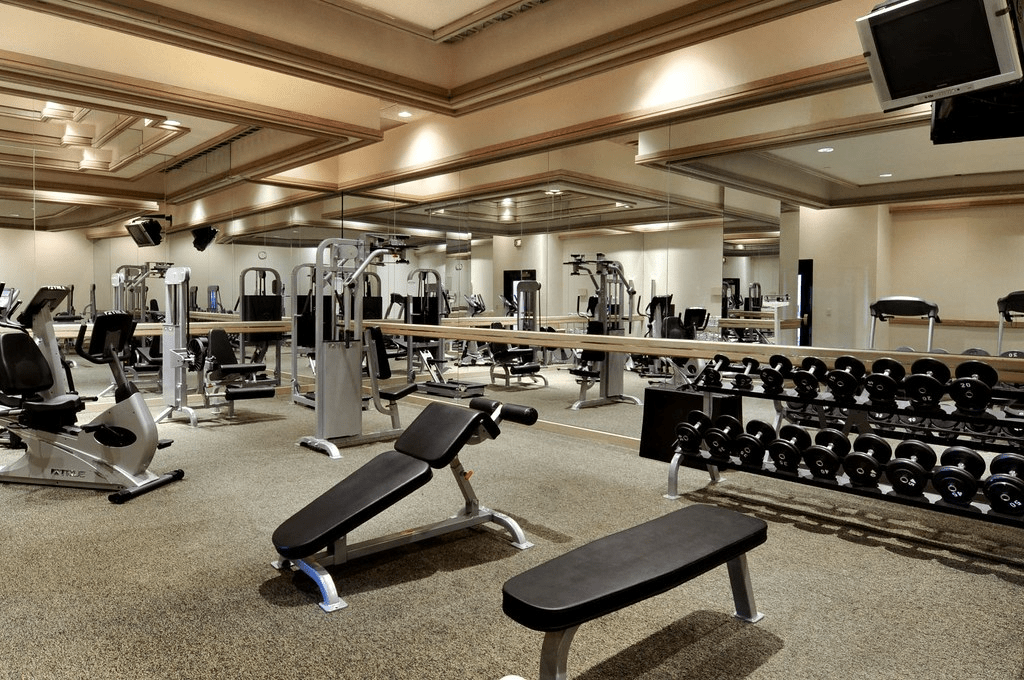
Free weights have some advantages. If you do not belong to a gym, it is much easier and cost-effective to have dumbbells at home; this is the case with most of my clients. In general, exercises with free weights more closely resemble the kinds of activities we do on a regular basis like picking up bags of groceries, putting boxes on a shelf, or carrying suitcases. Because the machine does not do all the thinking for you, free weights require better form and more coordination. On the one hand that is a good thing because it replicates real life situations, but it can also result in injuries due to poor form or too much weight.

Weight machines also have advantages. Most have instructions right on the side telling you exactly how to do the exercise and what body parts will be affected. As long as you follow the instructions, it is difficult to get hurt on a machine. If you belong to a gym, there will be lots of machines and many opportunities to add more weight to the exercise to increase the degree of difficulty; with free weights, you have to go buy more equipment.

From a fitness standpoint, recent research indicates that both kinds of exercises are effective in different ways. For those looking to increase muscular strength, machines seem to be a bit more beneficial. For those looking to improve functional performance, free weights are better. The truth is that most older adults are looking to do both! As in many things in life, a combination of both is recommended for those who have access to free weights and machines and know how to use both safely. The guidance of a fitness professional can help to ensure that this requirement is met.

Most imporantly, make sure that resistance training is a part of your fitness regimen. Cardio is amazing, but we can raise our fitness and functional levels most when we include weights as part of the program.
Let’s Talk About TED

For the next installment of my journey through Long-Haul COVID brain fog, let’s have a TED talk talk! TED talks began in 1984 with a conference on Technology, Entertainment, and Design. The first video of a TED talk went on-line about 17 years ago and the topics have expanded to include science, business, education, arts, and important issues facing the world. They range in length from under 5 minutes to well over one hour.

Over the years, I had seen a few TED talks that made their way onto my social media feed or that had otherwise been recommended by family or friends. A couple of months ago the speech therapist I was seeing to help with my brain fog suggested I start watching the videos as a way to help my brain. I was to aim to watch one video each day and take notes; the next day I was to try to recall as much as I could. If I was able to hit 75% recollection on a regular basis, I could move on to podcasts which are almost entirely audio-only. (I am not there yet.) This exercise was to help with my auditory processing; the continuing exercises would sharpen my listening skills and attention to details. This was to go hand-in-hand with the brain games I am also doing daily that I blogged about earlier.

What I really enjoy about the TED talks is that I can choose the topics and the length depending on the time I have available and what interests me at the time. Sometimes I will choose something that does not really interest me just to see if I can expand my horizons. Neuroscientists have long reported that the brain is plastic, ie., that is capable of change at any age. We can build new neural pathways during our entire lifespan. One of the ways that we do that is by learning new things. It could be a new hobby like playing guitar, taking a class at a local university, or even just watching a brief video. The best part about TED talks is that one can watch for free–although there is an upgraded membership–and nearly every day there is something new to watch.

I do find that I am able to recall quite a bit the next day. I know that I will have to graduate to podcasts soon…but I have the feeling that I will continue to watch my TED talks even after graduation. It never hurts to learn something new every day. In fact, it helps keep the brain healthier and more capable.

Looking to Grow (?)

What do most older adults want to achieve as we age? Yes, we want to have financial security, but the biggest concern is that we do not want to suffer from physical and cognitive ailments. It is no secret to readers of my blog that physcial activity helps to ensure both physical and brain health. Working with older adults is rewarding because I am able to see the progress my clients make that allows them to live life more fully.

I am looking to grow my business for just this reason. Of course, I want At Home Senior Fitness to be successful from a financial standpoint, but I know that there many people out there who could benefit from the services we offer. They just do not know about us yet, or they think that there is no one out there who understands them and their particular circumstances. To try to reach out more, I am expanding into social media to help get the word out.

If you are interested in your own personal growth or know someone who is, check out our instagram account or our FaceBook page. These are updated on a regular basis and share the latest that is going on–even some great pictures of my clients doing their workouts! As always, more info is available at my website, or you can email me at michael@athomeseniorfitness.net.

Let’s help each other grow!

Report from the IDEA Personal Trainer Institute

Last week I had the opportunity to participate in the IDEA Personal Trainer Institute. For the record, I did not see this guy there…and if I did, I might have run in the other direction!

This was my third time at the PTI–and the second since the pandemic necessitated two years of on-line sessions. There is an interesting mix of personal trainers at the conference; I seem to recall that the first time I went in 2019 there were a lot less “senior” trainers. Now it looks like we are almost a majority! I think that many older adults who have worked out with personal trainers in the past decided that they would get certification during the pandemic. In any case, it definitely reflects a shift in perceptions about what personal trainers do; it is not all about training elite athletes and well-to-do clients.

The theme of the conference (two years running now) is Train with Purpose. I am not exactly sure what that means, but I will give it a shot. It challenges us to look beyond athleticism and to focus on what we can do to make peoples’ lives better. This is especially true for those of us who work with older adults. A few of my clients are looking to tone up or participate in competitive events, but most are either trying to build or maintain muscle strength, mobility, flexibility, and balance. It is less about prowess on the playing field and appearances, and more about being able to live the lives we want with courage and confidence. This is part of what motivates me.

This year I took four courses: 1. shoulder health and posture, 2. pricing and programming, 3. how to overcome mind traps in building business, and 3. adaptive fitness–working with individuals with disabilities. I was able to learn something in each of the classes. Every month I also do continuing education in order to maintain my certifications. Of course, I do it for the credits, but I find that more often than not I learn valuable insights to bring back to the work that I do with my clients.

I look forward to next year’s conference. The learning never ends. And that helps make me a trainer with purpose!

Does Your Brain Have Time for a Quickie?

Almost two years ago, I blogged about the benefits of shorter workouts. Studies show that short bursts of activity have positive effects on one’s physical health; this is good news for those who do not necessarily have a lot of time in their day to exercise, but who might have smaller chunks of time throughout the day. Getting up from a desk or couch and engaging in moderate physical activity can still have a positive effect.

New research was reported on this week that not only can Quickie workouts have physical benefits, but they can also improve our brain health. A study at the Institute of Sport, Exercise, and Health at University College London found that people who spent even smaller amounts of time (6-9 minutes) in vigorous activity each day had higher cognition scores compared to those who did not. Vigorous activity was defined as aerobic dancing, jogging, running, swimming and biking up a hill–activities that boost heart rate and breathing. The researchers looked at how this affected participants’ short-term memory, problem-solving, and processing skills.

This is just one more important piece of research that proves how important exercise is–and reinforces the connection between physical activity and brain health. Although there are some brain games and other activities that help build brain health, the single biggest factor in improving cognition is physical activity; the more we exercise, the more blood our hearts pump to the cells keeping them properly nourished and doing their jobs. Of course, this includes all those cells in the brain.

In upcoming blog posts, I will explore this further and talk about ways that brain health can be boosted further by exercises that combine both physical and cognitive tasks.

Until then, get up off the couch–even if it is for less than 10 minutes–and get moving! Your body and your brain will thank you.

Drink LeChaim…To Life!

It’s not what you think. Unlike the song from Fiddler on the Roof, we are not talking about alcohol, but instead our good friend H2O.

NBC News and many other news outlets reported on a new study from the National Institutes of Health indicating that poor hydration may lead to chronic disease and early aging. The study took place over the course of 25 years; participants started in their mid-40s to mid-60s and follow ups went through ages 70-90.

There is not total agreement on the meaning of the results. The research used blood sodium levels as an indicator of dehydration, which some scientists believe may not be the most accurate way to measure. Others believe that dehydration is not as widespread a problem as most people believe it to be; in other words, most of us are properly hydrated most of the time.

What is important about the research is that it sheds light on the continuing benefits of drinking water and other non-sugary decaffienated beverages. Drinking plenty of water tends to keep the kidneys healthier; kidneys filter the blood which is then circulated to the rest of the body. The “cleaner” the blood the better it is for the cells that rely on blood for nutrition.

It is also significant that those with higher concentrations of sodium in their blood (which could be the result of not enough hydration), were more likely to have high blood pressure, cholesterol levels, and blood sugar. These are all signs associated with faster aging. On the flipside, those with lower levels of sodium were less likely to have these conditions. While most participants were in the normal range for sodium, those at the higher end had a 20% increased risk of death than those at the lower range.

More research will need to be done, but current recommendations are that women drink 6-9 cups of water per day, and men should consume 8-12. Although water is best, other non-caffeinated beverages are also OK; fruits and other foods with high water content can also increase hydration levels.

Until that research is done, it is always a good idea to keep hydrated–especially before, during, and after workouts, as well as when the weather is warmer.

Tevy from Fiddler on the Roof, had it right. Drink…to life!

At Home Senior Fitness is Growing…Again!

It has been about four months since I told you about my welcoming At Home Senior Fitness’ first additional personal trainer, Sam Kalamasz. She is steadily growing her client base and bringing our unique brand to the Brunswick/Medina/Strongsville area near Cleveland as well as the rest of the world via the internet. I am looking forward to her continued success and growth.

As of the first of the year, I welcomed Victoria (Vicki) Yannie to AHSF as well. I hinted at it in my year-end reflection, and now it is official. Vicki brings a wide range of skills and experience. Both her undergraduate and Master’s Degrees are in the areas of physical education and she is a certified Silver Sneakers instructor. She has extensive experience working with older adults, has written papers, and made presentations on a wide variety of topics related to fitness. Vicki will be helping me to cover the eastern suburbs of Cleveland as well as some on-line work.

When I started AHSF, I was not sure if there really was demand for what I was offering. It was a risk, but it has paid off–not only from a business standpoint, but also in the ways that we have been able to help older adults become stronger, more flexible, and even more independent.

The big news, then, is that At Home Senior Fitness is able (finally!) to accept new clients. If you are or know an older adult who wants to get the most out of their years, contact me at michael@athomeseniorfitness.net or http://www.athomeseniorfitness.net.

Thanks to all my clients and everyone else who has supported AHSF! Here’s to a bigger, better, and healthier 2023!

Reflections on 2022

As 2022 draws to a close, I have a few reflections on the work that I have been doing for the last 12 months.

There were many successes. I have engaged two other trainers to work with me; the newest will be introduced on this blog soon. This has become a necessity as I continue to get regular inquiries about my services and there are only so many hours in a week. My book of clients has been maxed out for a while. Once I get these two trainers up to their desired number of hours, I will consider expanding further. All of this was unimaginable to me when I started At Home Senior Fitness over two years ago.

The rabbi work continues to be fulfilling. My part-time pulpit at Beth El – The Heights Synagogue continues to allow me to do some of the work that I enjoy best and for which I have decades of experience. Our small congregation of 80 families feels just like that–family; this, of course, means that there are squabbles just like in any family, but we always look out for each other. The most exciting developments this year have been the addition of some new families/individuals who have brought fresh ideas to what we do, and the inititation of a fundraising campaign to raise $250,000 to write a new Torah scroll and have some money to cover extraordinary expenses.

I continue to help out at a local synagogue that is “short” a rabbi. This is like being a substitute teacher but, in general, the “students” are more respectful and appreciative of the work I am doing. Most of the time (sometimes weeks on end), I have no responsibilities, but there are other times when I have my hands full with hospital visits, funerals, leading services, etc. I am glad that I can help this congregation as my family and I have many wonderful connections there.

I also have a very part-time gig as a consultant for American Greetings, based here in Cleveland. They have a line of greeting cards for Jewish occasions and I make sure the content and artwork are appropriate for the given purpose. This is actually fun and lets me flex some creative muscles (see what I did there?).

On a less positive note, two of my clients passed away. I blogged about one earlier; the other passed away in the fall–quite suddenly. He was one of my best clients, training with me three times/week for 45 minutes; I really enjoyed our time together and miss him and his sense of humor. Other clients have been through injuries and medical crises, but thankfully most are back to working out or on their way to recovery.

Best of all, I have had a good year health-wise: no surgeries! I did have COVID and am still dealing with Long COVID, but I am grateful that my case was mild and my continuing symptoms are mostly manageable.

It has been a good year. 2023 will be filled with lots of opportunities. I will continue to blog about what matters to older adults when it comes to their health, and I will continue to service the community in other ways as well.

Wishing everyone a happy, healthy, and fit 2023!

That Time I was a Guest on a Podcast

As many of you know, I was asked to be a regular columnist for Northeast Ohio Boomer magazine last year. Each issue I wrote about a different issue related to exercise/fitness and older adults. The magazine also hosts a number of blogs and has a podcast as well for which I was interviewed. If you’d like to hear my voice and my thoughts about fitness, click here. The podcast is about 20 minutes long.

I am waiting for 60 Minutes to contact me next….

Leave the Cannoli

Many of us are familiar with the line from The Godfather, “Leave the gun, take the cannoli.” Research from JAMA Network Open, a publication of the American Medical Association (AMA), says we should think about leaving the cannoli as well.

The investigation found that the number of adults in the USA over the age of 65 with poor diet quality increased 10% from 2001-2018; the percentage rose from 51% to 61%–both of which are alarming. The percentage in the same demographic whose diet was considered “ideal” in the study was 0.4%–that’s just 4 in 1000! This may help to explain why so many adults are living with diet-related diseases.

What is to blame? Older adults are eating more processed meats, sugar-sweetened drinks, and foods with high salt content. Intake of healthier foods like fruits, vegetables, fish and whole grains has gone down. This is a trend nearly 20 years in the making, but the AMA hopes that by raising awareness it will be possible to reverse the trend.

The issue transcends older adults. Healthier foods are often more expensive and less readily available than processed foods and junk food. Restaurant food can vary widely from more healthy items to those that are downright artery-clogging. As adults age and are less able to prepare food for themselves–or less willing to do so–the choices become less and less healthful. Throughout many age groups this has contributed to the obesity epidemic in our country.

Older adults are living longer than in past generations. The question is whether those added years will be quality years or ones filled with poor health. A big part of the answer has to do with our diet. Improved eating habits can lead to better health outcomes and quality of life. The choice is ours.