What I Hadn’t Counted on After Surgery

Scales

It has been 9 weeks since my surgeries on my leg and foot. The recovery has been more arduous and painful than I expected. And I have learned a lot.

It is only since I began physical therapy exercises a couple of weeks ago that i finally began to see progress in my mobility and levels of pain. As a personal trainer, I am on my feet a lot; after a month of putting no weight on my foot, the shock of doing that again was dramatic. After having been off pain medications, I went back on again for a short time. I’m still taking Ibuprofen and Tylenol–although a lot less now. It has only been in the last week that I finally have been able to go through a large part of the day without pain.

To those of you doing PT…listen to the instructions and do what you are told! It makes a difference. PTs are amazing skilled health professionals and I am really impressed with their ability to spot (diagnose) issues and recommend the appropriate exercises. I even “borrow” some of them for clients who have similar complaints.

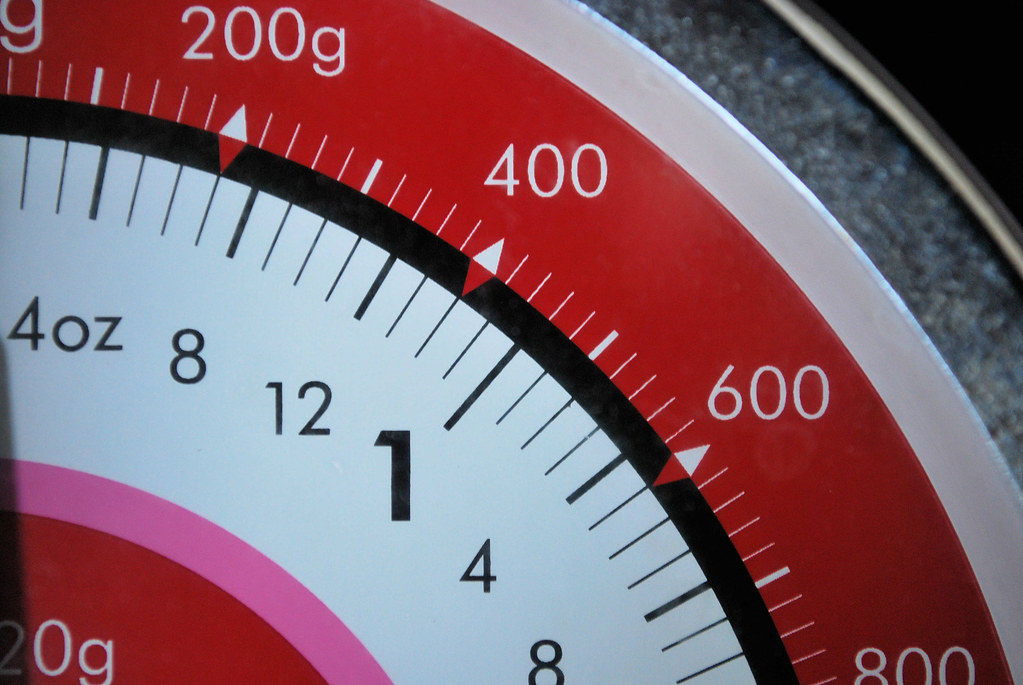
Here is what I really did not expect. I put on quite a bit of weight–about a 5% gain. This is due to a number of issues. I was forced to be sedentary. Medications (especially pain meds) messed with my system. I did not eat as I normally did since I was sitting around with little to do but…snack. My exercise regimen was interrupted.

I have been trying for over 6 weeks to get back to my pre-surgery weight and really been finding it difficult. I finally turned to a subscription weight-loss app. Too soon to say if I am making progress, but the tracking of calories is scary as hell and definitely showing me where I am making mistakes. I will let you know if it works.

It is noteworthy that weight gain is quite common after many different kinds of surgery. It is also notable that few doctors warn their patients that this is a possibility and to prepare for it–physically and emotionally. I wish I had known; not that it would necessarily have made a difference, but I believe that knowledge is power.

My big takeaway? With regard to both the pain and weight gain after surgery, patience is required. Others who have had foot surgery have told me to not give up hope or get anxious; it takes a while for recovery. This is true of nearly any surgery. I now see a pain-free light at the end of the tunnel, but it took me longer to get here than I thought it would. With regard to the weight, I am also learning that what took 8 weeks to come on will not come off in 8 days. Slow and steady wins the race.

At some point, most of us will have to undergo some kind of surgery; in my experience, I never felt like I adequately understood what the recovery would be like (if we did, would we ever agree to the procedure?!?). If there is a next time, I will ask more questions, adjust my expectations, and remember that there is a reason why we are called patients!

Claim your self-care

Hourglass

When my mother passed away, one of the best pieces of advice I got was “take care of yourself; this will be harder than you think.” Best. Advice. Ever. I have subsequently shared it with so many during difficult times.

This is why I find it puzzling when clients and others make excuses for not coming to work out because of everything going on in their lives. “So-and-so is ill.” “I’ve got big projects at work.” “I’ve got too many obligations with my kids/friends, spouse….”

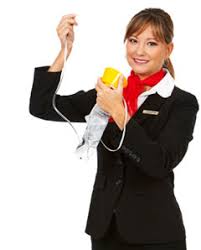
You may recall my second blog post where I spoke about one of the most important parts of my philosophy; remember that little speech that they make before your flight takes off?

Put your air mask on first and THEN assist those around you. In other words, unless you take care of yourself, you cannot possibly be of help to others. Somehow, we get this on an airplane, but in “real life” we find a million excuses.

During difficult times in my life (divorce, job loss, illness) I made sure to always prioritize taking care of myself–not just going to the gym, but also eating right, getting rest and treating myself to the occasional massage or other treat. Why? Because when I do these things it energizes me. If I don’t, a day goes by, two, three…a week, two…. I let things slide. I don’t exercise or eat right. Next thing I know, I’m feeling fatigued, wiped out, cranky and certainly less-than-helpful.

When the going gets tough, we need to claim our self-care. It is not a luxury; it is a necessity. Those around us–especially those that depend on us–must understand that when our compassion “gas tank” get empty, we need to make sure to refill it.

It sounds somewhat oxymoronic, but when things seem the most harried and pressured is exactly when we need to take care of ourselves. As my friend told me, it will be harder than we think…but the alternative will ultimately be even worse.

A New Book in My Top 5

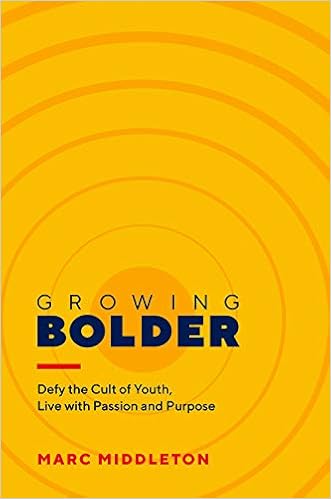
Image result for growing bolder book

This book was recommended to me by Cody Sype from the Functional Aging Institute when I attended his certification seminar.

I am accustomed to going to seminars, conferences, etc., where books are recommended and I am often cynical, but as a guy who is not getting any younger and is somewhat anxious about aging, this book sparked my interest.

Marc Middleton makes the argument that the “Machine”–the healthcare industrial complex, government, media and culture in general–wants all of us as we age to feel helpless, frail, weak and dependent. The Machine does this because it makes money for them; entire industries are built around this notion and we buy into it because it is so prevalent in our society.

Middleton’s goal is to show us another way. Retiring and aging aren’t about being put out to pasture. On the contrary, our 70s, 80s, 90s and beyond can be the happiest and most meaningful years of our lives. Middleton brings multiple examples of ordinary older Americans doing incredible things. These are not all far-fetched examples; all the individuals are accessible and inspiring.

I can honestly say that this book got me to rethink my attitude about aging. I know to look at the Machine with skepticism. I know that many of us reinforce ageism without even realizing it. I know that unless our society changes its point of view, we will have a big problem on our hands. This demographic is growing; unless we are able to dismantle the Machine, we had better be prepared for a whole sector our economy warehoused in long-term care facilities. Is that what we want?

I am inspired by this book. It has changed my thoughts about aging and given me the courage to rock whatever time I have left!

I’ve Fallen and I Can’t Get Up…Or…

falling

One of my top clients was so excited to bring in an article from yesterday’s (June 5, 2019) New York Times, “Rate of Death From a Fall Is Increasing Rapidly for Americans over 75,” by Katie Hafner. Here is the link: https://www.nytimes.com/2019/06/04/health/falls-elderly-prevention-deaths.html .

Let me start out by stating that while I am not a doctor, my many years working as a congregational rabbi and doing hospital visits has taught me a thing or two. In particular, I have seen first-hand that falls are a huge problem for older Americans. There is more than just the physical trauma too. A fall can make a person anxious about falling again so they go out less. Going out less leads to social isolation, can contribute to poor nutrition (ordering in rather than going to a store to get “real” food), and a general decline in conditions.

A new study out by the Journal of American Medicine shows that the rate of death from falls for those over 75 is going up at an alarming rate. There are a number of factors that explain this, but chief among them is that folks are surviving other conditions that might previously have ended their lives; the more we age and the longer we live, the higher a role falls plays in morbidity.

Part of my training as a Functional Aging Specialist allows me to better detect when a person is at a higher risk for a fall. My training has also taught me how to work to mitigate the risk. With some of my clients, this is a huge part of what we do–simply learning not to fall, and what to do if it does happen.

The article suggest that there are a number of factors that can help prevent falls: exercise, being aware of medications and the effect they can have on balance, the clothes and accessories we are wearing (bifocals and high heels are both culprits), tidying up to get rid of tripping hazards, and staying hydrated.

Falls are not inevitable. They can be prevented. When they are, they allow older adults to live longer, more independent and joyful lives. As we age, we need to be cognizant of this possibility and take the steps to make our golden years fall-free.

Exercise on the Sabbath

A few days ago at the Mandel JCC, a member who is a regular and long-time runner–who knows that I am a rabbi and a personal trainer–asked me (out of curiosity, I suppose), if running is permitted on Shabbat (the Sabbath).

This was not really the kind of question that I could answer on one foot (even though my left foot is still in a boot!), but I gave him the short answer, and promised to do a little more research. The short answer (so Jewish!) is: yes…and…no. It depends.

I started my “little more research” at my favorite Halachic (Jewish legal) source, Rabbi Googlowitz. A simple search on http://www.google.com revealed a surprisingly large number of web pages on this topic.

The long and the short of it…here is the issue. Traditionally, Shabbat is seen as being observed in two general ways: Shamor (guarding) and Zachor (remembering). These two broad categories come from the fact that the Aseret Hadibrot (The Ten Commandments) appear twice in the Torah–once in the Book of Exodus and once in the Book of Deuteronomy–in almost identical form. With regard to the observance of Shabbat (the 4th Commandment), one version uses the word Shamor and the other Zachor. Commentators said that the verses differ in order to instruct us that there are two aspects to making Shabbat holy and special. One is through guarding (observing the myriad laws about what can and cannot be done on the 7th day); the other is through remembering (doing the non-legal things that bring enjoyment to the day like having a festive meal, visiting friends, studying Torah, etc.) , often referred to as Oneg (literally, “joy”). The question becomes: is running simply exerting one’s body and therefore considered to be a violation of shamor–a kind of “work” with a productive purpose…or…is running an enjoyable activity in whose participation we can derive enjoyment, and therefore a kind of Zachor/Oneg? If the answer is the former, it is forbidden; if the answer is the latter, it is permitted. So…you are allowed to run, but only if it’s fun!

This is a very condensed version of the answer, but I was surprised to find that two pretty traditional websites: http://www.aish.com (Aish HaTorah) and http://www.ohr.edu (Ohr Sameach) said pretty much the same thing. Check them out for yourself to get the sources and the context.

By far the most comprehensive article I could find on the topic was written by my friend and colleague, Rabbi Jonathan Lubliner; it was endorsed overwhelmingly by the Committee on Jewish Law and Standards of the Rabbinical Assembly (the rabbinic association of the the Conservative Movement–which is ironically the name of one of the liberal/progressive branches of Judaism). He covers all kinds of exercises and the various circumstances and contexts in which athletic activities are permitted or not. Here is the web address: https://www.rabbinicalassembly.org/sites/default/files/public/halakhah/teshuvot/2011-2020/lubliner-recreation-sports-shabbat.pdf

My conclusion: like everything else having to do with exercise and athletic activity, if you’re not enjoying it…either you’re doing it wrong or perhaps you shouldn’t be doing it at all!

Brain Games may be just that…

Fixer Kayleigh Duddin

CNN reported on the new global guidelines from the World Health Organization (WHO) about preventing dementia.

The guidelines reinforce what many of us in the Fitness Industry and who have an interest in brain biology already know. Many of the gimmicks that are advertised to help stave off dementia are just that–gimmicks that are not proven to really work.

For some time now, experts in brain biology have been able to cite only one factor that is known to reduce the chances of developing dementia: cardio exercise. But wait, what does the heart have to do with the brain (sounds like a country music song)? It’s actually not that complicated; the more blood that we get pumping throughout our bodies (which is what cardio exercise does), the more blood that flows to the brain; the more blood to the brain, the healthier it is!

What the WHO guidelines add is that there are now a few other factors that also can contribute to preventing dementia: “regular physical exercise, not using tobacco, drinking less alcohol, maintaining healthy blood pressure and eating a healthy diet — particularly a Mediterranean one. “

Just one more reason to head to the gym…or outside…or to that piece of cardio equipment in the basement. Not only is it good for your heart, it is good for your brain too!

Here is the article from CNN.com:
https://www.cnn.com/2019/05/14/health/who-guidelines-dementia-intl/index.html

New Study out from NIH and AARP: Over 50? Start Exercising now…

Waiting For Their Turn
Is this what our senior years should look like?

A article in the most recent AARP Bulletin (May 2019, Vol. 60, No. 4, pg. 4) highlights something that those in the Fitness Industry have been saying for years…and now there is even more research behind it.

The study began in 1995 as a joint venture between AARP (American Association of Retired Persons) and the NIH (National Institutes of Health), and tracked the exercise habits of more than 315,000 people ages 50-71. It showed that even if a person has been inactive most of their lives, getting into regular exercise can add years to our lives and quality to those years as well.

The research shows that: “those ages 40-61 who begin exercising after years of physical inactivity can still extend their longevity. They had a 32 to 35 percent lower risk of mortality. The odds of death from cancer and heart disease also decreased. Compared with those who never exercised during the multiyear study, those who exercised their entire lives had a 29 to 36 percent lower risk of death.”

This is good news indeed–especially for fitness professionals who face the skepticism of those who have never been physically active during most of their lives. Of course, the real challenge is changing that behavior in the first place. Those who have felt that exercise or taking proper care of themselves was not a priority earlier in their lives are not necessarily going to “see the light.” Usually it takes a “wake-up call” or “Aha moment” to change the way they act. It should be comforting for them to know that not all is lost; even in their later years, they can have a significant impact on the quantity and quality of years in their lives.

As for change, Judaism has always taught that we are capable of change. Most religious traditions have a similar viewpoint. This is why there is a strong emphasis in the faith community on redemption in its many forms; there is a sense that we can always improve ourselves, and as a result, the world around us. We are not stuck with “it is what it is.” We have the potential to make “it what it ought to be.”

Good news indeed!

Getting back to the Gym after Surgery

The cast finally comes off!

Surgery was just over three weeks ago. I have one more week of non-weight-bearing, and three more weeks wearing the boot.

This means that next week I can get back to training others at the JCC. Last night I taught a small group class, but could not participate–it was a weird feeling.

Since I began my fitness journey I have had a few surgeries: Bunionectomy, double-hernia correction, emergency appendectomy (this past January) and now the surgery on my foot.

What I have learned from my past experiences:

  1. Listen to your doctor…but also listen to your body. Doctors set guidelines for how we should “ease” back into our fitness routine, but that does not work for everyone. I have seen people have the same surgery performed by the same doctor for the same condition; one was back to work in 2 days, the other was out for 3 weeks. We all respond differently; some have surgery that is 100% successful, while others experience less success. So while a doctor may tell us that we should be able to do something (run, lift weights, etc.) we must listen to our body too. If we feel that we are nowhere near the progress we and/or the doctor expected, we must be sure to communicate with him/her.
  2. Go slow. I do not expect to be running long distances for a while (even a mile). I will start with walking on the track, then little by little adding a couple of laps on the track (1/12 of a mile) each time. When I had my hernia surgery, I had completed a half-marathon 10 days earlier; I was in tip-top shape. I tried to hop back into running with both feet and it was big mistake. I actually pushed myself too hard and too quickly, setting me back further and causing greater pain. It was about a year until I felt full recovered. This does not mean that we shouldn’t push ourselves (see point 1), but caution is our ally.
  3. Try to have some goals and a plan about how to get there. This is true with any kind of fitness plan, but all the more so after an enforced break. Before heading back to the gym, have a plan of how frequently and for what duration it makes sense to be doing which exercises (what weight, how many reps, how many sets, cardio or resistance). Putting it on paper gives perspective; does it look like too much, or not enough?
  4. Don’t get impatient or give up hope. I remember after my hernia surgery thinking that I was washed up and would never recover. The reality is that I did my best work after that surgery; easily beat my half-marathon time, ran obstacle course races, won to 5ks, and became a personal trainer. Keeping a positive outlook and knowing that we are on a journey (that isn’t necessarily linear) helps our sense of progress.
  5. Do some research. I’ve been poking around the internet and found several good articles on recovery after surgery. They all contain several common themes. Best of all, they help to set appropriate expectations. The more we set appropriate expectations, the less likely we are to be disappointed. The less we are disappointed, the more positive we are. The more positive we are, the more progress we make.

I will keep you posted on my recovery with insights I develop through the process. Let’s see how the 5 points above really play out.

In the meantime, glad the cast is off!

A Registered Dietitian Weighs in on your Metabolism

This article, by Samantha Cassety, was featured on http://www.NBCNews.com. It is a pretty thorough explanation of how we can and cannot affect our metabolisms…and just what metabolism is in the first place.

The conclusion is something that those in the Fitness industry have been saying for years: regular exercise is good for us but may not necessarily help us lose weight; our diet is most important to dropping those pounds. On our journeys to weight loss and fitness, we need to assess our approach: we have little control over how many calories our bodies will burn, but we have total control over how many we will put in our bodies!


https://www.nbcnews.com/better/lifestyle/everything-you-need-know-about-your-metabolism-according-dietitian-ncna1000301

A long-ish read but worth it!

I’m a certified Functional Aging Specialist!

Readers may recall that I attended the IDEA Personal Fitness Conference – East at the beginning of April in Alexandria, VA. My main reason for going was to do the all-day training for the Functional Aging Specialist Certification. It was a great training (and I got CEC for it), but still needed to take three on-line exams in order to be certified.

I hoped that I would be able to pass all three by the end of April, but wasn’t sure if I could pull it off. Being laid up after foot surgery left me with more time on my hands so I decided to be productive. Many hours of reading and watching videos and I passed the last exam today! With four hours left in April!

As I blogged about earlier, FAI is in the forefront of fostering better practices and research in the realm of fitness for older adults. The focus is less on building muscle strength and more on working to keep older adults able to do the things they want and need to do. In other words, we address the wants and needs of our clients in order to keep them functional and independent. There is a greater emphasis on building muscle power (which helps with getting out of a chair or going up the stairs) as well as improving balance and reactivity time.

This will be very interesting for me since this is such a diverse population. Every senior presents with a different fitness and health history; there are 60-year-olds who cannot walk without assistance, and there are 80-year-olds running marathons. This kind of training requires more intense planning and specialization based on getting to know the client really well.

I will keep you posted on how this part of my “business” progresses. In the meantime, I look forward to a little celebration of my accomplishment!