Turning Dreams into Reality

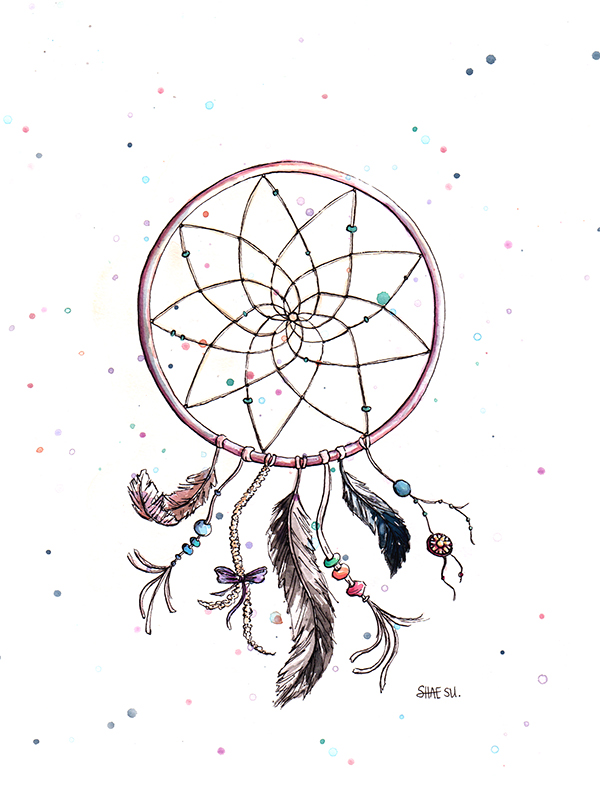
Dream Catcher

Torah portion, Miketz, it is Pharaoh himself who dreams; Joseph’s interpretation of those dreams and his knowing what to do with those interpretations catapult him to the second highest office in all of Egypt.
Herein lies an important distinction.  It is one thing to dream (or to be a dreamer).  It is another thing to be able to interpret or understand what the dream means (like, I shouldn’t have had a burrito before I went to bed!).  It is quite another thing to take that interpretation and convert it into a plan of action–which is exactly what Joseph did.  Dreams without a strategy remain just that:  dreams.


This is a timely message for us as we approach the new secular year.  Many of us make New Year’s Resolutions which are, in a way, dreams that we have for the new year.  Making a resolution, however, without a concrete way to make it all happen is an exercise in futility and/or folly.  If we think about the resolutions that we have made in the past, how many of them went unfulfilled simply because we did not really think through how to make them a reality?  This is true whether the resolution has to do with study, work, relationships or physical fitness.  No plan equals no success.


This is a concept that Joseph understood well.  He was a dreamer and he understood others’ dreams too.  What set him apart was what he did next.  As we begin 2020, we should ask ourselves as well…what must we do next to make our dreams a reality?

Hello! (I must be going….)

Image result for hi my name is

There was a big question mark back when my 20th High School Reunion rolled around.  Would I go or wouldn’t I?  I hadn’t gone to any of my previous reunions–mainly because I was usually travelling or it took place on Shabbat, but also because I didn’t really enjoy high school that much.  I felt like I didn’t share a lot in common with most of the other students; I couldn’t get away to college fast enough.

When the time came, I did decide to attend.  I went in with the following rule:  “if you didn’t talk to me in high school, I’m not talking to you tonight.”  I was pretty defensive about it all, but as soon as I walked through the door, it was great to see old friends.  Past concerns melted away and they were replaced with warm memories and lots of laughs.

That was many years ago (when I lived in Toledo) and, while I have reconnected with a few on Facebook, most of them have once again drifted off.

That experience gives perhaps 1% of the drama and anxiety surrounding the 20-year reunion of Jacob and Esau in our weekly Torah portion, Vayishlach.  The last time I saw many of my classmates we were getting our diplomas; the last time the brothers saw each other one had stolen a blessing and the other was threatening to kill!  Despite Jacob’s trepidation and planning, the reunion went smoothly.  In one of the most touching scenes in the Torah they come together, hug and weep.  Overall, it is a fairly brief reunion and the two head their separate ways; they do come together again to bury their father, Isaac, when the time comes.

The story of these twins and memories of my high school reunion remind us all that people dear and not-so-dear come in and out of our lives at different times.  It is rare that friendships last throughout the various stages of our lives; when it comes to friends, usually there are only a few to whom we hold on over the decades.  Family, however, is another matter.  Ultimately, it is sad that Jacob and Esau were never really able to patch things up, and our tradition tells us that we still suffer the consequences of that rift.

Not every relationship can be saved.  Not every relationship deserves to be saved.  Perhaps the lesson is to make the most out of the time we have with those we love; we never really know just how long they will be a part of our lives.Shabbat Shalom!

Jacob and Esau at Thanksgiving Dinner

I always read Parashat Toldot with extra interest since I am a twin.  The story of the rocky relationship between Isaac and Rebecca’s sons, Jacob and Esau, begins in our Torah portion.  From the very beginning, we are told that Isaac favored Esau and Rebecca favored Jacob.  We are told that this is because of the different lives they led.  As we know from the rest of the story, “playing favorites” did not really work out for the family.

As a child, my parents always made sure that they supported whatever my sister and I did.  They never dressed us alike; they wanted us to have our own identities.  They also made sure that we understood that we could follow whatever path we wanted in life and we would be loved and encouraged.  To this day, my sister and I (and our older brother) have a close and loving relationship.

Just yesterday, many of sat down to a festive Thanksgiving Dinner with our families; it may have been wonderful or perhaps less than wonderful.  Often, the discomfort comes from events that happened years ago.  Sometimes we can repair, but other times–as was the case with Esau and Jacob–we understand that it may not be possible.

All the more reason for us to think carefully about how our actions today can affect the connections we hope to build and maintain in the future.Shabbat Shalom!

Vegetarians…We Are Not Alone

Impossible Burger at Hell's Kitchen, Minneapolis

It used to be a pretty lonely business going out to eat in a restaurant as a pescatarian/vegetarian. Other folks see 100 items on the menu, but we see 5 or 6…or at least we used to.

There is a boom in the plant-based food industry and it is not because there are suddenly more vegetarians or vegans. The NPD group, a market research firm based in New York State, is reporting that of all those purchasing and eating plant-based burgers 89% are not vegetarian or vegan! 89%!!!

This is according to an article which recently appeared on http://www.nbcnews.com. Here is the link: https://www.nbcnews.com/business/consumer/almost-90-percent-people-eating-non-meat-burgers-are-not-n1082146

My wife and I went out to dinner with friends this evening and one of them ordered an Impossible Burger (so did I!). He is a meat eater, but we convinced him to give it a try. He liked it. As the article states, it seems that plant-based foods have crossed a threshold; taste has finally caught up to what consumers are looking for. Those looking for variety in their diet want to try new things, but will only stick with it if the taste holds up. Products like the Impossible Burger or nearly everything made by Gardein (www.gardein.com) hold their own against animal-based products.

Of course, just because something is plant-based doesn’t mean that it is necessarily healthier to eat. When you order a burger at a restaurant, it may have some salt, pepper, and other spices mixed in but it is otherwise usually not highly processed. Compare this with an Impossible Burger’s ingredients and you’ll see that it is quite processed indeed.

Even so, as the taste meets a higher standard and profitability grows for plant-based food companies, we can expect to see more variety and more healthy options available for everyone–not just vegetarians. Given the impact of the meat industry on the environment, this could be a win for the planet as well.

This is an interesting and exciting trend and it is nice to know that as vegetarians we are not alone.

More News on Dementia and Lifestyle

Image result for factors to prevent dementia

Well, it’s not really “news” since it is simply reconfirming what we already have seen in recent research.

There are studies recently shared at Alzheimer’s Association International Conference last week that show that there are five factors that have been shown to significantly reduce the risk of developing dementia later in life.

Both studies pointed to:

  1. A healthy diet
  2. At least 150 minutes a week of moderate to vigorous physical activity
  3. Light to moderate drinking (alcohol)
  4. No smoking
  5. Engaging in mentally stimulating activity

Engaging in all five decreased risk of Alzheimer’s by 60% compared to those who only had one healthy behavior. Those who added only one of the habits above saw their risk lowered by 22%!

It is becoming more and more clear every day that the decisions we make about our lifestyles at every point in our lives have implications downstream. There is no point at which we are “too late” to add healthy behaviors, and when we do add them the impact is noticeable.

For the full article in http://www.cnn.com, click here: https://www.cnn.com/2019/07/14/health/dementia-risk-lifestyle-study/index.html

Judaism teaches us that we are to pursue life. This means we cannot simply wait around and see what is in store for us health-wise. We must at every moment, make healthy decisions; not only will we sense the difference now, but in the years ahead as well.

Losing Weight: It’s All About the Math

Numbers

Those of you who follow my blog know that for the last few months I have been “struggling” to take off the weight that I put on during my mostly sedentary recovery from foot surgery.

Newsflash: going on a week-long Alaska cruise does NOT help the cause. Luckily, I only put on two pounds during the vacation, but it could have been worse.

When I returned home, I had the latest issue of ACE Fitness Magazine weighting for me. Much of the issue was devoted to discussions about nutrition and weight loss. There were articles about the latest trends in dieting (Keto, for example), the debate about whether eggs are good for us or not, as well as the latest research on the role of carbs.

The issues are usually not clear cut. Keto, for instance, is an effective method for dieting IF you can actually stay on the diet. The food choices are so limited that it is estimated that 50% of folks who try it do not last long enough to see results. It is also not recommended for older adults since the lack of protein in the Keto diet can contribute to loss of muscle mass–a serious issue as we age.

As was the case in many articles in ACE Fitness Magazine, the conclusion is that “more research is needed.”

So what do we know? A simple truth: weight loss is achieved when we burn more calories than we put into our bodies. It is a simple question of mathematics. If we eat 3000 calories worth of food but only burn off 2500 each day, we will put on weight (approximately one pound/week). On the flip-side if we burn 3000 calories per day and only eat 2500, we will lose about a pound a week. Simple math.

How does this effect me in my weight loss journey? I have started using the My Fitness Pal app again; I stopped on the vacation. This app (there are others out there) allows me to calculate how many calories I am ingesting, how many I am burning through exercise and activities of daily living, and suggests a proper calorie intake per day to achieve my goals. I have to be super-diligent to make sure I enter in the info in order to actually have this work. The app works on one simple principle as well: math. The numbers don’t and won’t lie.

We should all feel free to try different diet plans, but there are certain underlying truths:

  1. Eat less processed foods.
  2. Increase consumption of vegetables and fruits.
  3. Eat fats and carbs in moderation; try to switch out saturated fats for unsaturated fats.
  4. Burn more calories than you consume through eating.

I will keep you posted on my journey. The fact that yesterday was a Jewish fast day (17th of Tammuz) did help the cause, but I know there is a lot more work ahead to get me back to where I was pre-surgery.

Good thing I always did well in math class!

Back from Alaska renewed?

Alaska-0021

I write this Thought for Shabbat from the airport in Houston on my way back from a wonderful vacation with Michele. 


We had the good fortune to travel to Alaska for a tour/cruise. It was a beautiful trip with great memories. 

We went primarily to see the majesty of nature before it is altered beyond recognition by global climate change; unfortunately, so much damage has already been done and we saw and experienced it first hand. It renewed in me the need to act in ways that are sustainable and even help to reverse the damage that has been done. 

Princess Cruises’ motto is “come back new.”  I certainly feel refreshed, but I think I’m still me. What is new, is an appreciation of the enormity and beauty of God’s Creation—and the obligation that each of us has to “till it and tend it.”


Shabbat Shalom!

What is Your Inner Voice telling You?

Thought for Shabbat

Shelach Lecha contains the well-known story of the scouts sent into the Land of Israel by Moses to check out the territory in preparation for the conquest.  One scout was sent from each tribe.  Although they all saw the same thing, not everyone agreed on what it all meant.  Ten of the scouts were afraid and said that even though the land was everything that had been promised, it would be too difficult to conquer.  The other two had faith that God—who had already wrought Ten Plagues on Egypt, split the sea, and fed them manna—would not fail them now.  Unfortunately, the voices of the ten won out and the Children of Israel were made to wander in the wilderness for forty years until a new generation arose in its place.

Shelach Lecha can be a reminder to all of us about the proverbial “voices” in our heads.  They can often be like the ten scouts, providing a million reasons why we cannot do this or that.  They are the voices that traffic in fear, negativity and stagnation.  They tell us we cannot get that new degree, lose that weight, find a new job, or even just be happy.  How often do we listen to the other two voices?  Do we look back and remind ourselves of the blessings that are a part of our lives?  If we take the time to really listen to the voices of positivity in our heads and in our lives, we may not only find ourselves avoiding forty wasted years, but also find ourselves in the midst of a “land of promise.”

Shabbat Shalom!

Rabbi Michael Ungar

On the way to a funeral for a 25-year-old

Yesterday I performed the Mitzvah of Nichum Avelim–Hebrew for the commandment to comfort the bereaved. A family that played a significant role in one of my previous congregations lost a son and grandson who was active duty in the military. Although I only barely remember the young man (I left that community 17 years ago), I felt I needed to be there for the family; Jewish tradition says that we do not really have a choice but are commanded to be there for others.

On the way to the funeral I was listening to NPR and there was an hour-long discussion about suicide. (This was not the cause of death.) As a member of the clergy, there was not a whole lot that I had not heard before, but still it was a great segment and a good reminder.

Much of the program dealt with what to do when we hear/see/sense something wrong with a friend. What are we supposed to do? What should we say? In a number of different ways, they spoke about how one of the most important things we can do is let the other person know they are not alone, that there are others going through the same thing as well, and that there are places to get help. They all emphasized how significant it is for those who are having suicidal thoughts to feel connected to others.

They also talked about a kind of systemic change that needs to occur. We still place too much of a stigma on mental health. Our healthcare system does not always provide health insurance or treatment parity with physical illnesses. This means that open discussions about how friends, family, co-workers, etc., are doing do not take place often enough. We can begin to create change in our own families, places of work, school, by encouraging those conversations–checking in on others even when they don’t seem to be distressed. Sometimes those with mental illness are very good at disguising their distress, and all it takes is making the effort to connect.

I know that I will try this myself. The more we make conversations about mental health no different than those about physical health, the more likely we are to create situations in which those needed help will comfortable to seek it.

The funeral I attended was not a suicide, but was tragic nonetheless. I cannot imagine what the family is going through. I hope my presence made some difference. As we rethink mental illness, we can all make a difference.

This was not the segment, but still very helpful: https://www.npr.org/sections/health-shots/2019/04/20/707686101/reach-out-ways-to-help-a-loved-one-at-risk-of-suicide

Fitness in the Passover Story

File:Figures The Israelites Eat the Passover.jpg

The Israelites Eat the Passover,
illustration from the 1728 Figures de la Bible; illustrated by Gerard Hoet (1648–1733)

Passover and fitness in the same sentence! Is that even possible? Most of us who observe the Passover holiday think of it as two nights of Thanksgiving Dinner-sized meals followed by carbs, carbs and more carbs. It is possible to eat healthy during Passover, but that’s not my focus here.

The Passover holiday commemorates the departure of the Hebrews from Egyptian slavery as told in the Book of Exodus. The events described would have taken place thousands of years ago. The Haggadah–the book that contains the service for the Passover Feast (called a Seder) held on the first two nights–tells us that each of us should see ourselves as if we personally went out from Egypt. This is a tall order; many, if not most, of us have never experienced discrimination or oppression–let alone slavery. It is a challenge to try to put ourselves in the story.

The holiday is not just about the historical exodus from Egypt, though; the underlying theme is about redemption–the idea that where we are now is not where we need to be forever. The Hebrews’ situation seemed hopeless and yet, with God’s power, they were able to make their way to freedom; not only that, Egypt–the most powerful empire on the planet–was brought to its knees in the process. This sets a paradigm for us in the world and in our personal lives. The world we live in, with all of its problems, need not remain as it is; we can make it better–redeem it as it were. On a personal level, who we are today does not define who we will be tomorrow; we are always capable of becoming more and better than we are now.

Which brings me to Fitness and Passover…

Many folks look at their own personal fitness and say, “well, this is how I am.” “I’ll always be fat.” “I can never get in shape.” This outlook becomes even more rigid as we age. All the research on fitness, however, points in the opposite direction. Embarking on an exercise and/or diet program at any age is beneficial; we are always capable of improving our health. The prevailing notion was always that as we age there are certain functions that we must inevitably lose; study after study shows that we can maintain and even improve our muscle mass, cardiovascular health, endurance and reaction time–or at the very least slow the progression of their weakening. We all know individuals who were sick and frail who, after a period of rehab, were back to “normal” or even stronger than before their illness or injury. We know that we can transcend the situation in which we find ourselves; we can get better. The lessons of Passover echo this idea; they teach us that we are always capable of redemption. Although there are chronic diseases and conditions like cancer that we may not be able to overcome, we still have greater control over our fitness destiny than we may have thought in the past.

Another connection has to do with the idea of freedom which underpins the Passover story. The Hebrews were not liberated from Egypt simply so they could run around in the wilderness without a care in the world; the exodus had a purpose. The Israelites were forced to serve Pharaoh, which meant that they could not serve God. How could they focus on their connection to the divine when every day was a struggle to stay alive? The purpose of the Hebrews’ liberation was to allow them to serve God and follow the Lord’s commandments that they would receive soon afterwards at Mt. Sinai. The Israelites were made free in order to serve; it sounds oxymoronic, but it is a profound idea.

Likewise, watching what we eat, exercising, and taking care of ourselves is for most of us not an end unto itself. We take care of ourselves so that we are able to do the things we want to do longer, more efficiently and more easily. We build strength and endurance in order to carry out the tasks of our lives. What are those tasks? Certainly much of our lives are taken up with grocery shopping, paying the bills, working, studying, folding fitted sheets (!), etc., and we need to be healthy enough to do that–but most of us look for a deeper purpose to our existence. If, in fact, one of our duties as human beings is to partner with God and our fellow humans in making the world a better place (redeeming it), we cannot do so if we are frail, weak, tired and out of shape. Ideally, we maintain and strengthen our bodies–which are vessels given to us by God–to be able to carry out our mission in the world (however you define that for yourself).

The work of redemption is not easy. It is slow, laborious and often frustrating–kind of like some of our workouts. Jewish tradition teaches us that it is not our obligation to finish the work, but neither are we at liberty to excuse ourselves from the work of redemption. One of the ways that we can ensure that we are up to the task is to prepare ourselves spiritually AND physically. We are capable of changing the world for the better…but not if we don’t first change ourselves for the better–in spirit and in body.

Chag Sameach! Best wishes for a happy and fit Passover holiday!